
(By You Yunting) Recently, a trademark opposition filed by Apple in the European Union has attracted widespread attention across the industry. The trademark at issue was applied for by a Chinese keyboard manufacturer, Yichun Qinningmeng Electronics Co., Ltd. (“Qinningmeng“). What makes this case interesting is that the two trademarks are not actually very similar, yet Apple won. In contrast, an Australian court rejected McDonald’s request for trademark invalidation of the “Big Jack” mark owned by Burger King’s local franchisee on the basis of its “Big Mac” product. Today, let’s discuss how subjective discretion in trademark examination affects similar trademark disputes.
1. Apple’s Successful Trademark Opposition Case in the EU
In May 2026, the European Union Intellectual Property Office (EUIPO) issued a ruling, partially upholding Apple’s opposition and refusing Qinningmeng’s application for the registration of a citrus fruit graphic trademark for keyboards and computer-related products.
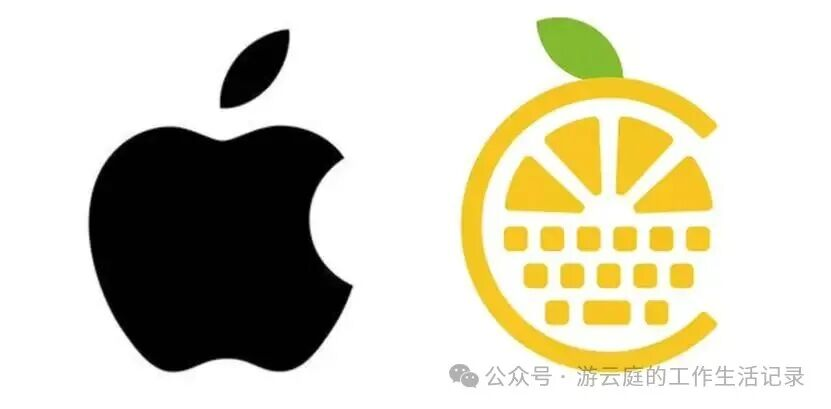
The opposed trademark consists of a round lemon outline with a notch on its right side and a left-slanting leaf on the top. The middle part of the fruit is decorated with square patterns resembling keyboard keys. Overall, it looks more like a lemon than an apple. In its examination, the EUIPO explicitly stated that the two marks are visually similar to a very low degree, believing that the opposed mark’s round fruit shape and internal dividing lines make it closer to a citrus fruit and significantly different from Apple’s elliptical shape with a bite.
Even so, the EUIPO ruled in favor of Apple, reasoning that given Apple’s extremely high reputation in the technology goods sector in the EU, relevant consumers, upon seeing the opposed mark, are highly likely to establish an associative connection between the two trademarks, which amounts to unfair exploitation of Apple’s goodwill. The EUIPO simultaneously sustained Qinningmeng’s trademark registration for solar panel products, as Apple has no reputation in that category.
2. McDonald’s Unsuccessful Rights Enforcement Casein Australia
Apple’s opposition against Qinningmeng reflects an inherent defect in trademark examination: the criteria for determining trademark similarity are not clearly defined, and such determination is essentially a comprehensive evaluation tinged with strong subjectivity. We can refer to another analogous case where the owner of the prior trademark failed to safeguard its rights and interests.
Several years ago, McDonald’s sued Hungry Jack’s, Burger King’s local franchisee in Australia, over the latter’s introduction of a new hamburger named “Big Jack”, which McDonald’s claimed was confusingly similar to its classic flagship product Big Mac. In that case, the goods categories of the two marks were identical, and the global fame of the Big Mac was undisputed. However, the Australian court ultimately dismissed McDonald’s application for trademark invalidation.
The court held that the word “Big” is a commonplace descriptive term in the burger field, so the core comparison shall be made between “Mac” and “Jack”. Ordinary consumers were unlikely to confuse the two brands or assume they came from the same commercial source. Notably, the defendant even acknowledged its deliberate cheekiness in adopting the BIG JACK name. In China, such conduct is deemed “bad faith” on the defendant’s part. Yet the court still found that this free-riding conduct had not reached the level of illegality.
This leads to a striking judicial divergence: faced with well-known trademarks and similar brand associative free-riding conduct, the EUIPO upheld the rights of the famous brand while Australian courts declined to do so. This reflects that despite global consensus on basic rules concerning trademark similarity and free-riding conducts, different jurisdictions maintain vastly different thresholds of tolerance for commercial association. Some jurisdictions prioritize the protection of goodwill enjoyed by famous brands, while others attach greater importance to free market competition and actual likelihood of consumer confusion. The final judgment largely hinges on the discretionary opinions of examiners and judges, as well as the argumentation strategies adopted by legal counsel.
3. Trademark Examination Standards for Similar Situations in China
It is thought-provoking to analyze Apple’s opposition case under China’s domestic trademark examination principles. According to China’s Trademark Examination and Adjudication Guidelines, typically the following four dimensions will be considered in such cases.
First is the level of consumer attention. When it comes to fruit-shaped graphic marks, consumers tend to form impressions based on overall visual perception rather than scrutinizing fine details. While the combination of a leaf and a notch constitutes a minor design feature, it may trigger subconscious brand associations among consumers due to Apple’s massive brand exposure. Such judgment is highly subjective, for examiners need to simulate the cognitive perspective of ordinary consumers, and such simulated perspectives inevitably vary from person to person.
Second is the similarity degree of constituent elements. Although the two trademarks differ in overall graphic structure, the visual combination of a fruit bearing a single leaf with a notch on one side has evolved into Apple’s exclusive distinctive identifier after its long-term market cultivation. Nevertheless, Qinningmeng’s trademark incorporates sliced lemon segments and keyboard keys inside the fruit outline, which greatly lowers the overall similarity and weakens the distinctive features of Apple’s logo.
Third is the distinctiveness and market reputation of the prior trademark. Apple, as one of the world’s most recognizable technology brands, has achieved extremely high market recognition for its graphic mark. Typically, the higher the fame, the broader the scope of protection. That said, there remains ample judicial discretion in defining the exact boundary of such extended protection.
Fourth is the subjective intent of the trademark applicant. The applicant engages in keyboard products, which also fall within Apple’s business scope. Its adoption of visual elements similar to Apple’s core logo inevitably gives rise to reasonable suspicion of its intent to free ride on the goodwill of well-known marks.
After comparative analysis of the two trademarks, my colleague and I still believe that the actual visual differences are quite obvious. Apple is round-shaped while lemon is oval-shaped, with obvious differences in color, outline and overall proportion. If exclusive trademark protection can be granted merely based on abstract elements such as “leaf plus notch”, then the proprietary rights boundaries of well-known brands will be excessively expanded. Therefore, our conclusion is that the core criterion for trademark similarity disputes remains actual visual resemblance. For this reason, Apple would likely fall if it filed an identical lawsuit in China. Coincidentally, the exact same Qinningmeng trademark has already faced opposition in China, presumably filed by Apple. The final ruling issued by the China National Intellectual Property Administration will test the soundness of our analysis.
Finally, media reports indicate that Qinningmeng’s trademark also faced opposition from Apple in the United States, yet it chose not to lodge an appeal, mainly due to the high cost of overseas intellectual property litigation. However, from a professional perspective, I believe that this EU case is worthy of an appeal. Litigating against a multinational giant like Apple inherently carries extremely high market exposure. For small and medium-sized brands, even if they ultimately lose, sustained media coverage of the case can turn part of legal expenses into equivalent brand marketing costs. Therefore, Qinningmeng may retain specialized intellectual property lawyers to file an appeal with EU judicial authorities. In cases featuring strong subjective discretion in official rulings, seasoned legal practitioners can guide the adjudicating body’s trial logic in favor of the client, leaving sufficient room for a favorable outcome even when confronting industry giants such as Apple.
Disclaimer of Bridge IP Law Commentary
Short Link: