Copyright Issues behind Disputes on Beijing Love Story

By Albert Chen

The popular TV drama Beijing Love Story (the “Story”) has become the hot topic of  social discussion. The discussion was triggered about with whom the copyright  ownership of the story resides, on which both editors Chen Sicheng and Li Yaling claimed the right over it.  Chen planned to shoot a film of the Story which Li was against, with the reason that any licenses of the works shall have to go through her approval and that she will have to be paid  remuneration. With the  escalation of the dispute, both parties seek the settlement through legal ways.

READ MORE

Why the Cybercafé could be Exempted from the Liability of Pirate Video Broadcast?

By You Yunting

In the past few days, a Beijing court published a case (note: the link is in Chinese) involving a cybercafé who has purchased the Video-on-demand (VOD) system, and that made the court refuse the claims of the plaintiff though the right holder proved the piracy in the VOD.

VV8.com Company, a professional video system provider to cybercafé invested by IDG and Disney, detected the pirated TV drama against its copyright in the video system of a cybercafé. And then, the right holder filed a lawsuit against the piracy. The cybercafé afterwards argued that the system was purchased by it from Hero Inc. Company, who is a third party video provider, and in that transaction, both parties has agreed that all the copyright dispute shall be handled by Hero Inc.. Moreover, all the contents in the system are updated and ciphered by Hero Inc. with remote control, thus the cybercafé could not delete any videos in it. In the lawsuits, VV8.com expressed no intention to add Hero Inc. as the co-defendant and make no claim thereby.

READ MORE

Shall Figure of Mickey be Protected by Copyright Law in DPRK?

By Albert Chen

Mickey Mouse’s showing up in the show for Kim Jong-un, the new leader of DPRK, has provoked the coverage of news reports worldwide. The swift reaction by Disney stated that “This was not licensed or authorized by The Walt Disney”, which in turn made the event gather more controversy. Moreover, the State Council of USA also expressed its concern on the issue.

Not limited to the politics behind the event, the copyright matters involved in the character performance is also very interesting. This brings forth the question; does the performance constitute the infringement against Disney? In my opinion, the answer to the question shall lay on the answers to another two more basic questions: 1) Is Mickey Mouse still in his protection period? 2) Could copyright be protected through DPRK and USA?

READ MORE

Analysis on Lawsuits and Arbitration in Domain Name Dispute Settlement System in China

By Luo Yanjie

According to a news report, Apple filed arbitration in June over “iPad 3.com” in WIPO, and claimed the adjudication to grant it the domain name. So far as is known this week, Apple is said to have received the internet address, and the registration information of iPad 3.com, and has now been updated, transferred from Global Access to Kilpatrick Townsend & Stockton; the law firm entrusted by Apple.

The development and popularity of the Internet has increased the weight of domain names to the companies, especially for those engaged in the Internet industry and to them the domain name is playing the main role in propaganda with the replacement of trademark to some extent. Therefore, the domain name has been one of the main battlegrounds of the Internet or IT companies, and that thereby has brought many disputes. Due to the fact that the domain name is unified in global standard, the dispute concerning the domain name could be mainly settled in arbitrations (like Apple did in the case above, while it’s a little different from the contractual arbitration as specified below) and lawsuits. Now, we would like to introduce you how these two settlement methods applied in China:

READ MORE

Analysis of App Store’s Obligation under China Copyright Law

By Zhan Yi

Highlight

At the beginning of 2012, Apple Inc. (the “Apple”) was sued by some noted local writers in China for copyright infringement. This aroused wide concentration amongst the public on the copyright issue in App Store. Will Apple be liable for the free or paid download by law? The answer to this question, in my perspective, shall focus on the determination of its legal nature which shall be considered within the regulations of the copyright law based on App Store’s commercial and technological model of App Store.

READ MORE

No Infringement of SONY TV’s Unauthorized Cartoon Playing

By Luo Yanjie

In our past post “How Sony Can Avoid Copyright Risk”, we gave our legal opinion in the copyright infringement charged against SONY. And in that case, SONY integrated the function of networking in a type of its TV products, by which the consumer could watch the cartoon produced by an animation company after registering its TV and the application for an account on an appointed websites under the instruction of SONY. The animation company sued SONY and the website in Beijing after detaining the infringement.

READ MORE

Traditional Internet VS Mobile Internet: Any Difference in Law Application?

By Luo Yanjie

With the popularity of the smart phones in the modern society, we have seen an explosion development of the mobile internet. And by some statistics, the data traffic of the mobile terminal has occupied 10% of the total on the internet, which has been taken as the most important growth point of technology in the coming several years. Meanwhile, the explosion also adds fuel to the firing copyright piracy on the internet, and the convenience of the network also troubles the copyright owner in the right protection. And moreover, it also puzzles the copyright the law application in the mobile internet. Therefore, in today’s post, we would like to share our opinions and experiences on the issue:

READ MORE

Parody on Copyrighted Works Could Be Infringement? II

the poster of the parodic World of Warcraft

By Albert Chen

II. Is it necessary infringing of parody?

Just like analyzed above, the “transformative use” may be the re-creation basing on the ideas, and also could be the re-creation relying on the “expression”. Therefore, the infringement of parody could not be determined in general and should be considered in situations.

1. The parody with transformative use of idea

The basic principle of Copyright Law is to protect the expression while such protection will not extend to the idea which is not detailed by the expression. Surely, there has regulated no specific standard or border between the abstract of idea and the concrete of expression, and that makes the judgment depend on the case analysis.

READ MORE

Parody on Copyrighted Works Could Be Infringement? I

the parodic portrait of ancient Chinese poet DU FU

By Albert Chen

On 7th June, 2012, the committee affiliated to Agencies for Cultural Affairs deliberated on the issues that could the derivative works and parody constitute the infringement to copyright (note: the link is in Chinese). And that marks the Japanese government facing up to the common problems KUSO in the country.

As a country with well-developed culture industry, Japan sees a large number of original cultural creations within the nation every year, including the cartoons, movies, games, etc. On the other hand, the derivatives of the existing works are also common in the country with the parody included. The trend of parody in Japan also influences the literature works of China, and thereby we see Lin Daiyu, the character in the noted A Dream in the Red Mansion, becomes a courtesan, the Monkey King begins to date with his master, and the generals in the Romance of Three Kingdoms have all been coquettes.

READ MORE

MOC: Data of IP Infringement Law Enforcement of this 1st Quarter in China

By You Yunting

The Ministry of Commerce (MOC) reported on 12th the latest progress of the combat against the IPR infringement and knockoff production in 2012 in China. And today’s post is mainly about part of the data released on the conference.

By the preliminary statistics, during this January to April, the commerce law enforcement departments nationwide have investigated and punished those involved in 78,773 cases of intellectual property rights (IPR) infringement and counterfeits, with the money involved of 1, 810 million yuan, 44,371 settled , 1, 016 transferred to the judicial organ and 4,065 dens for counterfeit manufacture are smashed. Also during the period, the public security department investigated 7, 140 cases of infringement and counterfeits, with 9, 305 suspects were arrested and 161. 1 million yuan is involved. During January to April, the procuratorate approved the arrestment in 1, 743 infringement or counterfeits cases and on 3, 289 individuals, and prosecuted 2, 516 cases and 4, 870 individuals. And also in the same period, 2, 586 criminal cases relating to the IPR infringement and counterfeits are filed in the courts throughout the nation, 2, 021 were settled and 3, 170 individuals are covered by the effective sentences.

READ MORE

How to Make Administrative Complaints against Knockoff Software in China?

By Luo Yanjie

According to China “copyright law”, commercial using pirated software is a typical act of infringement. We generally recommend the right owner taking civil action against pirates. But in many cases, administrative complaints against them will be more efficient because it is hard to get “evidences”. Today, we would like to introduce how to start a copyright infringement complaint inChina.

I. Legal basis of administrative complaints to pirates users

The current “copyright law” article 47 provides:“Any of the following acts of infringement shall, depending on its circumstances, be demanded for civil responsibility such as cease of the infringement, elimination of effects, public apology or compensation for loss; if the act causes a damage to the public interests simultaneously, the copyright administration department may order the person committing the act to stop the act of infringement, confiscate his illegal gains, confiscate and destroy the infringing copies and impose a fine thereon; if the circumstances are serious, the copyright administration department may also confiscate the key materials, tools and equipment mainly used for making infringing copies; and if the act constitutes a crime, criminal responsibility shall be demanded according to law”. This is the law basis for China Administration of copyright administrative punishment. In addition, the” Regulations for the protection of computer software” article 24 also make similar provisions in the light of computer software tort ( similar with ” copyright law”, repeat no longer here ). And” Decree of the National Copyright Administration of the PRC ” also provides the jurisdiction of an administrative copyright complaint case belongs to the State Copyright Bureau and the local copyright bureau, and make detailed provisions of legal procedure.

READ MORE

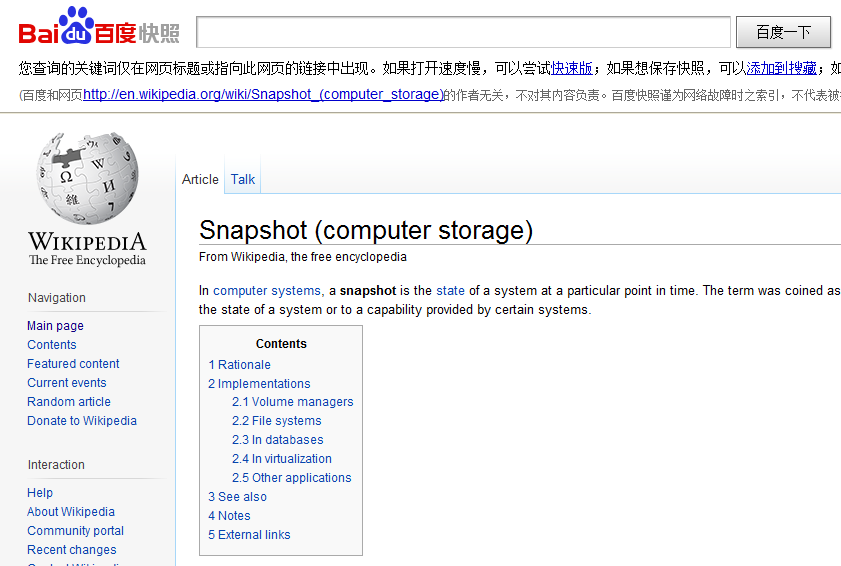
Search Engine in China: Liability to Infringement in Snapshot?

the Baidu snapshot

By Luo Yanjie

With the increasing sense of legal protection, the copyright owner are paying more and more attention to the infringing works spread in the internet, especially for the ICP of infringing works, like the video search engine and Wenku (namely the online library). But to the annoy of the copyright owners, when the ICP deletes the infringing content, the page may be remained in the snapshot of the search engine available to the visitors, which makes the effect of right protection may be discounted. Today, we would like to share our opinions on the copyright infringement by snapshot of the search engine in this post:

READ MORE

Protection on Architecture Works in China Copyright Law

the above is the Wangjing SOHO, and the bottom is the copied one in Chongqing.

Recently, Ms. Zhang Xin, the CEO of SOHO China claimed on Weibo the design of Wangjing SOHO of her company is copied by a community in Chongqing (note: the link is in Chinese), and this weibo is also forwarded by Mr. Pan Shiyi, the chairman of the board of SOHO and restated the plagiarism. Meanwhile, the official Weibo of SOHO also expressed its feeling of helpless and put up a question that could the copyright of architecture works be protected in China? To this question, in our view, the answer is definitely “YES”. And there are three main protection way to the appearance of architecture in China law system:

READ MORE

Brief Introduction to Software Copyrighter’ s Right Limitation to Ultimate User

by Luo Yanjie

Under the system of China Copyright Law, what right limitations may come to software owners? And what rights and obligations are enjoyed or taken by the ultimate user and what’s the liability when the infringement occurs? Today we would like to give you the introduction on the issues. There are two main litigations on the PC software, namely the Copyright Law and the Regulations on the Protection of PC Software (the “Regulation”). But according to the latest exposure of the Copyright Law’s revision, the Regulation’s articles have been all regulated in the new drafted law; therefore, it is foreseeable that the Regulation may be abolished once there publicized the new Copyright Law.

READ MORE

What Change on Information Communication by Network in Exposure Draft of China Copyright Law? II

By Luo Yanjie

II. To enlarge the information networks: a concept coincidence with the right to transmission

Besides the enlargement to the definition of the right to the information communication by networks in the exposure draft, the new judicial interpretation also regulates a wider definition on the information networks, which includes PC internet, radio & television networks and mobile telecommunication networks. We support such enlargements for radio and television VOD is feasible with the technology development while the networks of them are excluded from the legal information networks. Since the nature of VOD on radio & television networks is of no difference from that on the internet, the information communication by networks shall naturally involve it.

READ MORE