Essential points on Writing Noncompetition Clauses In a China Labor Contract

(By You Yunting) In today’s post, our website would like to introduce some essential points in writing noncompetition clauses in a labor contract in accordance with relevant Chinese laws and regulations. Pursuant to the Labor Law, the Labor Contract Law and related laws and regulations, combined with the specific conditions of employing units, when writing noncompetition clauses or agreements, we will pay particular attention to the following points:

I. How to determine the scope of the noncompetition clauses?

READ MORE

Logic and Practical Analysis of Foreign Investment Facilitation in the Shanghai FTZ

1

(By Gong Lier) The China (Shanghai) pilot free trade zone (hereafter called ‘the free trade zone’) was officially launched in Waigaoqiao, Shanghai on 29th Sept. 2013. Attention should be paid to the news that the, i.e., the ‘Negative List’, of the free trade zone was issued at midnight on the same day, on which the five Shanghai municipal governmental rules were also implemented one after another, including the China (Shanghai) Pilot Free Trade Zone Administrative Rules (No.7 municipal government’s order) (hereafter called ‘the Free Trade Zone Administrative Rules’), the China (Shanghai) Pilot Free Trade Zone Foreign Investors’ Funded Projects Filing Rules (H.F.F.(2013) No.71) (hereafter called ‘the Foreign Investors’ Funded Projects Filing Rules’), the China (Shanghai) Pilot Free Trade Zone Overseas Investment Projects Filing Rules (H.F.F.(2013) No.72) (hereafter called ‘the Overseas Projects Filing Rules’), the China (Shanghai) Pilot Free Trade Zone Foreign Investors’ Funded Enterprises Filing Rules (H.F.F.(2013) No.73) (hereafter called ‘the Foreign Investors’ Funded Enterprises Filing Rules’), and the China (Shanghai) Pilot Free Trade Zone Overseas Invested and Incorporated Enterprises Filing Rules (H.F.F.(2013) No.74) (hereafter called ‘the Overseas Invested and Incorporated Enterprises Filing Rules’).

READ MORE

The Establishment Procedure of Foreign-Capital Enterprises in Shanghai FTZ

(By Bai Lituan) On August 30, 2013, the Standing Committee of the National People’s Congress enacted the Decision of the Standing Committee of the National People’s Congress on Authorizing the State Council to Temporarily.

Adjust the Administrative Examination and Approval of Relevant Laws in China (Shanghai) Free Trade Zone (the “DESIVISION”). The DESIVISION authorizes the State Council to temporarily adjust about 11 administration examinations and approval of the establishment and merger of foreign-capital enterprises including the wholly foreign-owned enterprises, Sino-foreign cooperative joint venture and Sino-foreign equity joint ventures in the Shanghai Pilot Free Trade Zone (the “FTZ”). Earlier reports once said that it would temporarily suspend the implementation of the Law on Wholly Foreign-Owned Enterprises, the Law on Sino-Foreign Cooperative Joint Ventures and the Law on Sino-Foreign Equity Joint Ventures in the FTZ. In effect, those three laws involve the establishment, business structure, foreign exchange management, labor and personnel, finance and accounting, dissolution and liquidation, etc. The DESIVION of the National People’s Congress just temporarily suspends 11 administration approvals and changes them into filling administration. The Law on Wholly Foreign-Owned Enterprises, the Law on Sino-Foreign Cooperative Joint Ventures and the Law on Sino-Foreign Equity Joint Ventures will still be enforced in the FTZ and be temporarily adjusted.

READ MORE

Why did the “Gatekeeper” of the Capital Market Fail to Fulfill its Duties?

(By Yu Zhiyuan and Bai Lituan) In the capital market, agency institutions’ participation greatly reduces the degree of information asymmetry of market subjects, and plays a significant role in the capital market; thus, the agency institutions and their professionals are named by the industry as the “gatekeepers” of the capital market. Ever since the Enron Corporation scandal became public and the Sarbanes-Oxley Act (SOA) was published, in order to better protect the interests of public investors, all countries are attempting to apply new approaches to security supervision. Thus far, enhancing the gatekeepers’ obligations is one of the ways to realize investor protection. Recently, fraudulent securities issuances and severe distortions of information disclosure are occurring frequently in China’s capital market, and this has a direct causal relationship with the gatekeepers’ mechanism failure.

READ MORE

Introduction to the New Laws and Policies in the Shanghai Free Trade Zone

SH-map_Yangshan-Deep-Water-Port_Pudong-Air_Waigaoqiao-Port_550pix

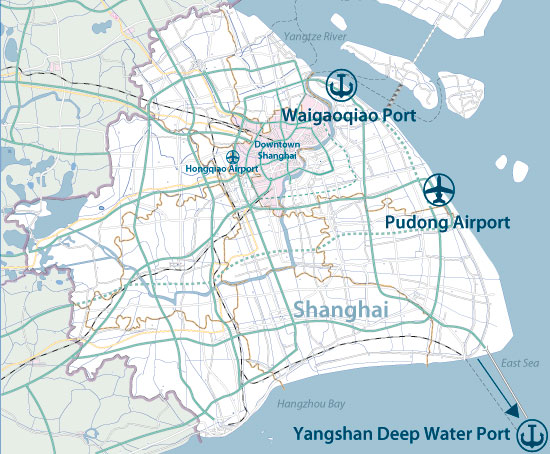
(By Dr. Qiao Wenbao) On August 22, 2013, the State Council officially approved the establishment of the China (Shanghai) Free Trade Test Zone (the “FTZ”). Compared with regular domestic bonded zones, export-processing zones, and the Qianhai Bay economic zone previously approved, the FTZ is of profound significance upon the degree of openness and the influence of China’s development in the future.

The FTZ occupies an area of 28.78 square kilometers, including the Yangshan Free Trade Port Area, the Waigaoqiao Free Trade Zone, Waigaoqiao Free Trade Logistics Park, and the Shanghai Pudong Airport Comprehensive Free Trade Zone. The FTZ, centered on the Waigaoqiao Free Trade Zone and combined with Yangshan Free Trade Port Area and Shanghai Pudong Airport Comprehensive Free Trade Zone, is quickly becoming the new experimental field in China’s economy, promoting the development of Shanghai’s financial, trade and shipping center.

READ MORE

The Exposure Legal Defects of Chinese Crackdown on Online Rumors

(By You Yunting) Recently, Chinese governments have cracked down on the spreading of rumors online, and have arrested some web users for allegedly fabricating or disseminating online rumors. A lot of netizens have voiced their objections that this crackdown suppressed the “proper freedom of speech.” In our opinion, theoretically, online rumors shall better be handled through other means of self-remedy, such as the victims filing civil or criminal lawsuits against the alleged rumormongers. However, government intervention is in some cases a realistic necessity to more effectively crackdown online rumors, because in some cases the victims hurt by online rumors cannot file a lawsuit on their own initiative, often resulting from a failure to discern the rumormonger’s identity.

READ MORE

What Legal Problems are GSK Scandal Involved within China’s Criminal Law?

1

(By Zhou Wei) On July 11, 2013, the Ministry of Public Security (the “MPS”) issued a piece of news on its official website that some senior executives of GlaxoSmithKline (China) Co., Ltd (the “GSK”) were being investigated for their involvement in serious unspecific economic crimes, demonstrating a scandal with GSK’s involvement in bribery in China. Utilizing currently disclosed information, this post is aimed at analyzing possible alleged criminal charges and criminal liabilities.

READ MORE

Foreign Enterprises’ Criminal Risk Prevention in China

GlaxoSmithKline

(By Ding Jinkun) Recently, Glaxo SmithKline, UCB and many foreign pharmaceutical giants are being investigated for their involvement in economic crimes. The entire pharmaceutical industry is involved into this investigation, stated-owned pharmaceutical firms included. Thus, it can be seen that the Chinese medical market has developed some deformities. Among the resulting crimes, some specific acts include unlawfully raising the price of medicine and unreasonably requiring consumers, particular patients, to pay “perks” for the lawbreakers in the form of small fees.

READ MORE

Trademark “Zhuomuniao”: Cancelled for Squatting Though It Has Been Put into Use

(By Luo Yanjie) Abstract: when applying for a trademark, the trademark office will judge the similarity of the submitted trademark based on the International Classification of the Trademark Registration for Product and Service (the “Classification”), but the court does not use this only standard. Even if the court finds that the later trademark application to be similar with the earlier applications, and the trademark office approves the later applied trademark’s application, the earlier trademark holder shall have no right to demand the later user for any damages.

READ MORE

How to Judge the Validity of Trademark Transfer without Inner Approval of the Company in China

(By Albert Chen) Abstract:

When a company’s trademark agent transfers a trademark without approval, a judgement of the validity of said transfer requires not only a consideration of the company approval, but also a determination of the third party good faith in the transfer. When a condition is not fulfilled the transfer will invariably be considered invalid.

Case Introduction:

In 2001, Leidi (China) Co., Ltd. (“Company L”) was granted the exclusive right in the use of the trademark “雷迪” (read as “Leidi” in Chinese). In November of 2002, Wu, as the executive director of Leidi China, transferred the trademark to the Hua Qu Duo Investment Company (“Company H”). The State Trademark Office made an announcement regarding the transfer in October 2003. Subsequently, Company H licensed the trademark to the Shanghai-based Leidi Mechanics Co., Ltd. (“Company S,” which had no affiliation with Company L).

READ MORE

Would Those First Users Involved in OEM Constitute Trademark Infringement?

(By Albert Chen) The author once introduced readers to different judicial opinions adopted in the Shanghai and Guangzhou courts over whether trademark infringement could be caused by an OEM. According to a ruling handed down by the Fujian Higher People’s Court in 2012, which came to the attention of the author recently, the judge confirmed that an OEM could lead to trademark infringement, but decide at the same time that no liability shall be taken by the first user of the mark, for no confusion would be made. As for that point, the author certainly has a different opinion.

READ MORE

Could User Information Be Considered Trade Secret in China?

Abstract: trade secret must have three basic features: confidentiality, practicability, and security. Therefore, whether user information in a website could be considered as trade secret or not, it shall also be judged based on these three basic features.

(By Luo Yanjie) User information is very important to a website daily operation. To judge it from the legal protection perspective, it is generally protected as a trade secret. The case introduced in this article is a typical dispute on whether the user information could be considered a trade secret, and thereby could infringement be decided.

READ MORE

Whether using the Name of Another’s Work Constitutes Copyright Infringement or Unfair Competition

Abstract: The Copyright Law and the Anti Unfair Competition Law supplement each other, but they also compete with each other.

(By Luo Yanjie Unfair competition refers to an operator’s misconduct that violates principles of fairness, justice, and good faith; it is also considered any behavior that violates widely adopted commercial ethics. As for copyright, as a kind of exclusive right, it mainly focuses on granting the right holder a monopolistic right in conformance with the law, and thereby grants the right holder monopoly rights as well as a competitive advantage through the exploitation of his/her own intellectual works.

READ MORE

Why Hainan Netcom Is Judged Infringement Liability for IP Addresses It Manages?

(By Albert Chen) Hainan Netcom is an Internet Service Provider (“ISP”), but it also provides the content on the Internet. Even after the company failed todemonstrate that the IP address is used by a third party, and it fulfilled its obligation to check the content of the webpage, the company should still be liable for any corresponding infringement.

Case Summary:

Beijing Ciwen Filming Co., Ltd. (“Company C”) is the copyright holder of film Qi Jian (also known as “Seven Sword”) in mainland China. However, Company C discovered that Hainan Netcom hadbeen providing a link on its homepage (www.hai169.com) for its visitors to stream Qi Jian, without the authorization of Company C.As a result,in September of 2005, Company C filed a lawsuit against Hainan Netcom because it believed that Hainan Netcom had infringed upon its copyright.

READ MORE