Why Could “Kellogg Company” not be Registered under Class 41 for Educational Services?

kello

(By You Yunting) Kellogg Company, an American multinational food manufacturing company, produces cereal and convenience foods, including cookies, crackers and fruit-flavored snacks. However, in China, someone tried to apply for “Kellogg” as a trademark under Class 41 for educational services. After discovering this, Kellogg Company filed an opposition, but suffered a setback at first in that both the TRAB and Beijing No.1 Intermediate People’s Court rejected its claim. After Kellogg Company appealed, Beijing Higher People’s Court supported its claims, on the ground that the disputed trademark infringed the prior enterprise name of Kellogg Company.

READ MORE

Why China Court Decision the Use of Registered Trademark to Non-infringement?

bianzuiba

(By Luo Yanjie) Abstract:A trademark shall be distinctive and a rational use of the characters in a trademark does not constitute infringement. The 2013 version of the Trademark law clearly stipulates that where an identical or similar trademark has been used in connection with the same goods or similar goods by others before the registrant’s application, the exclusive right holder of said registered trademark shall have no right to prohibit other people from using the aforesaid trademark from continuous use of such trademark within the original scope, but may request its users to add proper marks for distinction.

READ MORE

Why Couldn’t the “CASTEL” Trademark Prevent AnotherFrom Registering As Enterprise Name?

castel

(By Luo Yanjie ) Abstract: Generally, the trademark-right and the right of an enterprise-name are independent of each other. However, these rights, which also act as an enterprise-business-mark-right and are comprised of an intellectual property right, are likely to be so similar in their nature and characteristics that they may objectively cause disputes. To reach a judgment on whether there has been a breach of the principle of good faith and recognized commercial-morality as regulated in the anti-unfair Competition Law, the court would make a judgment based on the particular circumstances of a case.

READ MORE

Why the TRAB Removed the Johnson & Johnson’s “ONETOUCH” Trademark?

Johnson-Johnson

(By You Yunting) U.S. drugmaker Johnson & Johnson (NYSE:JNJ) and Guilin Zhonghui Biotechnology Co., Ltd are in fierce competitions on blood glucose test strips in China. Johnson & Johnson has always accused Guilin Zhonghui Biotechnology Co., Ltd of producing counterfeits of Johnson & Johnson’s OneTouch blood glucose test strips used by patients with diabetes, but did not receive support of the courts in responding litigations. Recently, Guilin Zhonghui Biotechnology Co., Ltd won this dispute through revoking Johnson & Johnson’s ONETOUCH trademark. The followings are the case introduction and our analysis.

READ MORE

Why could an Unregistered Trademark Obtain Protection in Beijing Higher People’s Court?

(By Luo Yanjie) Abstract: To judge whether two goods are similar, generally is ruled upon the basis of the Chinese Goods and Services Classification and then on the courts’ interpretation of different cases and facts. The trademark application shall not be a means to register a mark that is already in use by another party and enjoys substantial influence, and shall also not infringe upon another party’s prior existing rights.

The statement “Goods and service are similar” refers to the goods and services that are associated with each other and thus are likely to produce confusion among the relevant public (our previous post, Why the “NEXT” Trademark could Receive Cross-class Protection in China had introduced similar problems), in which the actual situations conflict with the Chinese Goods and Services Classification of the Chinese Trademark Office (the “CTMO”). In today’s post, we would like to introduce a typical case.

READ MORE

Shall Silk Street Undertake Compensation Liability to LOUIS VUITTON MALLETIER for Trademark Infringement?

silk street

(By Luo Yanjie) Abstract:  Market-managers should fulfill their duty to exercise reasonable care to cease trademark infringement. “Intentionally facilitating an infringement by another person or party of an exclusive right to use a registered trademark including through acts such as storage, transportation, postage, concealment and similar” shall be deemed as an infringement of the exclusive right to use a registered trademark.

Our website once introduced a post that the Name on the American Notorious List Could Also be the Well-known Trademark in China. Actually, Silk Street is not a company that sells fake goods, buta market consisting of many small shops. It is undeniable that the market of Silk Street was once listed alongside the Pirate Bay in the notorious market by USTR because it has sold too many fake products. Considering there are many fake products in Silk Street, the market manager shall be found liable. In today’s post, we would like to introduce and discuss a case where the market manager was found liable for its shops’ selling fake goods.

READ MORE

Why the “NEXT” Trademark could Receive Cross-class Protection in China?

next trademark

(By Luo Yanjie) Abstract: Generally, two goods that fall into the same similar group constitute similar goods. “Similar goods” refers to the goods that are identical in such respects as the function, purpose, industry, sales channel and consumers; or goods that are likely to lead the relevant public into thinking they are associated with each other and cause confusion.

Trademark registration in China applies the Nice Agreement Concerning the International Classification of Goods and Services for the Purposes of the Registration of Marks (the “Nice Classification”). Every year the State Trademark Office in China will update the Chinese Goods and Services Classification in accordance with the Nice Classification. A trademark shall be registered in accordance with the Chinese Goods and Services Classification. When a trademark dispute brought to a court, the Chinese Goods and Services Classification is not used only as a reference for judgment of similar goods or services.

READ MORE

Could an Additional Proof be Admitted in the TRAB’s Trademark Review?

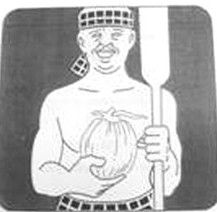
手持椰子

(By Luo Yanjie) Abstract: The general principle of copyright authorship centers on the signature in the work pursuant to the Copyright Law. The Trademark Review and Adjudication Board shall determine the proof that provided by the administrative counterparty with strict and cautious attitude and consider the changes together with the combination of legal facts and objective conditions so as to make a ruling that protects the right holders’ legitimate rights and interests.

The people’s court shall have the right to revoke the ruling made by the Trademark Review and Adjudication Board (the “TRAB”) and order the TRAB to remake a ruling. For how the TRAB deal with the additional evidences provided by the administrative counterparty during the period of re-ruling, there are no clear laws and regulations. In today’s post, we would like to introduce a typical case with readers.

READ MORE

Could Audi Succeed in Applying for “SQ2”, “SQ4” and “Q9” Trademarks in Mainland China?

audi

(By Luo YanjieAbstract: A subsequently applied trademark must not be identical with or similar to a prior trademark. The trademark submitted for registration must have sufficient characteristics that allow it to be distinguishable. A few days ago, foreign media outlets reported that Audi had filed several trademarks application for model names, including SQ2, SQ4 and Q9. This is a sign that these vehicles will likely be sold in China in the future.

According to our research, further information about those trademarks is not yet available in Mainland China. This is likely either because Audi has not started the application procedures, or because the Trademark Office has not yet input Audi’s application information online. However, this does not affect our analysis on the outlook of those trademarks in mainland China.

READ MORE

Abuse of Internet keywords in Competitive Bidding may Constitute Trademark Infringement

(By Luo Yanjie) Abstract: Using another’s trademark as a promotion keyword in Baidu’s competitive bidding may constitute trademark infringement and unfair competition. The contents of “sale promotion (for others)” refer to providing advice, planning, promotion and consulting for others to sell goods or services, and does not include, in particular, enterprises whose main function is to sell goods, namely, activities of commercial enterprise.

   With the widespread use of Pay Per Click (the “PPC”) promotion, related legal problems also surface. In recent years, there are many trademark infringements regarding the bidding service of keyword PPC. The case in today’s post is a typical one considering the bidding service of keyword PPC as follows.

READ MORE

How to Solve the Language Conflict between Foreign and Chinese-Language Trademarks?

资生堂

(By You Yunting) When applying for trademark registration in China, foreign companies are often puzzled by an issue arising out of a translation of a foreign trademark into Chinese being rejected by the Trademark Office due to a language conflict with some preexisting trademark. In our experience, however, if an applicant can prove to the court that its trademark won’t cause confusion with previously registered trademarks, there is a great chance of success in a foreign trademark ultimately being registered. As follows, we will introduce a case where a Chinese court supported the Japanese Shiseido Ltd. Co. in applying for registration of its BéNéFIQUE trademark.

READ MORE

Should An Enterprise Change its Enterprise Name that Infringed a Registered Trademark in China?

巴黎春天

(By Luo Yanjie) Abstract: Marks that only bear the generic names, devices, or model numbers of the goods shall not be registered as trademarks. This restriction was just limited the generic names of the same goods. Trademark right is a unified national right all over the China and shall be under equal protection. In practice, for an act of an enterprise name infringing a registered trademark, the court may make a comprehensive judgment of different kinds of infringement liabilities.

With regard to some well-known brands, an act of using another’s well-known brand as an enterprise name is a typical infringement manner, which annoys the right holder. In today’s post, we’d like to introduce and share a typical case that the infringing party was finally convicted of infringement by the courts and ordered to stop using its enterprise name for the following.

READ MORE

When a Preceding User of a Trademark Counters a Subsequent Registrant in China?

hannas

(By Luo Yanjie) Abstract: China’s new Trademark Law still enforces the principle of “first to file,” but at the same time a prior user of a trademark only need prove to some extent that their prior use of a registered trademark had a degree of popularity, and need not prove that a subsequent user of the trademark “squatted” the trademark by registering it. If the board approves such prior use, the prior user will have the right to continue using the trademark in the original scope of use. “Improper means” as stated in Article 31 of the Trademark Law, refers to situations “where the applicant knows or should have known that the trademark had been used by others with a certain degree of influence, and preemptively registered the same, then such applicant shall be determined to have used improper means to register the mark.”

READ MORE

How A.O.SMITH Corporation Protects Its Interests against the Free Rider AOSIMIHE?

1

(By Luo Yanjie) Trademark infringement via the unauthorized use of an enterprise’s name is a common phenomenon in China. Since the requirements for registering a company in Hong Kong are well known for being comparatively lax, many companies attempt to register well-known trademarks as an enterprise name in Hong Kong, and then run a business in Mainland China using this registered name, effectively fulfilling its role as a “free-rider” of another’s well known trademark.

 The A.O.SMITH Corporation was founded over 100 years ago in Milwaukee, Wisconsin, USA, and is a global leader applying innovative technology and energy-efficient solutions to products marketed worldwide. However, the “American”AOSIMIHE (note: AOSIMIHE is a rough approximation of the name A.O. Smith transliterated into Chinese) Appliances (International) Group Ltd., registered in Hong Kong, is a free rider attempting to imply a connection between it and the United States-based A.O. Smith Corporation. Based on its Hong Kong company and trademark registration, the former succeeded in registering its “AOSIMIHE” trademark in Mainland China. Today, we’ll discuss how A.O.SMITH Corporation protected its legal interests against the “American” AOSIMIHE Appliances (International) Group Ltd.

READ MORE

Can Carnival Films Retake the Downton Abbey Trademark Squatted in China?

图片1

(By Luo Yanjie) According to a recent report by the British Broadcasting Corporation (BBC), the British television series Downton Abbey (In Chinese, translated as “唐顿庄园 Tangdun Zhuangyuan”), which is very popular in China, and Carnival Films, who produced Downton Abbey, was attempting to sell Downton (in Chinese, Downtown is translated as “唐顿 Tangdun”) branded wine in the North American, European and Australian markets. However, according to a disclosure by the State Trademark Office, some Chinese merchants drew first blood, registering the “唐顿庄园 Tangdun Zhuangyuan” trademark and subsequently obtaining rights in the trademark. This news also pointed out that a Shandong-based Merchant Li Xiangjun had already received ownership of the “唐顿庄园 Tangdun Zhuangyuan” trademark for wines in China.

READ MORE