Introduction to A Case on Whether OEM Would Constitute Infringement in China

Abstract:

(By Luo Yanjie) For the infringement caused by OEM in China, different courts hold different opinions in China, and in this essay you could see a case describe the infringement determination. The determination of trademark infringement should be subjected to whether or not potential consumers would be confused when making their decision to purchase the product. If the potential consumer is not confused by the product, then it should not be considered as an infringement.

READ MORE

Would the Cancellation of the Applicant Lead to the Invalidity of Trademark Application in China?

(By Luo Yanjie) Abstract: trademark application may take a long time. If the applicant encounters any change on its subject qualification, it shall handle the trademark transfer procedure as soon as possible, or otherwise the trademark could be cancelled.

It normally takes about one year from submitting the trademark application to the right granting. If during the application process it encounters any opposition, the time it takes for right granting adjudication would be much longer, possibly extending to several years. While during that period, the applicant may face a change on its subject qualification, and then will the trademark application be influenced in such a situation? In today’s post, you will see a typical case that we would like to share it with our readers.

READ MORE

When Can a Trademark Be Applied for Following the Cancellation of A Similar Mark in China?

(By Luo Yanjie) Article 46 of the Trademark Law has regulated how long one must wait until a cancelled or revoked trademark can be reapplied for, and yet due to the complexity of the application procedures, in the process of applying, an applicant could easily be confused or mistaken.

Case Summary

On January 13, 2003, Wang Huilan applied for the registration of a design trademark, numbered 3432984, specifically for Class 18, which includes both bags and briefcases. On July 1, 2004, the Trademark Office under the State Administration of Commerce and Industry (the “Trademark Office”) issued a Notice of Trademark Application Refusal, stating that the applied trademark was similar to already registered ones, and thereby Wang Huilan’s application was refused. Dissatisfied with this result, Wang filed a review application with the Trademark Review and Adjudication Board (the “Board”). In July 2007, the reference trademark judged in Wang’s application was cancelled. On August 22, 2007, the Board refused the review application. Ever more dissatisfied with this decision, Wang filed an administrative lawsuit.

READ MORE

Why Glasses and Clothing Were Deemed Similar Products Under the Trademark Law, Part II

 (By Luo Yanjie) Today, we will introduce all of our opinions on yesterday’s case.

Lawyer’s opinions:

The reason why the two courts made different conclusions than the Trademark Office and the Board is that the court does not blindly follow the Similar Products and Services Form. With that in mind, we will share our opinions on the legal issues in this case:

1. The preconditions for trans-class protection of well-known trademarks

Article 13 of the Trademark Law provides:

“Where a trademark for which the application for registration is filed for use on non-identical or dissimilar goods is a reproduction, imitation, or translation of the well-known mark of another person that has been registered in China, misleads the pub1ic, and is likely to create prejudice to the interests of the well-known mark registrant, it must be rejected for registration and prohibited from use.”

READ MORE

Why Glasses and Clothing Were Deemed Similar Products Under the Trademark Law, Part I

(By Luo Yanjie) Today and tomorrow’s posts will introduce an administrative lawsuit recently decided by Chinese courts. The greatest focus point in the case is that the courts broke the barrier between trademark classes to hold that glasses and clothing are similar classes of trademark application.

According to China’s Trademark Law, trademark applications in China follow the “first application” principle. This means that for similar products whoever applies for a trademark first owns it and receives protection in that class, except for well-known trademarks, which receive cross-class protection. To determine what classes are identical or similar, the Trademark Office, Trademark Adjudication and Review Board (the “Board”), and other administrative institutions follow the Similar Products and Services Form that they promulgated. In practice, however, courts do not blindly follow this form. Today’s case is a prime example of the different opinions held by and different results reached by administrative organs and courts.

READ MORE

Is It Illegal For Directors in Company to Squat Trademarks in China?

A0132

 (By Luo Yanjie) As regulated in Article 15 of the Trademark Law:

“Where any agent or representative registers, in its or his own name, the trademark of a person for whom it or he acts as the agent or representative without authorization therefrom, and the latter raises opposition, the trademark shall be rejected for registration and prohibited from use.”

But in judicial practice, the agent or representative has a very vague definition and limit, and interpretation regarding the meaning of “authorized” is currently in dispute. Our website once introduced and analyzed the issues concerned in the post “Whether Sales Agents Are Included in the Trademark Agent Squatting Articles of China Trademark Law”, and in today’s post we would like to introduce the opinions of the court having analyzed the case from a different aspect. The details are as follows:

READ MORE

Whether Sales Agents Are Included in the Trademark Agent Squatting Articles of China Trademark Law?

360截图-12690338

(By Luo Yanjie) Due to the late establishment of the relevant law and system, the trademark squatting situation in China is quite serious, and much squatting is conducted by trademark agents or partners. Article 15 of the Trademark Law provides that:

“Where any agent or representative registers, in its or his own name, the trademark of a person for whom it or he acts as the agent or representative without authorization therefrom, and the latter raises opposition, the trademark shall be rejected for registration and prohibited from use.”

READ MORE

Analysis on Trademark Infringement Case of Adidas

20130214-周四

 (By Luo Yanjie) In 2001, the globally known sportswear brand Adidas acquired a trademark certificate issued by the Trademark Office of the State Administration of Industry and Commerce (“SAIC”), namely a certificate numbered 1489454 for the “three slants” trademark, which was approved in Class 25 for clothing, ball shoes, hats, socks and other similar products; in addition, the certificate numbered 1536558 for the “three slants” trademark was approved in Class 18, which covers bags, clothing case, traveling bags and belts. On June 21 2003, Adidas transferred the trademarks to its affiliates.

READ MORE

Why Pfizer Did Not Win the Blue Pill Trademark Infringement Case?

360截图20130209162739984

(By Luo Yanjie) Pfizer is the holder of a blue, diamond-shaped mark (the “Pfizer trademark,” number: 3110761). The trademark was approved in Class 5 for pharmaceutical preparation, medicines made for human consumption, antibiotics, medical nutrition supplements, cleaning agents, and veterinary preparation. The registration period for the trademark commenced on May 28, 2003 and will expire on May 27, 2013.

On July 21, 2005, Pfizer representatives purchased a box of medicine priced at RMB 50 yuan from the New Concept Company. The medicine was mainly intended to cure “erectile dysfunction.” The front and back cover of the package contained both “Viagra”[1] and “TM,” which was underlined and accompanied by the diamond image. The manufacturer was printed as “Jiangsu Lian Huan Pharmaceutical Co., Ltd” (“Lian Huan”) dated on April 14, 2005. The opaque inner packaging also contained the words “Viagra” and “TM,” as well as the manufacturer “Lian Huan.” The packaging of the medicine was also diamond-shaped, in accordance with the shape of the tablet. The medicine itself was light blue in color, diamond compass shaped, and contained the words “Viagra” and “TM.” Pfizer believes that these products constituted three-dimensional trademark infringement and thereby sued the manufacturer and seller.

READ MORE

Analysis on Proof Requirements in Figurative Trademark Infringing Others’ Copyright Cases by China Court

360截图-3444018

— A trademark certificate cannot be taken as evidence of copyright ownership

(By Luo Yanjie) On June 27th 2002, Hua Yuan Company (hereinafter “Hua Yuan”) filed an application to revoke the disputed trademark “老人城LAORENCHENG” (hereinafter Lao Ren Cheng) pursuant to on Article 31 of the Trademark Law, with the claim that the trademark infringed upon Hua Yuan’s first rights in the mark. The disputed trademark was applied in Class 25 with registration number 1497462. During prosecution of the trademark, Hua Yuan submitted certificate of the No. 590673 trademark and No. 696935 trademark as evidence of its first rights in the mark. As indicated by the documents, the trademarks were registered before the trademark “Lao Ren Cheng.” Considering the opposition was mainly filed on the ground that Hua Yuan’s first rights had been infringed rather than due to similarity of the trademarks, the focus of this particular case depends on whether a trademark certificate may be treated as evidence of trademark ownership.

READ MORE

A Brief Introduction to China’s Collective Trademark Application and Use System

d商标

(By Luo Yanjie) A recent report said that the National Tourism Resort Brand Association for the well-known tourist attraction, Dian Lake in Kunming, received approval for a “D” type trademark certificate from the State Trademark Office—Yunnan Province’s first collective trademark. The above report shows that the collective trademark is of great value, but currently very few have been registered. What then are the features of the application and registration for collective trademarks compared with the normal ones? And, what factors should be noted for their use? In today’s post, we would like to share China’s collective trademark system with the reader.

READ MORE

Is OEM the Safe Harbor for Trademark Infringement in China?

(By Albert Chen) Whether original equipment manufacturing (OEM) can lead to trademark infringement has been long argued. The opinions on it may vary among the judicial organs in various regions and between the judicial department and various administrative departments. A Shanghai court once confirmed that a processing party should not assume infringement liability in the case Shenda vs. Jolida. Following this decision, some began to advocate the idea that OEMs could be considered a safe harbor in the seas of trademark infringement. Can that point of view reasonably be established in China? In today’s post, we would like to introduce you to Chinese cases and popular opinions in judicial circles concerning OEMs and trademark infringement.

READ MORE

Why Apple Failed to Stop the Application of Apple-Trademark by Others?

20121220093547935

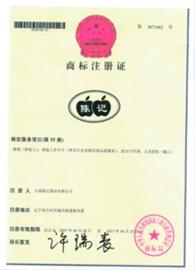
(By Luo Yanjie) Two companies with a great gap in their relative strength have been seen battling with each other over the trademark of an apple image; they are the globally known Apple Inc. and a fruit food making company in Zhuang He, a small city of China. At the end of the battle, the small company won the fight, Dalian Chenji Guopin Co., Ltd. (the “Chenji”) was supported by the authority in the dispute lasted for 5 years. The dispute was triggered by Chenji’s design, which consists two apples overlapped together, and the Chinese characters “陈记” written on them. In examining the mark, we can find the apple resembles that of Apple’s, which appears to have been bitten by someone. For this reason, Apple filed the trademark opposition with the trademark office.

READ MORE

Another iPad Like Battle for WeChat (微信) Trademark Dispute?

9090

 (By Albert Chen) In yesterday’s post, we analyzed why Tencent would confront with the trademark squatting, and mainly blamed it for the defect on the internal management. Today, we would continue our discussion, and share our opinions on how could Tencent take back or stop the first application by others.

Before the end of this year, no one would oppose “iPad battle” shall be the trademark dispute of the year, and yet with the breaking out of conflict on the trademark of “微信”, a LBS software from Tencent Inc. (the “Tencent”) and its English name is WeChat, that affirmation would be challenged.

READ MORE

All General Vocabulary Cannot Be Registered As Trademarks in China?

1101051007434

(By Luo Yanjie) Early in this year, JDB Inc., the famous herbal tea manufacturer argued with Guangzhou Pharmaceutical Company (the “GPC”) regarding ownership of the Wang Lao Ji trademark, which concluded in JDB being ordered to cease its use of the trademark. Now, JDB has begun its second battle with GPC, this time accusing GPC of infringeing the trademark “Ji Qing Shi Fen (吉庆时分).” Wanglaoji Health Industry Co. Ltd. (Guangzhou Wanglaoji Company) affiliated with GPC, recently made a statement that the State Trademark Office had accepted its application to revoke the registration of “Ji Qing Shi Fen (吉庆时分)”, the main reason being that the mark is considered generic in the sense that it is vocabulary in common use. Due to this, the State Trademark Office further advocated that it is uncertain whether there can be any exclusive right in the use of the registered mark.

READ MORE