Introduction to the 2013 China Trademark Law, Part I

(By Zhan Yi) On August 30, 2013, the Standing Committee of the National People’s Congress promulgated the Decisions of the Standing Committee of the National People’s Congress Concerning Alterations to the Trademark Law of the People’s Republic of China, which shall be implemented on May 1, 2014. Our website has already translated the Full text of 2013 China Trademark Law in a previous post, and compiled and provided a comparative version highlighting the differences between the 2001 Trademark Law and 2013 Trademark Law. Starting with today’s post, we will introduce and discuss the most important revisions and changes found in the 2013 Trademark Law. In today’s post, we will introduce the first part.

READ MORE

Why could China’s Courts Decide for Audi’s “TT” to Apply for a Trademark?

TM截图未命名

(By Luo Yanjie) Abstract: as for whether trademarks are similar, many times, it is decided on the subjective cognition of the judge. Furthermore, considering the fact of the distinctiveness of a trademark, whether the “TT” trademark has distinctiveness is still in doubt.

Automobile models are always composed of simple numbers and English letters. Sometimes manufacturers of bestselling cars once hoped to register these simple models as trademarks but all failed (for example, A6, A4, etc.). However, Audi canceled the rules handled down by the Trademark Review and Adjudication Board through administrative litigation processing, thus possibly obtaining trademark registration:

READ MORE

Why Wallet and Clothes in Different Trademark Classes Would be Taken by China Court as Similar Products?

(By Luo Yanjie) When registering trademark in China, the applicant shall first determine the classification of the trademark to be registered. Class 18 of the Classification of Goods and Services include goods such as leather and artificial leather, goods made from these materials and not included in other classes, cases, travelling bags, and umbrellas. Goods under Class 25 includes clothing, footwear, and headgear. Looking at it closely,  Class 18 is classified by its physical attribute, while Class 25 is classified by the purpose of the goods. Would the two Classes constitute similar goods for any particular product? In today’s post, a specific case would be introduced to analyze this question.

READ MORE

Does a Previously Registered Noted Trademark Influence Subsequently Registered Similar Trademarks?

Abstract

(By Luo Yanjie) In determining the similarity of two trademarks, one must take into account the common understanding among the public as to the trademark and the goods it presents (as well as the source), and the public’s comprehension of the words, pictures, designs, or a combination of all of the above. Concurrently, however, the reputation of the trademark must be taken into consideration in order to determine whether the above factors would lead to confusion as to source among the relevant consumers and market. Generally, trademarks are judged by their similarity with the appearance of another trademark; however, in the following described case, the second instance court also considered the reputation of the reference trademark and the understanding of the consumer in relation to a more comprehensive protection of a well-known brand. The significance of the case is primarily that, due to the millions of trademark applications made in China each year, even subsequently registered trademarks that are incredibly similar to those previously registered may be approved for commercial use by the China Trademark Office, due to strained and restricted resources on its part. In any case, the trademark involved in this case is a well-known one, and for this reason, the court decided that the subsequently registered mark would not be approved for use.

READ MORE

Why Did the Supreme People’s Court Changed Its Attitude towards Revoking Trademarks When It Is Unused for 3 Years

(By You Yunting) China is a heavily administrated and controlled country. If administrative approval is not obtained, business activity such as producing and selling of Alcoholic beverages, medicine, etc.,  could be ruled to be invalid by the court. According to the Trademark Law of China, once the trademark has not been used for three continuous years, it could be eliminated. There is a significant amount of people who uses their right to their trademark however, many people fail to obtain the proper administrative approval or violates administrative rules. This brings us to the issue of  whether or not such a trademark should be removed even though it has been used. For this kind of cases, we find an example in the 10 annual cases of 2011 promulgated by the Supreme People’s Court of China. In that case, the Supreme Court overturned its opinions expressed in the previous year, “Kangwang Trademark Dispute”, in which the court determined that despite a shortage of administrative approval, the using of the trademark is sufficient according to the Trademark Law. 

READ MORE

When Can a Trademark Be Applied for Following the Cancellation of A Similar Mark in China?

(By Luo Yanjie) Article 46 of the Trademark Law has regulated how long one must wait until a cancelled or revoked trademark can be reapplied for, and yet due to the complexity of the application procedures, in the process of applying, an applicant could easily be confused or mistaken.

Case Summary

On January 13, 2003, Wang Huilan applied for the registration of a design trademark, numbered 3432984, specifically for Class 18, which includes both bags and briefcases. On July 1, 2004, the Trademark Office under the State Administration of Commerce and Industry (the “Trademark Office”) issued a Notice of Trademark Application Refusal, stating that the applied trademark was similar to already registered ones, and thereby Wang Huilan’s application was refused. Dissatisfied with this result, Wang filed a review application with the Trademark Review and Adjudication Board (the “Board”). In July 2007, the reference trademark judged in Wang’s application was cancelled. On August 22, 2007, the Board refused the review application. Ever more dissatisfied with this decision, Wang filed an administrative lawsuit.

READ MORE

Analysis on Proof Requirements in Figurative Trademark Infringing Others’ Copyright Cases by China Court

360截图-3444018

— A trademark certificate cannot be taken as evidence of copyright ownership

(By Luo Yanjie) On June 27th 2002, Hua Yuan Company (hereinafter “Hua Yuan”) filed an application to revoke the disputed trademark “老人城LAORENCHENG” (hereinafter Lao Ren Cheng) pursuant to on Article 31 of the Trademark Law, with the claim that the trademark infringed upon Hua Yuan’s first rights in the mark. The disputed trademark was applied in Class 25 with registration number 1497462. During prosecution of the trademark, Hua Yuan submitted certificate of the No. 590673 trademark and No. 696935 trademark as evidence of its first rights in the mark. As indicated by the documents, the trademarks were registered before the trademark “Lao Ren Cheng.” Considering the opposition was mainly filed on the ground that Hua Yuan’s first rights had been infringed rather than due to similarity of the trademarks, the focus of this particular case depends on whether a trademark certificate may be treated as evidence of trademark ownership.

READ MORE

Why Apple Failed to Stop the Application of Apple-Trademark by Others?

20121220093547935

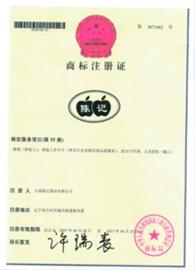
(By Luo Yanjie) Two companies with a great gap in their relative strength have been seen battling with each other over the trademark of an apple image; they are the globally known Apple Inc. and a fruit food making company in Zhuang He, a small city of China. At the end of the battle, the small company won the fight, Dalian Chenji Guopin Co., Ltd. (the “Chenji”) was supported by the authority in the dispute lasted for 5 years. The dispute was triggered by Chenji’s design, which consists two apples overlapped together, and the Chinese characters “陈记” written on them. In examining the mark, we can find the apple resembles that of Apple’s, which appears to have been bitten by someone. For this reason, Apple filed the trademark opposition with the trademark office.

READ MORE

Could Nike Get the Trademark “Liuxiang”?

(By Luo Yanjie) Recently, the lawsuit filed by Nike against China’s Trademark Review and Adjudication Board (“TRAB”) (note: the link is in Chinese) was heard in the Beijing No. 1 Intermediate People’s Court. The case was brought because TRAB refused Nike’s application to trademark Liu Xiang (刘翔) for the reason that the trademark had been registered by another company twenty six years ago, namely in July of 1986. At that time, a company named Shanghai Liuxiang Company applied for the trademark Liu Xiang Brand (刘翔牌) in the class of clothing, and the exclusive period for the use of that mark will last until 2017. Incidentally, the Liu Xiang Brand trademark happens to have the same name as the famous Chinese athlete, Liu Xiang. The case is currently being heard, but the author believes Nike has little chance of winning the case. Today’s will examine the issues involved in this case.

READ MORE

What Geographical Names Can be Registered As Trademarks in China?

It is reported that (Note: the link is in Chinese) Wakayama County of Japan recently announced that the trademark application for “Ji Zhou” (纪州) filed by a Hong Kong company on the Chinese mainland concerns a publicly well-know geographical name. The County has also filed an objection with the Chinese Trademark Office because this name is not appropriate to serve as a trademark. The report also stated that Wakayama County has been paying close attention to trademark applications in China since 2010 and has already had two objections granted against trademark applications for “Wakayama.” Today, we would like to discuss whether geographical names can be registered as trademarks:

READ MORE

Does Chinese Trademark Law Permit the Coexistence of Identical or Similar Trademarks?

Last year, the Supreme People’s Court issued the final decision in the protracted dispute between LACOSTE and CARTELO. The decision clarifies cases involving long brand history and could guide future hearings on similar disputes in courts of all levels. In the decision, LACOSTE lost the lawsuit, and no infringement was found on the part of CARTELO. In the judgment, the Court took the first steps towards establishing a system of “trademark coexistence,” which means the coexistence of similar trademarks in the same class, for use in China’s trademark cases. Today’s post will provide an analysis of the application of this system in China.

READ MORE

A Recorded High Objection to Mao Tai’s Trademark Application

By Albert Chen

According to the report, the renowned white liquor distillery Mao Tai’s application of the “Guo Jiu Mao Tai” trademark is facing a recorded huge amount of objections. Since the announcement of its preliminary examination on 20th July, it has seen totaled 95 objections to the applied 4 marks within the 3-months publication. And the objectors have been more than 40 units or individuals. For the case, we once posted an essay on its analysis: “Will Alcohol Trademarks Implying Them the State Liquor Be Registered in China?” For more details of the analysis, please check today’s post.

READ MORE

How to Decide Infringement When Conflict between Trademark and Trade Name in China?

By Luo Yanjie

As two different concepts in law, trademark plays the role as to distinguish the origin of the product or services, and the trade name is the literal expression to indicate different companies. But in the daily operation, we may see the confusion between these two concepts, and the trade name may also be used as kind of mark in business. Naturally, we see many companies choose to register their name as the trademark. Despite the similar function of them, the trademark and trade name are verified by different administrations (the mark is subject to the administration of trademark office, and the trade name is ruled by local administration of industry and commerce), but that also triggers the conflict between two objects. In today’s post, we would like to analyze the conflict occurred when trade name registered prior to the trademark by different subjects.

READ MORE

Will Alcohol Trademarks Implying Them the State Liquor Be Registered in China?

By Albert Chen:

By the latest trademark gazette of State Trademark Office of China on 20th July of 2012, “Guo Jiu Mao Tai”, which implies it the state liquor, has come through the preliminary examination and has been published. The news soon agitated the argument among the industry and academic circle, and other brewers like Feng Jiu (SSE:600809) and Luzhou Laojiao (SZSE: 000568) have all expressed their oppositions on it and planed to block the registration of “Guo Jiu Mao Tai”.

As retrieved on the state trademark website, I find it’s not the trademark’s first application. Early in 2011, the applicant China Kweichow Moutai Distillery Co., Ltd (the “Maotai Company”) tried to register the trademark, yet it was refused by the authority and the same for the follow on 5 applications. The current preliminarily approved marks are concentrated in Class 33, covering the fruit wine, Bitter, wine, aperitif, spirit, and alcohol beverage excluding beer, etc.

READ MORE

What Tencent’s Trademark Strategy Tells Us?

By You Yunting

Today, we would like to introduce how Chinese enterprises protect their brands. Months ago, the news reporting Tencent (SEHK: 700)’s QQ trademark registration in all classes, including condom, is heatedly spread among Chinese netizens. From the report, we saw the local IT giant registered more than 1, 000 trademarks in the classes to protect its well-known mark “QQ” avoiding the free-riding by others, among which the class of food, matchmaking and condom is listed. Unlike the author who criticized Tencent a muddled thinking, we prefer the applications as the company’s thoughtful and overall strategy on trademark protection. Now, here’re our conclusion on Tencent’s experience and the analysis:

READ MORE