Does 360’ s QQ Guard Constitute Unfair Competition against Tencent? Part II

u6610322904267603108fm21gp0_副本

 (By Luo Yanjie) Today, we would give our opinions on 360’s unfair competition ruling.

Lawyer’s Comments:

The case is a part of the “3Q battle”, and has garnered wide attention in the society. Both parties in the case have submitted large amounts of evidences to support their claims. As showed in the judgment, the case seems to be very complicated. Moreover, because 360 provided the service for free, 360’s lose in the case has gained the sympathy of Internet users. However, from a legal standpoint, this case is not difficult. The ruling against 360 was proper for the following reasons:

READ MORE

Does 360’ s QQ Guard Constitute Unfair Competition against Tencent? Part I

u=661032290,4267603108&fm=21&gp=0_副本

(By Luo Yanjie) Abstract: Although online ads or pop-up ads may make you feel uncomfortable, that is a profit model utilized by free software like Tencent’s QQ, the popular online messaging software. But, when the 360 Guard software removed QQ’s ads, despite that being deemed reasonable in the eyes of some netizens, it would no doubt damage Tencent’s legal rights as QQ’s developer and operator. The author believes that it was proper for the court to determine that 360 had engaged in unfair competition practices. Today we’d like to introduce a bit about this case to our readers, beginning with today’s post and extending into tomorrow’s.  

READ MORE

Whether using the Name of Another’s Work Constitutes Copyright Infringement or Unfair Competition

Abstract: The Copyright Law and the Anti Unfair Competition Law supplement each other, but they also compete with each other. In the case introduced in this article, the first instance court denied the copyright infringement claim, but confirmed liability under the principles of unfair competition. This seems to be logically contradictory, and the court in the second instance corrected this glaring mistake.

(By Luo Yanjie Unfair competition refers to an operator’s misconduct that violates principles of fairness, justice, and good faith; it is also considered any behavior that violates widely adopted commercial ethics. As for copyright, as a kind of exclusive right, it mainly focuses on granting the right holder a monopolistic right in conformance with the law, and thereby grants the right holder monopoly rights as well as a competitive advantage through the exploitation of his/her own intellectual works. In this particular aspect, it shares a similar purpose with the Anti Unfair Competition Law. For this reason, the Copyright Law and the Anti Unfair Competition Law supplement each other, yet on the other hand they also compete with each other.

READ MORE

Why No Solution to “Box Office Stealing” under the Current Laws in China?

728da9773912b31bf66a46478618367adbb44aed2e73c966

(By You Yunting) Abstract: the author was interviewed: is “box office stealing” mainly a result of a defect in GAPP’s legislature (the General Administration of Press and Publication) and SARFT (State Administration of Radio, Film and Television)? For this issue, the author’s opinion is that the administration and governance over the film industry is the real reason this problem arises, because there is really no way this would happen otherwise, and its unlikely those right holders would try to protect their rights, making the aggressive parties even more aggressive. Thus we would only see the bad drives out the good.

READ MORE

The Shanghai Branch of CIETAC Changed Its Name

Today, we noticed an announcement published on the website of the Shanghai Branch of the China International Economic and Trade Arbitration Commission stating that it has changed its name to the Shanghai International Economic and Trade Arbitration Commission (the “Shanghai Commission”). At the same time, it will begin to use the name of Shanghai International Arbitration Center. Additionally, starting on May 1, 2013, the Shanghai Commission will begin using new Arbitration Rules and a new arbitrator name list.

READ MORE

How to Determine the Recognition Level of Products in Unfair Competition Disputes in China, II

金莎vs费雷罗

Comments on the unfair competition case between Ferrero and Jinsha

Today, we will share our opinions on the following issues related to the case introduced in yesterday’s post: the scope of name recognition, whether a product’s packaging can refer to the products of others, and protection over product packaging through the use of trademarks.

Lawyer comments:

The interpretations of the judges in the first and second instance courts and the review court help us better understand the following issues involved in unfair competition cases:

READ MORE

How to Determine the Recognition Level of Products in Unfair Competition Disputes in China, I

金莎vs费雷罗

Comments on the unfair competition case between Ferrero and Jinsha

Today and tomorrow, we will analyze several issues raised by the Ferrero and Jinsha unfair competition
case. Namely: the scope of name recognition, whether a product’s packaging can refer to the products of others, and protection over product packaging through trademark protection. Today, we will briefly introduce the case facts and the opinions held by the deciding courts.

Case summary:

Ferrero Company registered the trademark “FERRERO ROCHER” in China in 1986 and its FERRERO ROCHER chocolate (“Ferrero Chocolate”) entered the Chinese market in 1988. The Ferrero Chocolate packaging has the following features: 1) gold, ball-shaped foil wrapping; 2) the “FERRERO ROCHER” trademark printed as a decoration within an oval on the gold foil; 3) each chocolate wrapped in gold foil is padded with additional brown paper; 4) outer packaging is made of transparent plastic, so that the inner gold-wrapped balls can be seen from the outside; and 5) a red ribbon-like decoration printed on the trademark of the chocolate.

READ MORE

China’s New Civil Procedure Law behind the Application for an Injunction of Guangzhou Pharmaceutical Company

360截图-27985783

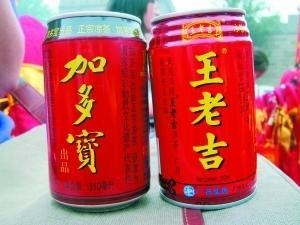
(By Albert Chen) Guangzhou Pharmaceutical Company’s lawsuit (GPC) against Jia Duo Bao (JDB) for false advertising was heard in January of this year at the Guangzhou Intermediate People’s Court. In addition to the arguments held by each party regarding the false advertising, they also disputed whether an injunction could be issued as applied to GPC. Ultimately, the Guangzhou Intermediate People’s Court approved the injunction, basing its decision on findings that  JDB had exploited GPC through false advertising, thereby confusing and misleading consumers. The Court  then prohibited JDB from making advertisements with claims that GPC’s vitamin drink “Wang Lao Ji” had changed its name to JDB, or any other similar slogans indicating that somehow GPC’s Wang Lao Ji product was the same as JDB’s as the result of a name change.

READ MORE

Do All Minimum Price Limits Violate the Anti-trust Law in China?

J&J

(By You Yunting) In the post, “The Legal Sense of the Punishment over the Vertical Monopoly of Mao Tai and Wu Liang Ye By NDRC,” which was posted several days ago, we described China’s first case on vertical pricing agreements (a vertical monopoly contract refers to a contract a monopolistic business signs with its business partner, which limits pricing or contains other monopolistic content). The application of Article 14 of the Anti Monopoly Law adopted by the court in that case was different from the application adopted by the China National Development and Reform Committee. We have found and studied the written judgment for that case, which is now in its second instance. Although according to the Civil Procedure Law, the judgment of the first instance has not yet come into effect due to the appeal, some of the main points of the decision are worth looking at. Therefore, we would like to share our opinions on it with our subscribers.

READ MORE

Administrative Warning Issued to 360.cn by Beijing Administration of Industry and Commerce

20130213-周三

 (By You Yunting) Recently, the Beijing Municipal Administration of Industry and Commerce (“Administration”) published on its official Weibo that the Beijing Administration and Xicheng Administration of Industry and Commerce made an appointment with the chief of Beijing’s Qihoo Co. (“Qihoo”), and issued an administrative warning against company conduct, claiming violations of unfair competition laws and regulations related to its “360 Safeguard” for use in computer internet browsers.

READ MORE

The Court Ultimately Supported Guangzhou Pharmaceutical Holding Company’s Application for an Injunction

201302011-周一

(BY Albert Chen  ) Guangzhou Pharmaceutical Holding Company (“GPHC”) is the holder of the王老吉 (the “Wang Lao Ji”) trademark in mainland China. In 2000, it licensed Hongdao Group, a Hong Kong admitted company, to use the trademark. After Hongdao Group used the trademark and caused it to develop a definite business reputation, however, a dispute broke out between the two parties over the right to use the Wang Lao Ji trademark.

In the first round of the fighting between the parties, GPHC used arbitration with CIETAC to cancel the supplementary agreements signed between two parties in 2002 and 2003 based upon the fact that the agreements were executed under commercial bribery. This website has discussed the implementation problems arising in that case. After that, the subsidiary of Hongdao Group that had sold Wang Lao Ji, Jia Duo Bao (“JDB”) began to sell its herbal tea under the brand name 加多宝(the “JDB”) Additionally, JDB used disputed slogans, such as “Wang Lao Ji now calls itself JDB,” “China’s top selling red can herbal tea now call itself JDB.” Claiming that such slogans constituted false advertising or unfair competition GPHC filed for an injunction with the Guangzhou Intermediate People’s Court and demanded an immediate halt to such advertisements.

READ MORE

“Do Not Hire Agreements” among Google, Intel, Apple and Other Tech Firms Violates Chinese Laws?

u=192487636,1824686138&fm=23&gp=0_副本

(By You Yunting) As reported, the CEOs of tech giants Apple, Intel, and Google might be forced to go to court to account for mutual unwritten agreements about not soliciting each other’s workers for employment. These cases started due to the dissatisfaction of relevant employees, who believed that such “do not hire agreements” damaged that legal rights and interests. The news has also revealed emails from former Apple CEO, Steve Jobs, threatening Palm and Google and demanding that they stop using headhunters to obtain the email addresses of Apple employees. This news also raised the concerns within the industry.

READ MORE

Is Tencent’s 51Buy’s “Higher Price Reimbursement” Strategy against 360buy Illegal?

360截图-29354723_副本

(By You Yunting) As reported by the media, the e-commerce site 51buy.com has instituted a so-called “higher price compensation” strategy: if clients of 51buy.com, an affiliate of Tencent, find a lower price for an item on 360.com, then 51buy.com will refund the price difference to the client as credits. According to 360buy.com, however, this action violates the Anti-unfair Competition Law and relevant commercial ethics. 360buy.com therefore sent a warning letter to 51buy.com. In reply, 51buy.com used its Weibo to state that the activity is legitimate and will continue.

READ MORE

Will the Wang Lao Ji Brand Holder’s Litigation Injunction Application Against Jia Duo Bao Be Approved?

u=1733134819,3834264073&fm=23&gp=0

(By Albert Chen) The hearing in the false advertising dispute between Guangzhou Pharmaceutical Holding Company (“GPHC”) (SSE: 600332) and Jia Duo Bao (“JDB”) was held in January of 2013 in the Guangzhou Intermediate People’s Court. In addition to the arguments over false advertising, the application for a litigation injunction has been hotly debated. Today, we would like to introduce you to the injunction, which is called “preliminary execution” in China’s Civil Procedure Law.

READ MORE

Is It Lawful for News Websites to Demand Payment of Fees for Google and Baidu Searches

(By You Yunting) According to a report in the New York Times, as also reported by some European websites, Google is recompiling its searched news results as a news page. It may be said that this method could infringe the copyright of the original publishing websites and, as a result, Google should pay fees for the websites. This idea has received support from both the French and German Governments, yet Google believes that its behavior fully conforms to the law, and thus should not have to pay any fees. In China, the main search engines Google and Baidu provide this kind of news search service, and today’s post will discuss whether it is lawful for news websites to claim fees from the search engines.

READ MORE