How Does the US Government Determine Whether the Parallel Import of Trademarks Is Legal?

Record III of the Visit to New York

(By You Yunting) From late of March, the author visited the US at the invitation of the US government in order to get a better understanding of how the US IPR system operates. On Monday of the second week there, the author visited Wiggin and Dana LLP and Pryor Cashman LLP, two New York law firms. The law offices visited on that day were all in New York’s central business district and had spacious offices, with luxurious decorations, and the view outside was all of beautiful river scenery or of the Apple Countdown. The following is the record of that day’s visit.

READ MORE

How Does the Federal Trade Commission Decide Whether Intellectual Property Licenses Violate Anti-trust Laws?

Day Five of the US Visit II

In late March, the author had the opportunity to make a journey to the United States at the invitation of the U.S. government in order to better understand how the US intellectual system operates. On the fifth day of the visit, the author went to the Federal Trade Commission (the “FTC”), and the following is a brief record of his visit there.

The FTC is the administration in charge of investigating and taking action against unfair competition and anti trust in the US. During the visit, FTC officials showed us a map showing that as of 1900, only the US and Canada had enacted competition laws, including unfair competition law and the anti trust law. Later by 1960, Sweden, France, and Japan passed legislation on competition. By 1980, many countries in Europe and South America passed competition laws, as well as Australia, India, Thailand, and South Africa. By 2012, almost all states of the world had laws in that field, except for a few African countries.

READ MORE

What Chinese Intellectual Property Legal Issues Are American Companies Dissatisfied With?

Day three of the visit to the United States

(By You Yunting) Beginning at the end of this March, on the invitation of the US government, I visited America with the goal of understanding its IPR system. On my third day in the US, I visited the Pharmaceutical Research and Manufacturers of America (“PhRMA”), the United States-China Business Council (“USCBC”), the United States Patent and Trademark Office (“USPTO”), and the East Asia Bureau of the US Department of State. The following is the brief record of my meetings on that day.

READ MORE

How does the U.S. Government Guide Companies Registering IPR in China?

(By You Yunting) This March, at the invitation of the U.S. government, Mr. You Yunting, the founder of Bridge IP Commentary began his journey to the United States. The main purpose of this visit was to better understand the system of intellectual property rights in the United States. Mr. You would like to share with our readers his experiences there in several posts here on our website. Of course, the content of the posts may not be truly comprehensive or strictly accurate; that being said, if you find any mistakes or comments that can be corrected or improved upon, please let us know. We encourage more dialogue with the IPR community and welcome all constructive commentary. The following is the first post in a series of Mr. You’s visit to the United States: 

READ MORE

How to Determine the Recognition Level of Products in Unfair Competition Disputes in China, II

金莎vs费雷罗

Comments on the unfair competition case between Ferrero and Jinsha

Today, we will share our opinions on the following issues related to the case introduced in yesterday’s post: the scope of name recognition, whether a product’s packaging can refer to the products of others, and protection over product packaging through the use of trademarks.

Lawyer comments:

The interpretations of the judges in the first and second instance courts and the review court help us better understand the following issues involved in unfair competition cases:

READ MORE

How to Determine the Recognition Level of Products in Unfair Competition Disputes in China, I

金莎vs费雷罗

Comments on the unfair competition case between Ferrero and Jinsha

Today and tomorrow, we will analyze several issues raised by the Ferrero and Jinsha unfair competition
case. Namely: the scope of name recognition, whether a product’s packaging can refer to the products of others, and protection over product packaging through trademark protection. Today, we will briefly introduce the case facts and the opinions held by the deciding courts.

Case summary:

Ferrero Company registered the trademark “FERRERO ROCHER” in China in 1986 and its FERRERO ROCHER chocolate (“Ferrero Chocolate”) entered the Chinese market in 1988. The Ferrero Chocolate packaging has the following features: 1) gold, ball-shaped foil wrapping; 2) the “FERRERO ROCHER” trademark printed as a decoration within an oval on the gold foil; 3) each chocolate wrapped in gold foil is padded with additional brown paper; 4) outer packaging is made of transparent plastic, so that the inner gold-wrapped balls can be seen from the outside; and 5) a red ribbon-like decoration printed on the trademark of the chocolate.

READ MORE

Whether Sales Agents Are Included in the Trademark Agent Squatting Articles of China Trademark Law?

360截图-12690338

(By Luo Yanjie) Due to the late establishment of the relevant law and system, the trademark squatting situation in China is quite serious, and much squatting is conducted by trademark agents or partners. Article 15 of the Trademark Law provides that:

“Where any agent or representative registers, in its or his own name, the trademark of a person for whom it or he acts as the agent or representative without authorization therefrom, and the latter raises opposition, the trademark shall be rejected for registration and prohibited from use.”

READ MORE

Why Pfizer Did Not Win the Blue Pill Trademark Infringement Case?

360截图20130209162739984

(By Luo Yanjie) Pfizer is the holder of a blue, diamond-shaped mark (the “Pfizer trademark,” number: 3110761). The trademark was approved in Class 5 for pharmaceutical preparation, medicines made for human consumption, antibiotics, medical nutrition supplements, cleaning agents, and veterinary preparation. The registration period for the trademark commenced on May 28, 2003 and will expire on May 27, 2013.

On July 21, 2005, Pfizer representatives purchased a box of medicine priced at RMB 50 yuan from the New Concept Company. The medicine was mainly intended to cure “erectile dysfunction.” The front and back cover of the package contained both “Viagra”[1] and “TM,” which was underlined and accompanied by the diamond image. The manufacturer was printed as “Jiangsu Lian Huan Pharmaceutical Co., Ltd” (“Lian Huan”) dated on April 14, 2005. The opaque inner packaging also contained the words “Viagra” and “TM,” as well as the manufacturer “Lian Huan.” The packaging of the medicine was also diamond-shaped, in accordance with the shape of the tablet. The medicine itself was light blue in color, diamond compass shaped, and contained the words “Viagra” and “TM.” Pfizer believes that these products constituted three-dimensional trademark infringement and thereby sued the manufacturer and seller.

READ MORE

Analysis on Proof Requirements in Figurative Trademark Infringing Others’ Copyright Cases by China Court

360截图-3444018

— A trademark certificate cannot be taken as evidence of copyright ownership

(By Luo Yanjie) On June 27th 2002, Hua Yuan Company (hereinafter “Hua Yuan”) filed an application to revoke the disputed trademark “老人城LAORENCHENG” (hereinafter Lao Ren Cheng) pursuant to on Article 31 of the Trademark Law, with the claim that the trademark infringed upon Hua Yuan’s first rights in the mark. The disputed trademark was applied in Class 25 with registration number 1497462. During prosecution of the trademark, Hua Yuan submitted certificate of the No. 590673 trademark and No. 696935 trademark as evidence of its first rights in the mark. As indicated by the documents, the trademarks were registered before the trademark “Lao Ren Cheng.” Considering the opposition was mainly filed on the ground that Hua Yuan’s first rights had been infringed rather than due to similarity of the trademarks, the focus of this particular case depends on whether a trademark certificate may be treated as evidence of trademark ownership.

READ MORE

“Do Not Hire Agreements” among Google, Intel, Apple and Other Tech Firms Violates Chinese Laws?

u=192487636,1824686138&fm=23&gp=0_副本

(By You Yunting) As reported, the CEOs of tech giants Apple, Intel, and Google might be forced to go to court to account for mutual unwritten agreements about not soliciting each other’s workers for employment. These cases started due to the dissatisfaction of relevant employees, who believed that such “do not hire agreements” damaged that legal rights and interests. The news has also revealed emails from former Apple CEO, Steve Jobs, threatening Palm and Google and demanding that they stop using headhunters to obtain the email addresses of Apple employees. This news also raised the concerns within the industry.

READ MORE

Summary of Administrative Case Verdict on “Britney Spears” Trademark Squatting (I)

(By Luo Yanjie) In past posts, we have introduced you to the trademark squatting of Yi Jian Lian, which is the name of a well-known basketball player in China. Today, we are going to show you another similar decision:

On 20th November 2000, Suzhou Yisheng Fashion Co., Ltd. (the “Yisheng Company”) applied for the trademark “布兰妮Britney” in Class 25, covering clothing articles, such as shirts, suits, coats, overcoats, skirts, t-shirts, wind coats and down jackets. The Trademark Office of the State Administration of Industry and Commerce (the “Trademark Office”), after conducting a preliminary examination, published the application on its No. 807 Trademark Announcement. Britney Spears filed an opposition to the Trademark Office within the statutory period.

READ MORE

Summary of the Administrative Case Verdict in the Yi Jian Lian Trademark Squatting Case

09bb4f3dea0808a73c6d974e

We are often consulted by clients asking what standards are used to determine trademark squatting, and why was malicious squatting found against Sony Ericson and HERMES but denied against COCA COLA or LANDROVER? Furthermore, once a trademark application has damaged anothers’ name right, copyright, or trade name right, what standards do courts use to determine infringement. Under the Trademark Law, what measures can be taken to protect the trademarks of well-known fictional figures, such as 007 or Harry Potter?

READ MORE

Is OEM the Safe Harbor for Trademark Infringement in China?

(By Albert Chen) Whether original equipment manufacturing (OEM) can lead to trademark infringement has been long argued. The opinions on it may vary among the judicial organs in various regions and between the judicial department and various administrative departments. A Shanghai court once confirmed that a processing party should not assume infringement liability in the case Shenda vs. Jolida. Following this decision, some began to advocate the idea that OEMs could be considered a safe harbor in the seas of trademark infringement. Can that point of view reasonably be established in China? In today’s post, we would like to introduce you to Chinese cases and popular opinions in judicial circles concerning OEMs and trademark infringement.

READ MORE

Why Apple Failed to Stop the Application of Apple-Trademark by Others?

20121220093547935

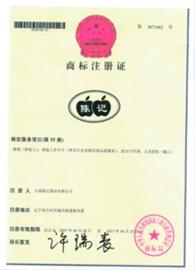
(By Luo Yanjie) Two companies with a great gap in their relative strength have been seen battling with each other over the trademark of an apple image; they are the globally known Apple Inc. and a fruit food making company in Zhuang He, a small city of China. At the end of the battle, the small company won the fight, Dalian Chenji Guopin Co., Ltd. (the “Chenji”) was supported by the authority in the dispute lasted for 5 years. The dispute was triggered by Chenji’s design, which consists two apples overlapped together, and the Chinese characters “陈记” written on them. In examining the mark, we can find the apple resembles that of Apple’s, which appears to have been bitten by someone. For this reason, Apple filed the trademark opposition with the trademark office.

READ MORE

Another iPad Like Battle for WeChat (微信) Trademark Dispute?

9090

 (By Albert Chen) In yesterday’s post, we analyzed why Tencent would confront with the trademark squatting, and mainly blamed it for the defect on the internal management. Today, we would continue our discussion, and share our opinions on how could Tencent take back or stop the first application by others.

Before the end of this year, no one would oppose “iPad battle” shall be the trademark dispute of the year, and yet with the breaking out of conflict on the trademark of “微信”, a LBS software from Tencent Inc. (the “Tencent”) and its English name is WeChat, that affirmation would be challenged.

READ MORE