Why the Calligraphic Character’s Copyright Failed to Defeat Trademark Right?
TM截图未命名

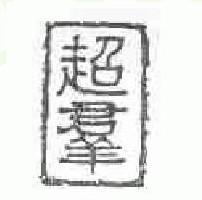
Abstract: To determine whether a prior copyright could defend itself against a later trademark right, whether the foundation of copyright exists should be the first enquiry. That is to say, it is worthy of discussion whether an author receives copyright for a single calligraphic character in calligraphic works.

Pursuant to China’s laws and regulations, prior ownership of copyright in a work is a defense against a later trademark right. In determining whether a prior copyright can defend itself against a later trademark right, however, the first matter to be decided is whether the foundation of copyright exists. That is, whether the author obtains copyright for a single calligraphic character in calligraphic works. In today’s post, we will introduce and discuss a typical case as follows:

READ MORE

Why did the Trademark Office Reject Audi’s “A4” Trademark Application?

(By Luo Yanjie) The Audi A4, A6 and other series of Audi cars are popular classic cars in China. However, Audi’s trademark applications for the A4, A6 etc., are always rejected. In today’s post, we will introduce a typical case regarding these trademarks, followed by our analysis for our readers.

Introduction to the Case:

In January 2007, Audi China filed an application with the State Trademark Office to register its “A4” mark (the “disputed trademark”). The State Trademark Office upheld that “A4”, a common vehicle model, lacked distinctiveness. Based on this finding, the Trademark Office rejected Audi’s application. After Audi applied for a trademark reexamination with the Trademark Review and Adjudication Board (the “TRAB”), the TRAB held that, the disputed trademark comprised of the English Letter “A” and Arabic numeral “4” was so simple that it would be difficult to distinguish the function of the source of goods; in addition, it lacked distinctiveness, a requirement pursuant to the Trademark Law. Again, based on these findings, the TRAB rejected Audi’s application for reexamination.

READ MORE

Introduction to the 2013 Trademark Law, Part 2

(By Zhan Yi) On August 30, 2013, the Standing Committee of the National People’s Congress promulgated Decisions of the Standing Committee of the National People’s Congress Concerning Alterations to the Trademark Law of the People’s Republic of China, which shall be implemented on May 1, 2014. Our website previously translated the Full text of 2013 China Trademark Law, we provided a Comparison Version highlighting the differences between the 2001 and 2013 Trademark Law. In today’s post, our website will introduce and discuss the revised content within the 2013 Trademark Law. Without further ado, we will now move on to the second part of our examination of the 2013 Trademark Law.

READ MORE

Introduction to the 2013 China Trademark Law, Part I

(By Zhan Yi) On August 30, 2013, the Standing Committee of the National People’s Congress promulgated the Decisions of the Standing Committee of the National People’s Congress Concerning Alterations to the Trademark Law of the People’s Republic of China, which shall be implemented on May 1, 2014. Our website has already translated the Full text of 2013 China Trademark Law in a previous post, and compiled and provided a comparative version highlighting the differences between the 2001 Trademark Law and 2013 Trademark Law. Starting with today’s post, we will introduce and discuss the most important revisions and changes found in the 2013 Trademark Law. In today’s post, we will introduce the first part.

READ MORE

Why did the Court not Approve the Trademark Coexistence Agreement?

图片1

By Luo YanjieAbstract: Current laws have no provisions as to whether a trademark coexistence agreement made by and between the trademark holder with a prior trademark and the trademark applicant with a latter trademark could impact the validity of the latter trademark. Under such circumstances, the courts shall consider and decide whether to approve the above-mentioned agreement. Where litigation concerning trademark ownership affirmation takes the form of an administrative suit, the courts shall, within the scope of the Trademark Review and Adjudication Board’s (the “TRAB”) administrative acts, decide whether its administrative acts are valid and rational.

READ MORE

Why could China’s Courts Decide for Audi’s “TT” to Apply for a Trademark?

TM截图未命名

(By Luo Yanjie) Abstract: as for whether trademarks are similar, many times, it is decided on the subjective cognition of the judge. Furthermore, considering the fact of the distinctiveness of a trademark, whether the “TT” trademark has distinctiveness is still in doubt.

Automobile models are always composed of simple numbers and English letters. Sometimes manufacturers of bestselling cars once hoped to register these simple models as trademarks but all failed (for example, A6, A4, etc.). However, Audi canceled the rules handled down by the Trademark Review and Adjudication Board through administrative litigation processing, thus possibly obtaining trademark registration:

READ MORE

Infringing Goods shall not be Determined as Well-Known Goods

图片1

Abstract: Under the circumstances of prior trademark rights on the same goods, determining similar trade name used by another person as the special name belonging to a well-known commodity shall be limited. Furthermore, the courts shall necessarily review the ownership of prior trademark as the fact of a case.

(By Luo Yanjie) The special name belonging to a well-known commodity is a protective approach for an unregistered trademark. In particular, the special name shall have no severability itself; otherwise, it shall be limited. In today’s post, we will introduce a case with this element with the following analysis:

READ MORE

Why Procter &Gamble’s “Pantene” Trademark cannot Obtain Cross-Protection?

图片1

(By Luo Yanjie) Abstract: Only if another trademark would “mislead the public and injure the interests of the registrant of a well-known trademark, the well-known trademark could obtain “across protection”. The court shall apply on leniency protective conditions of “injure the interests of the registrant of a well-known trademark” to cross-protection for well-known trademark.

Generally speaking, the well-known trademark can get the trademark cross protection, in particular, the “cross-category” does not mean that the well-known trademark can obtain only related categories’ protection , not all categories. A case in our today’s post is about a well-known trademark failure to get the cross protection sharing with readers as follows,

READ MORE

Full text of 2013 China Trademark Law

Notice: On August 30, 2013, China issued a new revision of Trademark Law which will come into force on May 1, 2014. We spent a week to translates the new revision of the Trademark Law into English and post it today. If any one needs to reprint our translated revision on web, please note the following content on the reprint page: This law is translated by Bridge IP Law Commentary http://www.chinaiplawyer.com.

                  Trademark Law of the People’s Republic of China

   ( Adopted at the 24th Session of the Standing Committee of the Fifth National People ‘s Congress on August 23, 1982, as amended according to the “Decision on the Revision of the Trademark Law of the People’s Republic of China”  adopted at the 30th Session of the Standing Committee  of the Seventh National People’s Congress on February 22, 1993, and  the “Decision on the Revision of the Trademark Law of the People’s Republic of China” adopted at the 24th Session of  the Standing Committee of the Ninth National People’s’ Congress on October 27 2001, and amended for the third time according to the “Decision on the Revision of the Trademark Law of the People’s Republic of China” adopted at the 4th Session of  the Standing Committee of the Twelfth National People’s’ Congress on August 30, 2013 )

READ MORE

Trademark Law of the People’s Republic of China (2013, Comparison Version)

Noctie: On August 30, 2013, China issued a new revision of Trademark Law which will come into force on May 1, 2014. We spent a week to translates the new revision of the Trademark Law into English and post it today. If any one needs to reprint our translated revision on web, please note the following content on the reprint page: This law is translated by Bridge IP Law Commentary http://www.chinaiplawyer.com.

To help foreign friends better understanding of Chinese laws, today we would first publish a comparison of different versions between the 2001 version and the 2013 version.

READ MORE

An Unregistered Trademark can be Licensed to Another Party for a Fee

图片1

Abstract: An unregistered trademark may lawfully be licensed to another person. If any third party had registered the trademark, the licensor’s actions will constitute a breach of license contract. Except where the licensor has committed obvious fraud, the validity and effectiveness of such a license contract upon unregistered trademarks cannot be denied.

(By Luo Yanjie) Generally, a trademark in a trademark license should be registered before it is licensed to any other party. However, in today’s post, we will discuss a particular case there the trademark licensed was unregistered at the time the license was concluded. After being heard by two courts and the Supreme Court, such a trademark license contract was ruled to be valid. The following is our analysis.

READ MORE

Does Using “Counterfeit Goods” Constitute Trademark Infringement?

1

Abstract: generally, consumers’ acts of purchasing infringing goods are not considered to constitute trademark infringement. However, some limits shall be given by laws and regulations to those that intend to manufacture and sell infringing goods to damage a trademark holder’s legitimate rights and interests. Based on such analysis, we don’t fully agree with the Chinese court’s decision in today’s post.

(By You Yunting) Pursuant to the Trademark Law, infringement refers to “manufacturing and selling” goods or services of a registered trademark without authorization, but does not include consumers’ acts of purchasing and using infringing goods or services. If laws entirely indulge consumers’ infringements, it is not entirely effective in protecting a trademark holder’s legitimate rights and interests. In today’s post, we will discuss a typical case evidencing such legal limitations. Here is our analysis:

READ MORE

Can Prior Rights in a Business Name Counterfeit With a Subsequent Trademark Right?

Abstract: trademark holder is not necessarily entitled to prevent others from using its trademark into a business name because operation method needs to be judged. On the contrary, consideration upon prior right of business name does not just depend on first registration but on operation methods.

(By Luo Yanjie)Using another’s registered trademark as a business name is a common phenomenon of copycat brand names in China. In today’s post we would like to introduce a typical case to you. Relying on the fact that the business name “凯伦 Kanren” was registered earlier than that of the trademark, the court determined the defendant did not infringe upon the exclusive rights in the trademark. In the author’s opinion, the ratio decidendi is worth further discussion:

READ MORE

Why did Chinese Courts Reject Perfetti’s Counterclaim for Unfair Competition?

图片1

(By You Yunting) Perfetti Van Melle Confectionery (China) Co., Ltd. (“Perfetti”) has a well-known candy named Alpenliebe, whose slogan is “浓浓奶香情 Nong Nong Nai Xiang Qing”. “浓浓 Nong Nong” refers to a strong scent, while “浓浓奶香情 Nong Nong Nai Xiang Qing” in English refers to a “strong milk taste,” i.e., the candy is notable for its rather strong milky flavor. A Zhejiang-based company owned the “浓浓 Nong Nong” trademark under the classification for candies, and filed a lawsuit accusing Perfetti of infringement and unfair competition for its use of that slogan. In today’s post, we will introduce relevant legislation on substantiality and procedure in this particular case.

READ MORE

Fair Use of a Registered Trademark does not Constitute Infringement

Abstract: fair use of a registered trademark does not constitute infringement, but users shall both have no intent to infringe and accord with the objective facts. The court facing those cases shall apply  Trademark Law to consider the original intention of Trademark Law instead of applying a rigid formula to determine that the infringement shall rely on “whether the results cause confusion”.

(By Luo Yanjie) Generally speaking, using a registered trademark without permission constitutes trademark infringement. However, a few exceptions to the general rule still exist. For example, in today’s post a typical case will be introduced.

READ MORE