Logic and Practical Analysis of Foreign Investment Facilitation in the Shanghai FTZ

1

(By Gong Lier) The China (Shanghai) pilot free trade zone (hereafter called ‘the free trade zone’) was officially launched in Waigaoqiao, Shanghai on 29th Sept. 2013. Attention should be paid to the news that the, i.e., the ‘Negative List’, of the free trade zone was issued at midnight on the same day, on which the five Shanghai municipal governmental rules were also implemented one after another, including the China (Shanghai) Pilot Free Trade Zone Administrative Rules (No.7 municipal government’s order) (hereafter called ‘the Free Trade Zone Administrative Rules’), the China (Shanghai) Pilot Free Trade Zone Foreign Investors’ Funded Projects Filing Rules (H.F.F.(2013) No.71) (hereafter called ‘the Foreign Investors’ Funded Projects Filing Rules’), the China (Shanghai) Pilot Free Trade Zone Overseas Investment Projects Filing Rules (H.F.F.(2013) No.72) (hereafter called ‘the Overseas Projects Filing Rules’), the China (Shanghai) Pilot Free Trade Zone Foreign Investors’ Funded Enterprises Filing Rules (H.F.F.(2013) No.73) (hereafter called ‘the Foreign Investors’ Funded Enterprises Filing Rules’), and the China (Shanghai) Pilot Free Trade Zone Overseas Invested and Incorporated Enterprises Filing Rules (H.F.F.(2013) No.74) (hereafter called ‘the Overseas Invested and Incorporated Enterprises Filing Rules’).

READ MORE

The Establishment Procedure of Foreign-Capital Enterprises in Shanghai FTZ

(By Bai Lituan) On August 30, 2013, the Standing Committee of the National People’s Congress enacted the Decision of the Standing Committee of the National People’s Congress on Authorizing the State Council to Temporarily.

Adjust the Administrative Examination and Approval of Relevant Laws in China (Shanghai) Free Trade Zone (the “DESIVISION”). The DESIVISION authorizes the State Council to temporarily adjust about 11 administration examinations and approval of the establishment and merger of foreign-capital enterprises including the wholly foreign-owned enterprises, Sino-foreign cooperative joint venture and Sino-foreign equity joint ventures in the Shanghai Pilot Free Trade Zone (the “FTZ”). Earlier reports once said that it would temporarily suspend the implementation of the Law on Wholly Foreign-Owned Enterprises, the Law on Sino-Foreign Cooperative Joint Ventures and the Law on Sino-Foreign Equity Joint Ventures in the FTZ. In effect, those three laws involve the establishment, business structure, foreign exchange management, labor and personnel, finance and accounting, dissolution and liquidation, etc. The DESIVION of the National People’s Congress just temporarily suspends 11 administration approvals and changes them into filling administration. The Law on Wholly Foreign-Owned Enterprises, the Law on Sino-Foreign Cooperative Joint Ventures and the Law on Sino-Foreign Equity Joint Ventures will still be enforced in the FTZ and be temporarily adjusted.

READ MORE

Why did the “Gatekeeper” of the Capital Market Fail to Fulfill its Duties?

(By Yu Zhiyuan and Bai Lituan) In the capital market, agency institutions’ participation greatly reduces the degree of information asymmetry of market subjects, and plays a significant role in the capital market; thus, the agency institutions and their professionals are named by the industry as the “gatekeepers” of the capital market. Ever since the Enron Corporation scandal became public and the Sarbanes-Oxley Act (SOA) was published, in order to better protect the interests of public investors, all countries are attempting to apply new approaches to security supervision. Thus far, enhancing the gatekeepers’ obligations is one of the ways to realize investor protection. Recently, fraudulent securities issuances and severe distortions of information disclosure are occurring frequently in China’s capital market, and this has a direct causal relationship with the gatekeepers’ mechanism failure.

READ MORE

Introduction to the New Laws and Policies in the Shanghai Free Trade Zone

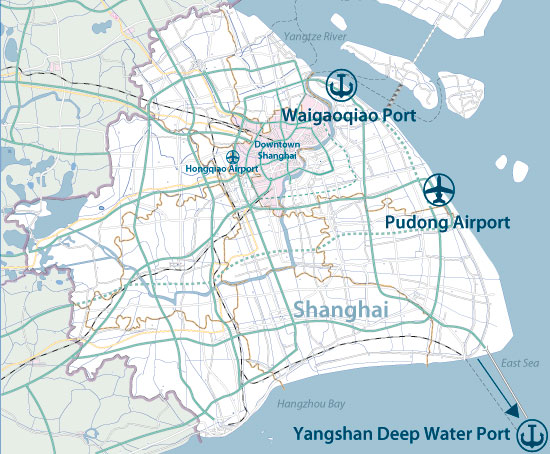
SH-map_Yangshan-Deep-Water-Port_Pudong-Air_Waigaoqiao-Port_550pix

(By Dr. Qiao Wenbao) On August 22, 2013, the State Council officially approved the establishment of the China (Shanghai) Free Trade Test Zone (the “FTZ”). Compared with regular domestic bonded zones, export-processing zones, and the Qianhai Bay economic zone previously approved, the FTZ is of profound significance upon the degree of openness and the influence of China’s development in the future.

The FTZ occupies an area of 28.78 square kilometers, including the Yangshan Free Trade Port Area, the Waigaoqiao Free Trade Zone, Waigaoqiao Free Trade Logistics Park, and the Shanghai Pudong Airport Comprehensive Free Trade Zone. The FTZ, centered on the Waigaoqiao Free Trade Zone and combined with Yangshan Free Trade Port Area and Shanghai Pudong Airport Comprehensive Free Trade Zone, is quickly becoming the new experimental field in China’s economy, promoting the development of Shanghai’s financial, trade and shipping center.

READ MORE

The Exposure Legal Defects of Chinese Crackdown on Online Rumors

(By You Yunting) Recently, Chinese governments have cracked down on the spreading of rumors online, and have arrested some web users for allegedly fabricating or disseminating online rumors. A lot of netizens have voiced their objections that this crackdown suppressed the “proper freedom of speech.” In our opinion, theoretically, online rumors shall better be handled through other means of self-remedy, such as the victims filing civil or criminal lawsuits against the alleged rumormongers. However, government intervention is in some cases a realistic necessity to more effectively crackdown online rumors, because in some cases the victims hurt by online rumors cannot file a lawsuit on their own initiative, often resulting from a failure to discern the rumormonger’s identity.

READ MORE

What Legal Problems are GSK Scandal Involved within China’s Criminal Law?

1

(By Zhou Wei) On July 11, 2013, the Ministry of Public Security (the “MPS”) issued a piece of news on its official website that some senior executives of GlaxoSmithKline (China) Co., Ltd (the “GSK”) were being investigated for their involvement in serious unspecific economic crimes, demonstrating a scandal with GSK’s involvement in bribery in China. Utilizing currently disclosed information, this post is aimed at analyzing possible alleged criminal charges and criminal liabilities.

READ MORE

Foreign Enterprises’ Criminal Risk Prevention in China

GlaxoSmithKline

(By Ding Jinkun) Recently, Glaxo SmithKline, UCB and many foreign pharmaceutical giants are being investigated for their involvement in economic crimes. The entire pharmaceutical industry is involved into this investigation, stated-owned pharmaceutical firms included. Thus, it can be seen that the Chinese medical market has developed some deformities. Among the resulting crimes, some specific acts include unlawfully raising the price of medicine and unreasonably requiring consumers, particular patients, to pay “perks” for the lawbreakers in the form of small fees.

READ MORE

How to Judge the Validity of Trademark Transfer without Inner Approval of the Company in China

(By Albert Chen) Abstract:

When a company’s trademark agent transfers a trademark without approval, a judgement of the validity of said transfer requires not only a consideration of the company approval, but also a determination of the third party good faith in the transfer. When a condition is not fulfilled the transfer will invariably be considered invalid.

Case Introduction:

In 2001, Leidi (China) Co., Ltd. (“Company L”) was granted the exclusive right in the use of the trademark “雷迪” (read as “Leidi” in Chinese). In November of 2002, Wu, as the executive director of Leidi China, transferred the trademark to the Hua Qu Duo Investment Company (“Company H”). The State Trademark Office made an announcement regarding the transfer in October 2003. Subsequently, Company H licensed the trademark to the Shanghai-based Leidi Mechanics Co., Ltd. (“Company S,” which had no affiliation with Company L).

READ MORE

A Dispute and Settlement involving Technology Investments

Comments on a Shareholder’s Qualification Case Arising out of Technology Investments

(Steven Wang) Recently, the author has represented parties in a shareholder’s lawsuit, with the dispute centering on IPR investment. The court has already heard the case. The property value involved in the lawsuit totaled as high as RMB 300 million Yuan, and the laws applied in its hearing involved IPR law, contract law, and corporate law. The focus of the dispute referred to the patent, exclusive technology, contribution, revocation of shareholder qualification and the application of law when a number of conflicts arise among these different areas of the law.  These conflicts have caused a lot of discussion regarding these legal conflicts, and several conclusions have been reached regarding issues presented in the case.

READ MORE

Is Apple Breaching China’s Foreign Exchange Management Rules in the App Store?

(By You Yunting) In November of 2011, Apple Inc. began allowing its users in China to purchase app by RMB. At the time, the author believed that it means Apple would operate its AppStore in China. Yet unill now, the business concerning AppStore of Apple is still run by iTunes S.A.R.L.(the “iTunes”), the company registered in Luxembourg, a subsidiary of Apple Inc. Furthermore, according to the relevant International convention on transnational transaction, neither Apple nor iTunes is required to pay taxes for Chinese user’s purchase of the apps to the Chinese government. For Apple and iTunes, on one hand they take the payment in RMB, but on the other hand, they do not pay the taxes. This business model is achieved through the third party payment method. In this situation, the third party payment service provider would collect the payment from the Chinese users, and then transfer them to overseas. But this business model is at risk of violating the foreign currency control regulations of China. The following are the opinions of the author on this issue.

READ MORE

China Supreme Court Publishes New Judicial Interpretation on Competitive Restriction Clauses

(By Albert Chen) The system of competitive restriction is one of the major systems concerning the protection of trade secrets. In the beginning of 2013, the Supreme People’s Court of China (the “Supreme Court”) published its Interpretation IV on Several Issues concerning the Application of Law in Hearing Labor Disputes (the “Interpretation IV”). According to the new Interpretation, the rules related to the labor issue include: 1) a competitive restriction clause is valid when no article has been made regarding payment for the restriction; 2) removal of competitive competition due to delayed payment for the restriction compensation; 3) the employee may claim extra compensation when an employer terminates the restriction.

READ MORE

Why No Solution to “Box Office Stealing” under the Current Laws in China?

728da9773912b31bf66a46478618367adbb44aed2e73c966

(By You Yunting) Abstract: the author was interviewed: is “box office stealing” mainly a result of a defect in GAPP’s legislature (the General Administration of Press and Publication) and SARFT (State Administration of Radio, Film and Television)? For this issue, the author’s opinion is that the administration and governance over the film industry is the real reason this problem arises, because there is really no way this would happen otherwise, and its unlikely those right holders would try to protect their rights, making the aggressive parties even more aggressive. Thus we would only see the bad drives out the good.

READ MORE

What do the First Valuation Adjustment Mechanism (VAM) Lawsuits in China Tell Us?

Analysis on the HF Fund’s lawsuits against Gansu Shiheng and Hong Kong Dia

(By Bai Lituan & Zhang Qianlin) In December 2012, HF Fund Management Co., Ltd. (the “HFF”) filed a lawsuit against Gansu Shiheng Nonferrous Metals Co., Ltd (the “GSNM”), and after being heard by the Supreme People’s Court, the Court stated that the valuation adjustment Mechanism (VAM) would be considered partially valid. This particular case has been seen ups and downs, and now that it has finally been heard, we would like to share our opinions on it within a framework of legal analysis, and hope that it will help clarify any issues presented in the case and thus help to reduce the risks investors typically face.

READ MORE

A Case Showing the Legal Effectiveness of Property Transfer Signed on the Behalf of a Spouse

Case Summary:

(By Zhang Fan) A and B are married. After being married, the couple established a real estate company through joint investment, by which A holds eighty percent of the shares and the owns the remaining twenty percent. C and D wish to purchase all of the company’s shares, to which both A and B agree. Additionally, both participate in the preliminary negotiation with C. Afterwards, however, negotiation was only carried out between A and C, and A signed on behalf of B on the concluded Share Transfer Contract, Shareholders Decision, and the documents prepared for the change of administration. As provided in the Share Transfer Contract, A’s eighty percent share option would be transferred to C, and B’s twenty percent share option would be transferred to D. B did not sign her name on the contract. After the payment by C to A for the share transfer, both parties went to the Administration for Industry and Commerce to register the change. Now the share holding of the company is eighty percent for C and twenty for B (B never took care of the registration transferring ownership to D).

READ MORE

The Prospect and Challenge of China’s Share Transfer System for Medium and Small Sized Companies (the New Three Board)

(Yu Zhiyuan) In September 2012, the China Securities Regulatory Commission promulgated the Supervision & Management Measures for Non-Listed Public Companies (the “Measures”), and the Measures came into effect January 1 2013. The Measures could be adopted as a fundamental regulatory rule of the OTC market of the security market in China. On January 31 2013, the overall regulatory rules for the three new boards, the Interim Management Measures for Liability Limited Companies for the Share Option Transfer of Medium and Small Sized Companies in China (the “Interim Measures”) was also published. The system construction of the OTC market has stepped into a substantial phase. Considering the large scale of the OTC market has the ability to exert great influence on the OTC market among multiple countries; it deserves people’s attention concerning its prospects and challenges in the future.

READ MORE