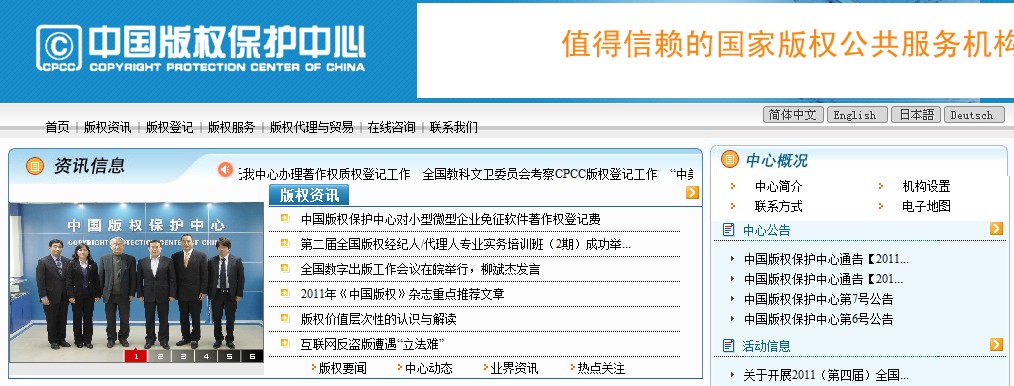
Suggestions from Chinese Writer on the Modification on Copyright Law

The modification on China Copyright Law is under preparation, and as news reports, for the promote of internet prosperity and infringement combat, Ms. Zhang Kangkang, the vice president of Chinese Writers Association and China Literary Copyright Protection Association suggested on the law modification recently:

I. To legally determine the fault ascertainment standard of Safe Harbor Rule

Ms. Zhang suggested to drafted the standard of “known or shall be known” as the legal standard of the ISP fault ascertainment, meanwhile, the obligation of ISP shall also be listed in the modified law while no too high obligation shall be set.

Bridge IP Law Commentary’s opinion: There’s no legal standard on the ascertainment of ISP fault in Copyright Law, with the standard is referred to partly in the Article 36 of Infringement liability law, “Where no measures have been taken by IPS on knowing the infringement or violation by users against others, the ISP shall take the joint liability with the infringer.”

READ MORE

Analysis on the Copyright Infringement on Microblog

On 30th December, the Annual Conference of Sohu Weibo Client (weibo is just kind of microbloggng service like twitter in China), 2011 was held in Beijing, and Sohu (NASDAQ: SOHU) first issued the Weibo Copyright Protection Convention among the four main microblogging platforms in China, which verifies that the author may enjoy the copyright over its tweets, and accordingly Sohu will provide protecton on it, respect its authorized use and offer aids in the legal protection. However, for the tweets tend to be brief, therefore its protection by Copyright Law has been long argued. And here is the analysis from Bridge IP Law Commentary on it.

READ MORE

Good News for Small and Micro Businesses: Further Relief on China Software Copyright Registration Fee

As to the latest news to us, aiming at the less operation burden as well as the healthy development to the small and micro business, the State Intellectual Property Center has promulgated the Notice of the Relief on the Software Copyright Registration Fee of Small and Micro Business (the “Notice”) on 27th December, 2011.

As stipulated in the Notice, during the period commencing from 1st January, 2012 to 31st December, 2014, any approved small or micro business may be temporarily exempted from the copyright registration fee, contract registration fee, information inquiry fee and other 8 administrative charging. Meanwhile, all the companies applying for the fee relief will be recorded by the administration.

READ MORE

Hinder or Protection? The Role of Law in Internet Development

Suggestions on the draft of Copyright Law Judicial Interpretation in China, II

Currently, it’s argued heatedly in America that whether SOPA and PIPA shall be passed, and on the other side of the world the Judicial Interpretation on Cyber Copyright is under drafting by Supreme People’s Court in China. Will the new interpretation meet the demand of the development of internet or bring a more rigorous regulation? That catches the eyes of the public. Bridge IP Law Commentary will give our suggestion on the judicial interpretation in three posts, and today is the second one of the series:

READ MORE

People’s Republic of China Social Insurance Law


Adopted at the 17th Meeting of the Standing Committee of the 11th National People’s Conference on October 28, 2010


Chapter One General Provisions

Article 1 This Law has been enacted in accordance with Constitution for the purpose of regulating social insurance relationships, protecting citizens’ legitimate rights to access social insurance and enjoy social insurance benefits, sharing the development achievements with citizens, promoting social harmony and stability.

Article 2 The state shall establish the basic pension insurance, basic medical insurance, industrial injury insurance, unemployment insurance, maternity insurance and other social insurance system, ensuring the citizens’ rights to material assistance in old age, sickness, work injury, unemployment and maternity from the state and society in accordance with the law.

READ MORE

RULES FOR THE ADMINISTRATION OF EMPLOYMENT OF FOREIGNERS IN CHINA

(Promulgated jointly by the Ministry of Labour, Ministry of public Security,Ministry of Foreign Affairs and the Ministry of Foreign Trade and Economic Cooperation of the People’s Republic of China on 22 January 1996)

Chapter l General Provisions

Article 1 These Rules are formulated in accordance with the provisions of the relevant laws and decrees for the purpose of strengthening the admiministration of employment of foreigners in China

Article 2 The term “foreigners”in these Rules refers to the persons,who under the Nationality Law ont1e People’s Republic of China, do not have Chinese nationality. The term “employment of foreigners in China” in these Rules refers to acts of foreigners without permanent residence status to engage in remunerative work within Chinese territory in accordance with it laws.

READ MORE

Law of the People’s Republic of China on Mediation and Arbitration of Labor Disputes

December 29, 2007

(Adopted at the 31st Session of the Standing Committee of the 10th National People’s Congress on December 29, 2007)

Chapter I: General Provisions
Chapter II: Mediation
Chapter III: Arbitration
Section 1 General Provisions
Section 2 Application and Acceptance
Section 3 Hearing and Award
Chapter IV: Supplementary Provisions

Chapter I: General Provisions

Article 1 The Law is formulated in order to fairly and timely resolve labor disputes, protect the lawful rights and interests of the parties and promote harmonious and stable labor relations.

READ MORE

Labor Law of People’s Republic of China

Contents
Chapter I General Provisions
Chapter II Promotion of Employment
Chapter III Labour Contracts and Collective Contracts
Chapter IV Working Hours, Rest and Vacations
Chapter V Wages
Chapter VI Occupational Safety and Health
Chapter VII Special Protection for Female Staff and Workers and Juvenile Workers
Chapter VIII Vocational Training
Chapter IX Social Insurance and Welfare
Chapter X Labour Disputes
Chapter XI Supervision and Inspection
Chapter XII Legal Responsibility
Chapter XIII Supplementary Provisions
Chapter I
General Provisions
Article 1 This Law is formulated in accordance with the Constitution in order to protect the legitimate rights and interests of labourers, regulate labour relationship, establish and safeguard a labour system suited to the socialist market economy, and promote economic development and social progress.
Article 2 This Law shall apply to enterprises, individual economic organizations (hereinafter referred to as employing units) and labourers who form a labour relationship therewith within the territory of the People’s Republic of China.
State organs, institutions and public organizations as well as labourers who form a labour contract relationship therewith shall be bound by this Law.
Article 3 Labourers shall have equal right to employment and choice of occupation, the right to remuneration for labour, to rest and vacations, to protection of occupational safety and health, to training in vocational skills, to social insurance and welfare, to submission of labour disputes for settlement and other rights relating to labour stipulated by law.
Labourers shall fulfill their labour tasks, improve their vocational skills, follow rules on occupational safety and health, and observe labour discipline and professional ethics.
Article 4 The employing units shall establish and perfect rules and regulations in accordance with the law so as to ensure that labourers enjoy the right to work and fulfill labour obligations.
Article 5 The State shall take various measures to promote employment, develop vocational education, lay down labour standards, regulate social incomes, perfect social insurance system, coordinate labour relationship, and gradually raise the living standard of labourers.
Article 6 The State shall advocate the participation of labourers in social voluntary labour and the unfolding of labour emulation and rational proposals campaign, encourage and protect labourers in conducting scientific research, technical renovation, inventions and creations, and commend and reward model and advanced workers.
Article 7 Labourers shall have the right to participate in, and organize, trade unions in accordance with the law.
Trade unions shall represent and safeguard the legitimate rights and interests of labourers, and independently carry out their activities in accordance with the law.
Article 8 Labourers shall take part in democratic management or negotiate with the employing units on an equal footing about protection of the legitimate rights and interests of labourers through the assembly of staff and workers or their congress or other forms as provided by law.
Article 9 The administrative department of labour under the State Council shall be in charge of the management of labour in the whole country.
The administrative departments of labour under the local people’s governments at or above the county level shall be in charge of the management of labour in their respective administrative areas.

READ MORE

IMPLEMENTING REGULATIONS OF THE PATENT LAW OF THE PEOPLE’S REPUBLIC OF CHINA

(Promulgated by Decree No. 306 of the State Council of the People’s Republic of China on June 15,2001, amended the first time on December 28,2002 according to the Decision of the State Council on Amending the Implementing Regulations of the Patent Law of the People’s Republic of China, and amended the second time on January 9,2010 according to the Decision of the State Council on Amending the Implementing Regulations of the Patent Law of the People’s Republic of China)

Translated by the State Intellectual Property office of the People’s Republic of China. In case of discrepancy, the original version in Chinese shall prevail.

READ MORE

China Cyber Infringement and Current Status of IP Protection

Suggestions on the draft of Copyright Law Judicial Interpretation in China, I

Currently, it’s argued heatedly in America that whether SOPA and PIPA shall be passed, and on the other side of the world the Judicial Interpretation on Cyber Copyright is under drafting by Supreme People’s Court in China. Will the new interpretation meet the demand of the development of internet or bring a more rigorous regulation? That catches the eyes of the public. Bridge IP Law Commentary will give our suggestion on the judicial interpretation in three posts, and today is the first one of the series:

READ MORE

Law of the People’s Republic of China on Application of Laws to Foreign-Related Civil Relations

Order No. 36 of the President of the People’s Republic of China

The Law of the People’s Republic of China on Application of Laws to Foreign-Related Civil Relations, adopted on October 28, 2010 at the 17th session of the Standing Committee of the 11th National People’s Congress of the People’s Republic of China, is hereby promulgated and shall come into effect on April 1, 2011.

President of the People’s Republic of China  Hu Jintao

October 28, 2010

Law of the People’s Republic of China on Application of Laws to Foreign-Related Civil Relations

READ MORE

Complaints from China IT Tycoon: Weak Protection over IPR Jeopardizes Industry Innovation

According to the report of Nandu Daily, Mr. Ding Lei, the CEO of NetEase (NASDAQ: NTES) and the representative of People’s Congress in China stated on the conference of Guangdong People’s Congress that despite the innovation could make customers more satisfied and bring more market share to the company, which is also the impetus to the company, it’s also haunted with the dilemma of “more innovation more suffering” due to the weak protection on IPR by the state.

According to Ding’s words, the lawsuit on the infringement against the company may last for years, therefore the proceeding may be a suffering to the company; moreover, the judged compensation may be very low even the infringed company wins the lawsuit. “Previously, Baidu stately posted the works of Han Han in its product Baidu Wenku, and why? The reason could only be the poor combat on the infringement”, said Mr. Ding.

READ MORE

Apple Lost the Trademark Opposition against Red Apple Trademark after the Proceeding for 10 Years

According to the report of hc360.com (the news is in Chinese), Beijing High People’s Court adjudicated the final judgment on the trademark opposition filed by Apple Inc (Apple) against Zhejiang Red Apple Electronic Co., Ltd. (Zhejiang Red Apple) on 28th November, 2011, Ltd, rejecting Apple’s opposition on the defendant’s registered trademark in class 9 of CCTV monitor. Till then the proceeding of the case for 10 years is finally ended up.

Early in November of 2002, Zhejiang Red Apple’s application of red apple trademark was approved by China Trademark Office, and afterwards opposed by Apple, who demanded no approval for the mark, for the similarity between the red apple image and the first applied Apple trademark. Despite the opposition, the trademark office approved the application and issued the “Image Trademark Opposition Ajudication”, (2007) Trademark Yi Zi No. 3887 on 27th August, 2007.

READ MORE

The Choice for Apple in China: Patent Lawsuit or Lower Price

According to the news of Forbes.com, for the fast developing and immensely potential mobile phone market in China, Apple has adjusted its phone strategy focusing on the increasing of the market penetration, which however facing the competition from the local manufacturer in China. For such challenges, Apple seems to be tending to file the patent lawsuit for more market share in the country.

In fact, Apple is actively suing its competitor globe-wide. Previously, Apple has filed patent lawsuit against SAMSUNG and HTC in U.S.A., Australia and Europe for its market share is eaten up by android phones, while for the robust iPhone market in England, no same or similar litigation has been initiated by Apple.

READ MORE

China Mobile Devices Alliance against Patent Lawsuit from International Giant

Bridge IP Law Commentary once posted the essay on the patent battle between HTC and Apple, with our advices and opinions attached. And the event also caught the attention of local mobile manufacturers in China. According to Nandu Daily’s latest news, to counter the possible challenge of patent lawsuit in China, ZTE, TCL, Konka and other main phone companies have formed an alliance.

China made phones are known for its high price performance and cool looking, and the android devices occupy most of the products. And just like other phone companies, China manufacturers also face the attack from Microsoft and Apple. The alliance has already participated in the lawsuit filed by Nokia against the alliance members.

What has to be acknowledged is that the total patent owned by the alliance could still not rival with those of the international giants’. While, on the other hand, the incomplete of the domestic legislature may be the safe harbor of the local companies, and the international companies have not finished their layout in China. Furthermore, the rapid technology update could also be the chance to tip the balance.

READ MORE