
 Abstract: To determine whether a prior copyright could defend itself against a later trademark right, whether the foundation of copyright exists should be the first enquiry. That is to say, it is worthy of discussion whether an author receives copyright for a single calligraphic character in calligraphic works.
Pursuant to China’s laws and regulations, prior ownership of copyright in a work is a defense against a later trademark right. In determining whether a prior copyright can defend itself against a later trademark right, however, the first matter to be decided is whether the foundation of copyright exists. That is, whether the author obtains copyright for a single calligraphic character in calligraphic works. In today’s post, we will introduce and discuss a typical case as follows:
Introduction to the Case:
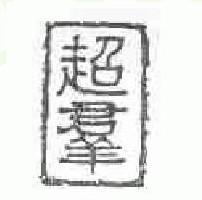
Baojia Company acquired all intellectual property rights for the “超羣 Chaoqun” mark from the author Ms. Li Zengchaoqun, including trademark right and copyright, in Mainland China and Hong Kong, in 1998 and 2002, respectively. Mr. Chen Junxian, without authorization from Baojia Company, registered the “超羣 Chaoqun” trademark (the “disputed trademark”) numbered 1603245, under the class 29 for canned goods, on April 7, 2000. The Baojia Company subsequently applied for a review but was rejected by the Trademark Review and Adjudication Board (the “TRAB”), based on the disputed trademark infringing its prior copyright. Dissatisfied with the decision given by the TRAB, Baojia Company filed an administrative lawsuit with a People’s Court.
The case ended with Baojia Company ultimately losing its suit after having the case heard in the first instance, the second instance, and a retrial. The courts, following the trial, held the following: The Trademark Law protects the original works that shall conform to two requirements: independent creation and a modicum of originality. The two calligraphic characters “超羣 Chaoqun”, were in fact independently created by the author, which conforms to the first requirement of independent creation. With regard to the second requirement of originality, its manifestation and irregularly drawn borders are general characters common in antique stamps, without the least bit of originality; thus, it was not protected by the Copyright Law. For these reasons, the courts made a decision that, the disputed trademark registered by Chen Junxian did not damage Baojia Company’s prior rights in the “超羣 Chaoqun” mark, in accordance with the Trademark Law.
Lawyers’ Comments:
In this case, the key points contained in the courts’ decision is to determine whether the author receives copyright for the independently created “超羣 Chaoqun” mark.
I. A prior copyright can defend against a subsequent trademark right
To determine whether a disputed trademark infringes a prior copyright for the “超羣 Chaoqun” mark, the first inquiry is whether a foundation for copyright in the mark even exists. As provided for in Article 3 of the Copyright Law:
For the purposes of this Law, the term “works” shall include works of literature, art, natural science, social science and engineering technology, etc., which are created in any of the following forms:
1. Written works;
2. Oral works;
3. Musical works, dramatic works, quyi (folk art), choreographic works and acrobatic works;
4. Works of fine arts and architectural works;
5. Photographic works;
6. Cinematographic works and works created by a process analogous to cinematography;
7. Graphic works such as drawings of engineering designs, drawings of product designs, maps and schematic drawings, and model works;
8. Computer software; and
9. Other works as provided for by the laws and administrative regulations.
In addition, Article 9 stipulates:
The term “copyright owners” shall include:
1. Authors; and
2. Other citizens, legal persons and other organizations that enjoy copyright under this Law.
In this case, the plaintiff was the copyright owner of the “超羣 Chaoqun” mark. If the plaintiff had copyright for the “超羣 Chaoqun” mark, where the “超羣 Chaoqun” mark was once published, in accordance with Article 31 of the Trademark Law, we should look at the following:
The trademark application shall not infringe upon another party’s prior existing rights, and shall also not be a means to register a mark that is already in use by another party and enjoys substantial influence.
Therefore, Chen Junxian’s application for “超羣 Chaoqun” trademark, without prior authorization, infringes the prior existing right stipulated by Article 31, i.e., the prior copyright holder can use such rights as a defense to a subsequent trademark application for the same mark.
II. Can an author hold copyright for single calligraphic characters in calligraphic works?
Our website once discussed the Legal Commentary on the copyright infringement case of Founder Electronics VS P&G. In this case, the court held that, according to the Copyright Law, works protected by the Copyright Law should conform to the two requirements of independent creation and minimum originality. Considering the fact that the “超羣 Chaoqun” mark was independently created by the author, however, the courts decided that, where the irregularly drawn borders and manifestation of the characters themselves have not achieved a certain level of original writing and overall originality, thereby not meeting the basic requirement of a modicum of originality, the “超羣 Chaoqun” mark could not be included in the realm of works protected by the Copyright Law. Therefore, the court upheld the decision that the plaintiff could not hold copyright in the “超羣 Chaoqun” mark and characters. This also means that, where the plaintiff’s prior copyright does not in fact exist, it cannot be subsequently used as a tool to fight against a subsequent trademark application for the same.
In the author’s opinion, we have reservations regarding whether the “超羣 Chaoqun” mark in the disputed trademark should receive copyright protection or not. In the author’s view, calligraphic works are by nature unique creations, and this uniqueness is embodied in four general elements common to all calligraphic works: brushwork, structure, composition and ink style. Taking the structure of a calligraphic character for example, when in writing, every artist utilizes a unique form for the characters, embodied in the painting of each stroke and their relation to one another. These differences visible in the four elements evidence the author’s thinking, emotions, skills, aesthetic, and so on. The original meaning is lowering to a subordinate position, and the calligraphic characters become an art form in and of themselves. The dotted lines, structural arrangement, composition and other manifestations fully display each artist’ uniqueness. Different brushwork, structure, composition and ink style create these characters, ultimately considered a form of fine art. When compared with others’ works, no doubt, the author’s style of writing can be considered entirely original. In this case, when the author Li Zengchaoqun created “超羣 Chaoqun” mark, which she researched for more than twenty years, the author should receive copyright of her writing. That also means, as a corollary, the author should be able to receive copyright for a single calligraphic character in calligraphic works.
Lawyer Contacts
You Yunting:86-21-52134918 [email protected]/[email protected]
Disclaimer of Bridge IP Law Commentary
Short Link: