“Passive use” is not equivalent to “Prior use” under Article 31 of the Trademark law

(By Luo Yanjie) Pursuant to Article 31 of the Trademark Law: anyone applying for trademark registration may not damage the existing rights of others obtained by priority, neither may it register, in advance, a trademark that has been used by others and has become influential. In practice, consumers apply a “name” to a product, which can then be considered a kind of “trademark” for the product itself. Is such passive use attributable to prior use? In regard to this legal issue, there are no actual legal provisions speaking to it in Mainland China. However, the answer in today’s post appears to be a resounding no.

READ MORE

Can A Subsequently Applied Trademark be Registered if the Owner of A Previously Registered Similar Trademark Does Not Oppose?

Abstract: Approval from a reference trademark holder in supporting the registration of a subsequently registered similar trademark is one of the key elements taken into consideration by administrative organs and the People’s Court in deciding whether to grant trademark rights to the latter, based primarily on Article 28 of the Trademark Law.

(By Luo Yanjie) China’s Trademark Law adopts the “first to file” principle, and in general, when a later applied-for trademark appears to be substantially similar to a previously registered trademark, it will not be granted exclusive rights in the use of the mark. In the case introduced in this post, the latter applicant succeeded in its trademark application due to approval by a previously registered holder of a similar trademark. The details of the case are as follows:

READ MORE

Is the Territorial Scope of a Famous Brand Limited to Chinese Territories?

(By Luo Yanjie) Abstract: The determination of a product reputation is usually limited to Chinese territories, while on the other hand the reputation of a mark may involve consideration of overseas reputation.

Freeriding among Chinese manufacturers is unfortunately a very common and severe issue, and for most well known foreign companies, there may be situations in which they have not paid adequate attention to the Chinese market, and ergo have provided insufficient attention to policing its marks within the realm of IPR protection. As a result, the vast majority of foreign brands are helpless in facing rampant infringement.

READ MORE

Is the Territorial Scope of a Famous Brand Limited to Chinese Territories?

(By Luo Yanjie) Abstract: to determine whether two trademarks are similar to each other, the main consideration is determining the distinguishing features of the mark. However, to determine a famous or well-known product, such a determination is typically limited to Chinese territories, while on the other hand the reputation of a mark may involve consideration of overseas reputation.

Freeriding among Chinese manufacturers is unfortunately a very common and severe issue, and for most well known foreign companies, there may be situations in which they have not paid adequate attention to the Chinese market, and ergo have provided insufficient attention to policing its marks within the realm of IPR protection. As a result, the vast majority of foreign brands are helpless in facing rampant infringement.

READ MORE

Would the Cancellation of the Applicant Lead to the Invalidity of Trademark Application in China?

(By Luo Yanjie) Abstract: trademark application may take a long time. If the applicant encounters any change on its subject qualification, it shall handle the trademark transfer procedure as soon as possible, or otherwise the trademark could be cancelled.

It normally takes about one year from submitting the trademark application to the right granting. If during the application process it encounters any opposition, the time it takes for right granting adjudication would be much longer, possibly extending to several years. While during that period, the applicant may face a change on its subject qualification, and then will the trademark application be influenced in such a situation? In today’s post, you will see a typical case that we would like to share it with our readers.

READ MORE

When Can a Trademark Be Applied for Following the Cancellation of A Similar Mark in China?

(By Luo Yanjie) Article 46 of the Trademark Law has regulated how long one must wait until a cancelled or revoked trademark can be reapplied for, and yet due to the complexity of the application procedures, in the process of applying, an applicant could easily be confused or mistaken.

Case Summary

On January 13, 2003, Wang Huilan applied for the registration of a design trademark, numbered 3432984, specifically for Class 18, which includes both bags and briefcases. On July 1, 2004, the Trademark Office under the State Administration of Commerce and Industry (the “Trademark Office”) issued a Notice of Trademark Application Refusal, stating that the applied trademark was similar to already registered ones, and thereby Wang Huilan’s application was refused. Dissatisfied with this result, Wang filed a review application with the Trademark Review and Adjudication Board (the “Board”). In July 2007, the reference trademark judged in Wang’s application was cancelled. On August 22, 2007, the Board refused the review application. Ever more dissatisfied with this decision, Wang filed an administrative lawsuit.

READ MORE

Whether Sales Agents Are Included in the Trademark Agent Squatting Articles of China Trademark Law?

360截图-12690338

(By Luo Yanjie) Due to the late establishment of the relevant law and system, the trademark squatting situation in China is quite serious, and much squatting is conducted by trademark agents or partners. Article 15 of the Trademark Law provides that:

“Where any agent or representative registers, in its or his own name, the trademark of a person for whom it or he acts as the agent or representative without authorization therefrom, and the latter raises opposition, the trademark shall be rejected for registration and prohibited from use.”

READ MORE

Is it Infringing LV’s Trademark Right when Registering Similar Images as Patented Design?

20130215-周五

(By Albert Chen)  Brief of the case:The Louis Vuitton Company (the “LV Company”) holds the rights to the “LV” trademark in Mainland China, and it registered the trademark “LV” as early as January 15, 1986. At present, the term of protection of the mark has been extended to January 14, 2016. The registered classes for the “LV” trademark include toys, Chinese checkers, Backgammon, golf gloves, etc. On November 13, 2003, Guo filed an application for a patented design called “Mahjong (23)”, and the application was approved and published on July 14, 2004. The published patent includes 5 pictures, which contain the front view, left view, back view, top view and three-dimensional views. Among them, the front view contains an image consisting of the letters “L” and “V.”

READ MORE

Analysis on Trademark Infringement Case of Adidas

20130214-周四

 (By Luo Yanjie) In 2001, the globally known sportswear brand Adidas acquired a trademark certificate issued by the Trademark Office of the State Administration of Industry and Commerce (“SAIC”), namely a certificate numbered 1489454 for the “three slants” trademark, which was approved in Class 25 for clothing, ball shoes, hats, socks and other similar products; in addition, the certificate numbered 1536558 for the “three slants” trademark was approved in Class 18, which covers bags, clothing case, traveling bags and belts. On June 21 2003, Adidas transferred the trademarks to its affiliates.

READ MORE

Why Pfizer Did Not Win the Blue Pill Trademark Infringement Case?

360截图20130209162739984

(By Luo Yanjie) Pfizer is the holder of a blue, diamond-shaped mark (the “Pfizer trademark,” number: 3110761). The trademark was approved in Class 5 for pharmaceutical preparation, medicines made for human consumption, antibiotics, medical nutrition supplements, cleaning agents, and veterinary preparation. The registration period for the trademark commenced on May 28, 2003 and will expire on May 27, 2013.

On July 21, 2005, Pfizer representatives purchased a box of medicine priced at RMB 50 yuan from the New Concept Company. The medicine was mainly intended to cure “erectile dysfunction.” The front and back cover of the package contained both “Viagra”[1] and “TM,” which was underlined and accompanied by the diamond image. The manufacturer was printed as “Jiangsu Lian Huan Pharmaceutical Co., Ltd” (“Lian Huan”) dated on April 14, 2005. The opaque inner packaging also contained the words “Viagra” and “TM,” as well as the manufacturer “Lian Huan.” The packaging of the medicine was also diamond-shaped, in accordance with the shape of the tablet. The medicine itself was light blue in color, diamond compass shaped, and contained the words “Viagra” and “TM.” Pfizer believes that these products constituted three-dimensional trademark infringement and thereby sued the manufacturer and seller.

READ MORE

Summary of Administrative Case Verdict on “Britney Spears” Trademark Squatting (II)

We introduced you to the first instance of Britney Spears’ trademark administrative lawsuit yesterday, and today we will continue that discussion concerning the second instance and provide our comments on the case.

In February 2012, Britney Spears appealed to the Beijing High People’s Court citing her dissatisfaction with the first instance decision. The court of second instance decided that as a first right, the right of publicity and use of one’s name is protected by Trademark Law. Furthermore, any unlicensed registration of the trademark would cause damage to the right of name when the relevant public mistakes the origin of the product or service with the name owner, or when the relevant consuming public believes there is an association between the two parties. Therefore, to determine whether a disputed trademark will harm the right to use one’s name, one must first consider whether the owner of the name is well known or popular. Moreover, to determine whether the relevant right will be regarded as a first right, the relevant date is the registration date of the disputed trademark. The focus of this case is whether Britney Spears was widely known in Mainland China among the relevant consuming public before the registration date of the disputed trademark, in this instance November 20, 2000; also, whether the relevant consuming public would be confused as to the source or origin of “布兰妮” or “Britney” as being substantially similar to the name Britney Spears, and thus inferring a relationship between the two parties. 

READ MORE

Summary of Administrative Case Verdict on “Britney Spears” Trademark Squatting (I)

(By Luo Yanjie) In past posts, we have introduced you to the trademark squatting of Yi Jian Lian, which is the name of a well-known basketball player in China. Today, we are going to show you another similar decision:

On 20th November 2000, Suzhou Yisheng Fashion Co., Ltd. (the “Yisheng Company”) applied for the trademark “布兰妮Britney” in Class 25, covering clothing articles, such as shirts, suits, coats, overcoats, skirts, t-shirts, wind coats and down jackets. The Trademark Office of the State Administration of Industry and Commerce (the “Trademark Office”), after conducting a preliminary examination, published the application on its No. 807 Trademark Announcement. Britney Spears filed an opposition to the Trademark Office within the statutory period.

READ MORE

A Brief Introduction to China’s Collective Trademark Application and Use System

d商标

(By Luo Yanjie) A recent report said that the National Tourism Resort Brand Association for the well-known tourist attraction, Dian Lake in Kunming, received approval for a “D” type trademark certificate from the State Trademark Office—Yunnan Province’s first collective trademark. The above report shows that the collective trademark is of great value, but currently very few have been registered. What then are the features of the application and registration for collective trademarks compared with the normal ones? And, what factors should be noted for their use? In today’s post, we would like to share China’s collective trademark system with the reader.

READ MORE

Why Apple Failed to Stop the Application of Apple-Trademark by Others?

20121220093547935

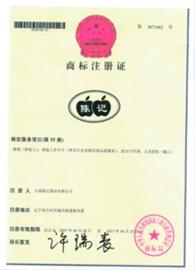
(By Luo Yanjie) Two companies with a great gap in their relative strength have been seen battling with each other over the trademark of an apple image; they are the globally known Apple Inc. and a fruit food making company in Zhuang He, a small city of China. At the end of the battle, the small company won the fight, Dalian Chenji Guopin Co., Ltd. (the “Chenji”) was supported by the authority in the dispute lasted for 5 years. The dispute was triggered by Chenji’s design, which consists two apples overlapped together, and the Chinese characters “陈记” written on them. In examining the mark, we can find the apple resembles that of Apple’s, which appears to have been bitten by someone. For this reason, Apple filed the trademark opposition with the trademark office.

READ MORE

All General Vocabulary Cannot Be Registered As Trademarks in China?

1101051007434

(By Luo Yanjie) Early in this year, JDB Inc., the famous herbal tea manufacturer argued with Guangzhou Pharmaceutical Company (the “GPC”) regarding ownership of the Wang Lao Ji trademark, which concluded in JDB being ordered to cease its use of the trademark. Now, JDB has begun its second battle with GPC, this time accusing GPC of infringeing the trademark “Ji Qing Shi Fen (吉庆时分).” Wanglaoji Health Industry Co. Ltd. (Guangzhou Wanglaoji Company) affiliated with GPC, recently made a statement that the State Trademark Office had accepted its application to revoke the registration of “Ji Qing Shi Fen (吉庆时分)”, the main reason being that the mark is considered generic in the sense that it is vocabulary in common use. Due to this, the State Trademark Office further advocated that it is uncertain whether there can be any exclusive right in the use of the registered mark.

READ MORE