US Industrial Representative’s Interpretation on the Impossibility of Charges in China’s Music Industry

Record IV of Day Four of our U.S. Visit

(By You Yunting) In late March, the author had the opportunity to take a journey to the United States at the invitation of the U.S. government in order to better understand how the U.S. IPR system operates. On the fourth day of the journey, the author and his associate visited the International Intellectual Property Association (the “IIPA”). The following is the brief record of our visit there.

The IIPA is a copyright protection organization consisting of the Association of American Publishers (the “APP”), Business Software Alliance (the “BSA”), Entertainment Software Association (the “ESA”), Independent Film & Television Alliance (the “IFTA”), International Visual Art Association (the “INTVAA”), Motion Picture Association of America (the “MPAA”), National Music Publishers’ Association (the “NMPA”), and the Recording Industry Association of America (the “RIAA”).
READ MORE

Why did the US Rule that iPhone Jailbreaking is Legal, but iPad Jailbreaking is Illegal?

Record III of Day Four of Our Visit to the United States

(By You Yunting) At the end of this past March, on the invitation of the US government, the author visited America with other Chinese legal experts with the goal of better understanding its IPR system. On the fourth day of the journey, the author visited the Copyright Office of the US Library of Congress (the “US Copyright Office”). The following is the brief record of the visit on that day.

READ MORE

Is a Notarization Made under False Pretenses for the Purpose of Evidence Collecting Valid in China?

(By  Luo Yanjie) In a civil lawsuit, the collecting of evidence for the purpose of notarization is quite common. However, during the process of collecting evidence that concerns the selling of infringing goods, the rights holders or their attorneys typically utilize a system of collection in which they set up a “customer” to purchase the infringing product as evidence of infringement. So the question is, should evidence collected in this manner be considered legally effective for the purposes of a lawsuit for infringement or unfair trade practice? For our understanding on the issue, and our experience in this decidedly complicated process, we would like to share with our readers today’s post concerning our opinions on the issue:

READ MORE

Has Apple Protected Its APP through the BSA?

The Second Record of the Day Four of the US Visit

(By You Yunting) In late March, the author had the opportunity to make a journey to the United States at the invitation of the U.S. government in order to better understand how the U.S. IPR system operates. On the morning of the fourth day of the journey, the writer visited the Business Software Association (BSA), which originally was not on the list of places to visit; it was later added on the recommendation of the writer. Despite this, the BSA received us with a chief inspection officer. The following is a record of our discussion carried out on that day. The topic of this post only concerns part of the discussion, and the reader may skip to the last part of this article if it interests you.

READ MORE

Does Running Game Cheating Programs Violate the Criminal Law in the United States?

—Day four of the visit to the United States

(By You Yunting) Beginning at the end of this March, on the invitation of the US government, the writer visited America with other Chinese legal experts with the goal of understanding its IPR system. On the fourth day, the writer visited the US Justice Department’s Bureau of Computer Crimes and IPR, the Department of Homeland Security’s IPR Coordination Center, and the American Chamber of Commerce. The following is the brief record of the writer’s experiences that day:

READ MORE

What Chinese Intellectual Property Legal Issues Are American Companies Dissatisfied With?

Day three of the visit to the United States

(By You Yunting) Beginning at the end of this March, on the invitation of the US government, I visited America with the goal of understanding its IPR system. On my third day in the US, I visited the Pharmaceutical Research and Manufacturers of America (“PhRMA”), the United States-China Business Council (“USCBC”), the United States Patent and Trademark Office (“USPTO”), and the East Asia Bureau of the US Department of State. The following is the brief record of my meetings on that day.

READ MORE

Why China Should Revoke the Regulations Which May Put All the Piracy Selling Vendors into Jail?

(By You Yunting) You could find the vendors selling the pirated films, TV dramas, music or software in almost each single street in the cities of China. And according to the current regulation that the amount of the sales totaled 500 discs could be prosecuted for the criminal law violation, any vendors who has been selling the pirated discs for at least one month could constitute the crime of copyright infringement, and to be sent in to jail. Despite what the vendor has done may damage the IPR of the copyright holder, it is fair to combat them under the laws and regulations. But it seems that the existing judicial interpretation has a too wide governing scope, and could have damaged the purpose of the Criminal law. And in the practices, the vendors who have been prosecuted for their piracy selling could be less than 1% of all. Thus it has made the vendors do not care the punishment regulated in the criminal law, and that on the other hand has broken the principle “any violation against the criminal law shall be prosecuted and punished”, and thereafter it may promote the law enforcement upon the selection or the law enforcement in the political campaign or the rule of man. And the at the same time, it could harm the IPR protection.

READ MORE

How does the U.S. Government Guide Companies Registering IPR in China?

(By You Yunting) This March, at the invitation of the U.S. government, Mr. You Yunting, the founder of Bridge IP Commentary began his journey to the United States. The main purpose of this visit was to better understand the system of intellectual property rights in the United States. Mr. You would like to share with our readers his experiences there in several posts here on our website. Of course, the content of the posts may not be truly comprehensive or strictly accurate; that being said, if you find any mistakes or comments that can be corrected or improved upon, please let us know. We encourage more dialogue with the IPR community and welcome all constructive commentary. The following is the first post in a series of Mr. You’s visit to the United States: 

READ MORE

The Development of China Court’s Judgment over Criminal Offence of Online Game Cheating Programs, III

Today, our website will introduce the most recent crime adopted by courts in some regions of China to combat online game cheating programs: the crime of damaging computer information systems.

III. The crime of damaging computer information systems

Although there problems with all of the crimes previously discussed for combating cheating programs, with the strengthening of legislation, the online game industry finally found a suitable crime in 2011. According to Article 286 of the Criminal Law:

“Those who violate the law by deleting, modifying, adding, or interfering with the function of computer information systems so that information systems are unable to run normally, which leads to severe consequences, may be sentenced to imprisonment of no more than five years of detention; when the consequences are especially severe, the violator may be sentenced to imprisonment of more than five years. Those who violate the law by deleting, modifying, or adding data or applicable procedures to the storage, processing, or transmission programs in computer information systems, which leads to severe consequences, may be punished as per the preceding paragraph.”

READ MORE

The Development of China Court’s Judgment over Criminal Offence of Online Game Cheating Programs, II

Today, we will introduce the second crime adopted in China to combat cheating programs in online games: criminal copyright infringement.

II. The state of criminal copyright infringement

After years of combating cheating programs using the crime of illegal operation, the judicial organs in some regions tried to use criminal copyright infringement from Article 217 of the Criminal Law to combat cheating programs. The subjective aspect of criminal copyright infringement requires the unlicensed copying and distribution of the copyrighted work of another for profit.

READ MORE

The Development of China Court’s Judgment over Criminal Offence of Online Game Cheating Programs, I

(By You Yunting) Since Shanda imported the massively popular online game, MIR, from South Korea in 2001, the online game industry has gradually become one of the most profitable businesses in China, and has made a fortune for tycoons such as Chen Tianqiao and Ding Lei. On the other hand, all kinds of illicit activities have arisen with the development of the online game business, among which cheating programs to assist players is the most troublesome for the game companies.

According to information acquired by the writer while working in a game company, cheating programs are software that run with the game software, thus giving them their name as game cheating programs. Cheating programs have several harms. First, they incur Gresham’s Law (bad money chases out good money), which makes rules-obeying players easily defeated and thereby damages the fairness of the game. Second they put more burden on the server and force the operator to purchase more servers and the bandwidth, which undoubtedly increases costs and decreases the stability of the server. Third, they enable players to fulfill game objective more quickly, which abnormally speeds up the progress of the game and could force the game company invest more human resources into developing new game content or elements. Although it is possible that some cheating programs are used to make up for the defects in the game, most have harmed the gaming experience, added costs of the company’s development and operation, and could jeopardize stable running of the game.

READ MORE

Analysis of the Assumption of Liability for E-Merchants in IPR Disputes in China, II

—Interpretations on Solutions to Several Issues in Hearing E-Commerce IPR Infringement Cases

In today’s post we will continue to discuss the standards to be considered in determining the liability of e-merchant platforms.

III. Standards in Determining the Indirect Infringement Liability of E-Merchant Platforms

As discussed above, an e-merchant platform may only assume indirect infringement liability under the law, and therefore it would not be necessarily always be liable for infringement occurring on its platform. The pressing question then, is what standards shall be utilized when determining their liability? In response to this question, we would like to share our analysis based on a comparison of similar statutes:

READ MORE

Analysis of the Assumption of Liability for E-Merchants in IPR Disputes in China, I

—Interpretations on Solutions to Several Issues in Hearing E-Commerce IP Infringement Cases

(By Luo Yanjie) In recent years, E-Commerce in China has thrived along with the development of online shopping. According to some news reports, the volume of the transactions from 360buy.com totaled more than RMB sixty billion Yuan, and Suning’s online sales achieved a comparatively paltry RMB 18.336 billion Yuan. With respect to Taobao.com and its affiliated websites, their business gains have vastly superseded all other rivals. By November 2012, Taobao.com and Tmall had sales of over RMB 1000 billion Yuan, which is almost three times that of Bailian Group, Suning and Gome’ s annual income in 2011 combined. The aforesaid three companies are currently the top three retail chains in China.

READ MORE

Is It Necessary to Receive Approval from the Rights Holder of an Original Work in Order to Use Adapted Work?

s2366722

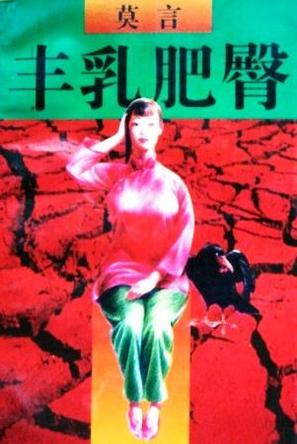
(By Luo Yanjie) Recent internet news has stated that the film adaption rights for Big Breast & Wide Hips, the work of 2012 Nobel laureate, Mo Yan, have sold for RMB 11,180,000 yuan, and the film will be directed by Zhang Yimou. Although Mo Yan’s agency ultimately confirmed that this was a false rumor, the cinematographic adaption of Mo Yan’s work has garnered public attention. With the trend of greater diversity in forms of work, we have seen more and more works recomposed in other artistic forms. Legally speaking, this re-composition actually belongs to adaption under the Copyright Law, and the work created is therefore adapted work. Today’s post will introduce the Chinese system for adaption of the film and cinematographic works.

READ MORE