China’s Courts won’t Prohibit a Trademark Squatting with Post-Approval

古珀行

(By Luo Yanjie) Abstract: “Agent” in conduct of Agent’s preemptive registration refers to “trademark agents, representatives or other agents and representatives based on sales and agency relationship such as distribution and agency”. Commodities that no agent or representative may apply for registration include commodities same as the commodities where the trademarks of the principals or the persons represented are attached to as well as other similar commodities. Considering trademark is a private right, judicial institutions shall fully respect parties’ autonomy.

READ MORE

How Mobile Game Protects its Intellectual Property Right?

捕鱼达人

(By You Yunting) Recently stock markets have heightened topics about mobile game and serious competition disputes of intellectual property rights (the “IPR”) between China mobile games enterprises are often appeared in the newspapers. According to the reports, Beijing Chukong Inc., the developer of popular “捕鱼达人”(Fishing Joy) mobile games, was engaged in a controversy of IRP because earlier in December the Guangzhou-based SEALY Technology suspected Beijing Chukong Inc.’s “捕鱼达人”(Fishing Joy) of plagiarism on its arcade game product “捕鱼达人”. In response, Beijing Chukong Inc. alleged that: first, the online time of its “捕鱼达人”(Fishing Joy) was earlier than that of SEALY Technology and its mobile game had been reported to the Ministry of Culture. Second, Beijing Chukong Inc. owns the “捕鱼达人”trademark. Third, there are significant differences in art images and playing methods between two products.

READ MORE

Legal Basis for Chrysler Group’s Anti-dilution Protection on Its Well-known “JEEP” Trademark in China

jeep 商标

(By Luo Yanjie) Today we would like to introduce a typical case regarding Chrysler Group’s countering a subsequent “free-rider” who attempted to register “JEEP” trademark under Class 2 for oil paint through the anti-dilution legal protection on well-known trademarks.

Introduction to the Case:

             Plaintiff: Chrysler Group LLC (the “Chrysler”)

           Defendant: Trademark Office of the State Administration for Industry and Commerce (the “Trademark Office”) and Guangdong-based Dongguan Xiehe Chemical Co., Ltd (the “Xiehe Chemical”)

READ MORE

When a Preceding User of a Trademark Counters a Subsequent Registrant in China?

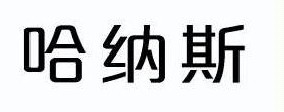
hannas

(By Luo Yanjie) Abstract: China’s new Trademark Law still enforces the principle of “first to file,” but at the same time a prior user of a trademark only need prove to some extent that their prior use of a registered trademark had a degree of popularity, and need not prove that a subsequent user of the trademark “squatted” the trademark by registering it. If the board approves such prior use, the prior user will have the right to continue using the trademark in the original scope of use. “Improper means” as stated in Article 31 of the Trademark Law, refers to situations “where the applicant knows or should have known that the trademark had been used by others with a certain degree of influence, and preemptively registered the same, then such applicant shall be determined to have used improper means to register the mark.”

READ MORE

Why BURBERRY’s Classic Pattern Registered Trademark was Revoked in China?

23901

(By You Yunting) Earlier in November, China’s Trademark Office announced canceling Burberry’s trademark of the “Haymarket Check” in China, known as iconic tan, black and red tartan (the “disputed trademark”), under Class 18 for packaging and bags because Burberry had not even used the registered trademark for over three years in China by the media.

A Chinese bag and apparel maker Polo Santa Roberta, who had disputes with Burberry for many years, filed an application with the China’s Trademark Office for revoking the disputed trademark that Burberry had not used for over three years. The State Trademark Office decided to revoke Burberry’s trademark due to inadequate evidence from Burberry after consideration, but Burberry applied for review with the Trademark Review and Adjudication Board, triggering heated debates in China.

READ MORE

Why China’s Courts Held an Ambiguous Attitude to the Rush Registration of Another’s Works as a Trademark?

When handling a dispute between trademark and copyright, Chinese courts always apply a rather high standard to determine whether works protected under trademark law will also receive protection under the copyright law. Our website previously discussed this question in the posts Analysis on Proof Requirements in Figurative Trademark Infringing Others’ Copyright Cases by China Court and Why the Calligraphic Character’s Copyright Failed to Defeat Trademark Right.Today, we’d like to introduce a case regarding conflicts between a work of fine art and a trademark, due to the identical combination of Chinese characters and English letters.

READ MORE

Why Shanghai Court Enforces Trademark’s Diligence Obligation on Original Equipment Manufacture?

(By You Yunting) Original Equipment Manufacture (the“OEM”) refers to a commercial model where the Principal person is responsible for the brand, research and design, and marketing, meanwhile, the manufacturer is responsible for production. As a big manufacturing country, OEM is an important way for our manufactured products to participate in international competition. Under China’s Laws, however, it is unclear whether OEM constitutes as a trademark infringement, and local courts have handed out different decisions for this problem. According to the author’s information, Fujian higher court, Zhejiang higher court and Shanghai higher court held that OEM manufacturers does not involve trademark infringement, but Guangdong higher court decided that the OEM manufacturers shall take responsibility for trademark infringement in many cases. The Supreme Court has not yet expressed its opinion towards this problem.

READ MORE

How A.O.SMITH Corporation Protects Its Interests against the Free Rider AOSIMIHE?

1

(By Luo Yanjie) Trademark infringement via the unauthorized use of an enterprise’s name is a common phenomenon in China. Since the requirements for registering a company in Hong Kong are well known for being comparatively lax, many companies attempt to register well-known trademarks as an enterprise name in Hong Kong, and then run a business in Mainland China using this registered name, effectively fulfilling its role as a “free-rider” of another’s well known trademark.

 The A.O.SMITH Corporation was founded over 100 years ago in Milwaukee, Wisconsin, USA, and is a global leader applying innovative technology and energy-efficient solutions to products marketed worldwide. However, the “American”AOSIMIHE (note: AOSIMIHE is a rough approximation of the name A.O. Smith transliterated into Chinese) Appliances (International) Group Ltd., registered in Hong Kong, is a free rider attempting to imply a connection between it and the United States-based A.O. Smith Corporation. Based on its Hong Kong company and trademark registration, the former succeeded in registering its “AOSIMIHE” trademark in Mainland China. Today, we’ll discuss how A.O.SMITH Corporation protected its legal interests against the “American” AOSIMIHE Appliances (International) Group Ltd.

READ MORE

China Supreme Court Issued A New Typical Trademark Infringement Case of OEM

1

(By You Yunting) As a big manufacturing country, China deals with a lot of products categorized as original equipment manufacturing (the “OEM”). With regard to whether OEM constitutes trademark infringement, where local courts had handed out different decisions and infringing standards for this problem, the Supreme People’s Court has not yet expressed a clear standard for determining. Recently, China’s Supreme People’s Court has published the 2012 Top 50 typical trademark cases, and, among them, there is a case concerning OEM trademark infringement, where the manufacturer of an OEM won an infringement claim against it by the trademark holder. From the SPC’s decision in this case, we find rather clear evidence of the court’s attitude toward this particular issue.

READ MORE

Can Carnival Films Retake the Downton Abbey Trademark Squatted in China?

图片1

(By Luo Yanjie) According to a recent report by the British Broadcasting Corporation (BBC), the British television series Downton Abbey (In Chinese, translated as “唐顿庄园 Tangdun Zhuangyuan”), which is very popular in China, and Carnival Films, who produced Downton Abbey, was attempting to sell Downton (in Chinese, Downtown is translated as “唐顿 Tangdun”) branded wine in the North American, European and Australian markets. However, according to a disclosure by the State Trademark Office, some Chinese merchants drew first blood, registering the “唐顿庄园 Tangdun Zhuangyuan” trademark and subsequently obtaining rights in the trademark. This news also pointed out that a Shandong-based Merchant Li Xiangjun had already received ownership of the “唐顿庄园 Tangdun Zhuangyuan” trademark for wines in China.

READ MORE

How did Lenovo Utilize Its Well-known Trademark to Defense against a “Free-Rider”?

图片1

(By Luo Yanjie) Abstract: In today’s post, we will introduce a typical case discussing Lenovo’s defense against a “free rider” utilizing its well-known trademark. In this case, when Lenovo claimed cross-class protection for its Lenovo trademark, the court established two rules in its decision, which are as follows:

First, “misleading the public and causing injury to the interests of the registrant of a well-known trademark” is a legal basis for whether or not a well-known trademark may receive cross-class protection.

READ MORE

Why the Calligraphic Character’s Copyright Failed to Defeat Trademark Right?

TM截图未命名

Abstract: To determine whether a prior copyright could defend itself against a later trademark right, whether the foundation of copyright exists should be the first enquiry. That is to say, it is worthy of discussion whether an author receives copyright for a single calligraphic character in calligraphic works.

Pursuant to China’s laws and regulations, prior ownership of copyright in a work is a defense against a later trademark right. In determining whether a prior copyright can defend itself against a later trademark right, however, the first matter to be decided is whether the foundation of copyright exists. That is, whether the author obtains copyright for a single calligraphic character in calligraphic works. In today’s post, we will introduce and discuss a typical case as follows:

READ MORE

Why did the Trademark Office Reject Audi’s “A4” Trademark Application?

(By Luo Yanjie) The Audi A4, A6 and other series of Audi cars are popular classic cars in China. However, Audi’s trademark applications for the A4, A6 etc., are always rejected. In today’s post, we will introduce a typical case regarding these trademarks, followed by our analysis for our readers.

Introduction to the Case:

In January 2007, Audi China filed an application with the State Trademark Office to register its “A4” mark (the “disputed trademark”). The State Trademark Office upheld that “A4”, a common vehicle model, lacked distinctiveness. Based on this finding, the Trademark Office rejected Audi’s application. After Audi applied for a trademark reexamination with the Trademark Review and Adjudication Board (the “TRAB”), the TRAB held that, the disputed trademark comprised of the English Letter “A” and Arabic numeral “4” was so simple that it would be difficult to distinguish the function of the source of goods; in addition, it lacked distinctiveness, a requirement pursuant to the Trademark Law. Again, based on these findings, the TRAB rejected Audi’s application for reexamination.

READ MORE

Introduction to the 2013 Trademark Law, Part 2

(By Zhan Yi) On August 30, 2013, the Standing Committee of the National People’s Congress promulgated Decisions of the Standing Committee of the National People’s Congress Concerning Alterations to the Trademark Law of the People’s Republic of China, which shall be implemented on May 1, 2014. Our website previously translated the Full text of 2013 China Trademark Law, we provided a Comparison Version highlighting the differences between the 2001 and 2013 Trademark Law. In today’s post, our website will introduce and discuss the revised content within the 2013 Trademark Law. Without further ado, we will now move on to the second part of our examination of the 2013 Trademark Law.

READ MORE

Introduction to the 2013 China Trademark Law, Part I

(By Zhan Yi) On August 30, 2013, the Standing Committee of the National People’s Congress promulgated the Decisions of the Standing Committee of the National People’s Congress Concerning Alterations to the Trademark Law of the People’s Republic of China, which shall be implemented on May 1, 2014. Our website has already translated the Full text of 2013 China Trademark Law in a previous post, and compiled and provided a comparative version highlighting the differences between the 2001 Trademark Law and 2013 Trademark Law. Starting with today’s post, we will introduce and discuss the most important revisions and changes found in the 2013 Trademark Law. In today’s post, we will introduce the first part.

READ MORE