The Development of China Court’s Judgment over Criminal Offence of Online Game Cheating Programs, III

Today, our website will introduce the most recent crime adopted by courts in some regions of China to combat online game cheating programs: the crime of damaging computer information systems.

III. The crime of damaging computer information systems

Although there problems with all of the crimes previously discussed for combating cheating programs, with the strengthening of legislation, the online game industry finally found a suitable crime in 2011. According to Article 286 of the Criminal Law:

“Those who violate the law by deleting, modifying, adding, or interfering with the function of computer information systems so that information systems are unable to run normally, which leads to severe consequences, may be sentenced to imprisonment of no more than five years of detention; when the consequences are especially severe, the violator may be sentenced to imprisonment of more than five years. Those who violate the law by deleting, modifying, or adding data or applicable procedures to the storage, processing, or transmission programs in computer information systems, which leads to severe consequences, may be punished as per the preceding paragraph.”

READ MORE

The Development of China Court’s Judgment over Criminal Offence of Online Game Cheating Programs, II

Today, we will introduce the second crime adopted in China to combat cheating programs in online games: criminal copyright infringement.

II. The state of criminal copyright infringement

After years of combating cheating programs using the crime of illegal operation, the judicial organs in some regions tried to use criminal copyright infringement from Article 217 of the Criminal Law to combat cheating programs. The subjective aspect of criminal copyright infringement requires the unlicensed copying and distribution of the copyrighted work of another for profit.

READ MORE

The Development of China Court’s Judgment over Criminal Offence of Online Game Cheating Programs, I

(By You Yunting) Since Shanda imported the massively popular online game, MIR, from South Korea in 2001, the online game industry has gradually become one of the most profitable businesses in China, and has made a fortune for tycoons such as Chen Tianqiao and Ding Lei. On the other hand, all kinds of illicit activities have arisen with the development of the online game business, among which cheating programs to assist players is the most troublesome for the game companies.

According to information acquired by the writer while working in a game company, cheating programs are software that run with the game software, thus giving them their name as game cheating programs. Cheating programs have several harms. First, they incur Gresham’s Law (bad money chases out good money), which makes rules-obeying players easily defeated and thereby damages the fairness of the game. Second they put more burden on the server and force the operator to purchase more servers and the bandwidth, which undoubtedly increases costs and decreases the stability of the server. Third, they enable players to fulfill game objective more quickly, which abnormally speeds up the progress of the game and could force the game company invest more human resources into developing new game content or elements. Although it is possible that some cheating programs are used to make up for the defects in the game, most have harmed the gaming experience, added costs of the company’s development and operation, and could jeopardize stable running of the game.

READ MORE

Conditions for Dormant Investment Compliance in China

(By Lear Gong) Regulation No.3 on Several Issues Concerning the Application of the Company Law issued by the Supreme People’s Court (“Corporation Interpretation III”), which was promulgated and came into effect on January 27, 2011, contains specific regulation on application of law with respect to dormant investment. Regulation No.1 on Several Issues Concerning the Hearing of Disputes Involving Foreign Invested Companies by Supreme People’s Court (“Foreign Investment Interpretation I”) also contains detailed regulation on dormant investment in companies.

READ MORE

China’s New Civil Procedure Law behind the Application for an Injunction of Guangzhou Pharmaceutical Company

360截图-27985783

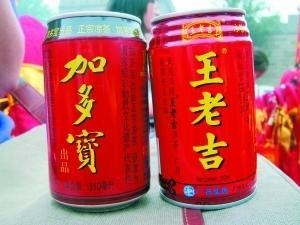
(By Albert Chen) Guangzhou Pharmaceutical Company’s lawsuit (GPC) against Jia Duo Bao (JDB) for false advertising was heard in January of this year at the Guangzhou Intermediate People’s Court. In addition to the arguments held by each party regarding the false advertising, they also disputed whether an injunction could be issued as applied to GPC. Ultimately, the Guangzhou Intermediate People’s Court approved the injunction, basing its decision on findings that  JDB had exploited GPC through false advertising, thereby confusing and misleading consumers. The Court  then prohibited JDB from making advertisements with claims that GPC’s vitamin drink “Wang Lao Ji” had changed its name to JDB, or any other similar slogans indicating that somehow GPC’s Wang Lao Ji product was the same as JDB’s as the result of a name change.

READ MORE

Do All Minimum Price Limits Violate the Anti-trust Law in China?

J&J

(By You Yunting) In the post, “The Legal Sense of the Punishment over the Vertical Monopoly of Mao Tai and Wu Liang Ye By NDRC,” which was posted several days ago, we described China’s first case on vertical pricing agreements (a vertical monopoly contract refers to a contract a monopolistic business signs with its business partner, which limits pricing or contains other monopolistic content). The application of Article 14 of the Anti Monopoly Law adopted by the court in that case was different from the application adopted by the China National Development and Reform Committee. We have found and studied the written judgment for that case, which is now in its second instance. Although according to the Civil Procedure Law, the judgment of the first instance has not yet come into effect due to the appeal, some of the main points of the decision are worth looking at. Therefore, we would like to share our opinions on it with our subscribers.

READ MORE

Full Text of the Anti-trust Punishment Ordered by China NDRC against MaoTai and WuLiangYe Vertical Pricing Monopoly

360截图-94650845_副本

The Price Bureaus under the Provincial Development and Reform Commissions in Sichuan Province and Guizhou Province published their orders for punishment against the vertical pricing monopoly by MaoTai and WuLiangYe on their official websites. By the orders, the two distilleries were fined totaled RMB 449 million yuan (approximately $ 72, 064, 500 dollar). The following is our translation of the full text of the administrative punishments already ordered.

The punishment ordered by Sichuan Provincial Development and Reform Commission:

READ MORE

Would NDRC’s Vertical Pricing Monopoly Fine against MaoTai and WuLiangYe Have Influences on Other China Companies?

360截图-11608502_副本

(By You Yunting) Over the past few days, the writer shared two essays concerning the administrative punishment ordered against Mao Tai Company and Wu Liang Ye Company, the top distilleries in China, over the accusation that they violated the Anti Monopoly Law by concluding monopoly agreements restricting or fixing retail prices (the “monopoly agreements”) with their dealers. The writer has received heated comments and arguments from the subscribers and followers of his Weibo and Blog. Many of these comments support the punishment, but some friends have expressed concerns over the issue. Today, the writer will share his opinions on whether the punishment will influence the normal commercial order.

READ MORE

How MaoTai and Wu Liang Ye Would Defend Against Vertical Pricing Monopoly Fines ordered by China NDRC?

360截图-3173356_副本

(By You Yunting) Abstract: Both Mao Tai and Wu Liang Ye can rely on one of the seven situations in Article 15 of the Anti Monopoly Law for their defense. But, that defense will not be easy because it requires evidence that the relevant agreements will not limit market competitors and that consumers can share the interests produced by the agreements.

In yesterday’s post, the writer analyzed the legal meaning of the punishment ordered by the National Development and Reform Commission (“NDRC”) against two top Chinese distilleries, Mao Tai and Wu Liang Ye. Today’s post will go one step further to describe the way for Mao Tai and Wu Liang Ye can protect their own interests.

READ MORE

The Legal Sense of the Punishment over the Vertical Monopoly of Mao Tai and Wu Liang Ye By NDRC

360截图-11608502_副本

(You Yunting) According to the report, Mao Tai Company and Wu Liang Ye Company, both are the top distilleries in China, would be ordered the penalty of 1% of their annual sales in 2012, approximately RMB 449 million yuan, by the National Development and Reform Commission (the “NDRC”) for their restricting or fixing the retail price of their downstream dealers. You might have noticed “would be”, and we have no idea about whether the final decision has been made, and it could not exclude the possibility that the news report is only the public opinion test by NDRC for its punishment in consideration.

READ MORE

Administrative Warning Issued to 360.cn by Beijing Administration of Industry and Commerce

20130213-周三

 (By You Yunting) Recently, the Beijing Municipal Administration of Industry and Commerce (“Administration”) published on its official Weibo that the Beijing Administration and Xicheng Administration of Industry and Commerce made an appointment with the chief of Beijing’s Qihoo Co. (“Qihoo”), and issued an administrative warning against company conduct, claiming violations of unfair competition laws and regulations related to its “360 Safeguard” for use in computer internet browsers.

READ MORE

The Court Ultimately Supported Guangzhou Pharmaceutical Holding Company’s Application for an Injunction

201302011-周一

(BY Albert Chen  ) Guangzhou Pharmaceutical Holding Company (“GPHC”) is the holder of the王老吉 (the “Wang Lao Ji”) trademark in mainland China. In 2000, it licensed Hongdao Group, a Hong Kong admitted company, to use the trademark. After Hongdao Group used the trademark and caused it to develop a definite business reputation, however, a dispute broke out between the two parties over the right to use the Wang Lao Ji trademark.

In the first round of the fighting between the parties, GPHC used arbitration with CIETAC to cancel the supplementary agreements signed between two parties in 2002 and 2003 based upon the fact that the agreements were executed under commercial bribery. This website has discussed the implementation problems arising in that case. After that, the subsidiary of Hongdao Group that had sold Wang Lao Ji, Jia Duo Bao (“JDB”) began to sell its herbal tea under the brand name 加多宝(the “JDB”) Additionally, JDB used disputed slogans, such as “Wang Lao Ji now calls itself JDB,” “China’s top selling red can herbal tea now call itself JDB.” Claiming that such slogans constituted false advertising or unfair competition GPHC filed for an injunction with the Guangzhou Intermediate People’s Court and demanded an immediate halt to such advertisements.

READ MORE

“Do Not Hire Agreements” among Google, Intel, Apple and Other Tech Firms Violates Chinese Laws?

u=192487636,1824686138&fm=23&gp=0_副本

(By You Yunting) As reported, the CEOs of tech giants Apple, Intel, and Google might be forced to go to court to account for mutual unwritten agreements about not soliciting each other’s workers for employment. These cases started due to the dissatisfaction of relevant employees, who believed that such “do not hire agreements” damaged that legal rights and interests. The news has also revealed emails from former Apple CEO, Steve Jobs, threatening Palm and Google and demanding that they stop using headhunters to obtain the email addresses of Apple employees. This news also raised the concerns within the industry.

READ MORE

Is Tencent’s 51Buy’s “Higher Price Reimbursement” Strategy against 360buy Illegal?

360截图-29354723_副本

(By You Yunting) As reported by the media, the e-commerce site 51buy.com has instituted a so-called “higher price compensation” strategy: if clients of 51buy.com, an affiliate of Tencent, find a lower price for an item on 360.com, then 51buy.com will refund the price difference to the client as credits. According to 360buy.com, however, this action violates the Anti-unfair Competition Law and relevant commercial ethics. 360buy.com therefore sent a warning letter to 51buy.com. In reply, 51buy.com used its Weibo to state that the activity is legitimate and will continue.

READ MORE

Does Wind’s Sale of Tonghuashun’s Stock Constitute Insider Trading?

u32801495062224114695fm52gp0_副本

Previously, we posted “Tonghuashun VS. Wind and the Judgment Standards for Software Copyright Infringement in China” to introduce the copyright dispute between Wind and Tonghuashun. According to a recent report, two lawyers based in Beijing filed a complaint to the China Security Regulatory Commission (“CSRC”) accusing Wind and its affiliated company of insider trading, which has made the dispute more complicated.

As shown by the currently available information, from the second quarter of 2011 to the third quarter of 2012, Wind’s affiliated company was a shareholder of Tonghuashun. When the rumor emerged that Wind would sue Tonghuashun, Tonghuashun’s shares experienced several major trades. As indicated in the report issued in the third quarter of 2012, Wind sold all the Tonghuashun shares it had held. Wind explained this situation by stating that its investment in Tonghuanshun was to use its rights as a shareholder to persuade Tonghuashun to cease infringement. Today’s post will provide analysis on this issue.

READ MORE