Legal Analysis on the Preemption Dispute between Fosun and SOHO China

(by Bai Lituan) After six months of tense negotiation without any satisfactory result over a dispute of the 8-1 Pearl Project land plot on the Bund, Fosun (00656.HK) and SOHO China (00410.HK) finally chose to take the case to court in Shanghai. The first hearing of the case was in late November 2012. Before then, Fosun insisted that the share transaction between SOHO China and Shanghai Zendai Group damaged its right of preemption.

READ MORE

Publishing Regulation from GAPP: Make Most Chinese Websites Illegal in Their Operation

(By You Yunting) Several days ago, the author wrote an essay “Is It Illegal for Amazon.cn Running Kindle Store with A License Borrowed from Business Cooperation?” And in recent, the Office of Legislative Affairs of the State Council published the news that, the General Administration of Press and Publication (the “GAPP”) is working with other departments drafting the exposure draft of Management Measures of Online Publish Service (the “Measures”) (note: the link is in Chinese). According to the Measures, the foreign invested company shall not engage themselves in the online publishing. The domestic publishing units shall report their cooperation with foreign companies in the service of online publishing. For this reason, once the Measures would come into effect, the Amazon, a foreign invested company, would have no access to participate in the business concerning the online publishing service, and its cooperation with Chineseall.com shall be reevaluated for the security by the administration.

READ MORE

Guideline for Foreigners to Apply Work Permit in China

jiuyezheng

(By Albert Chen) According to the statistics issued by the Ministry of Human Resources and Social Security (the “MOHRSS”) in 2012, the employment license released to foreign workers in China has totaled 200, 000. In fact the administration approval with respect to foreigner employment in China is not limited to this license. Considering we have been consulted for many times what approval is legally demanded for the employment of foreigners, today we gonna introduce you the specific procedure. And in general, the approval could include: 1) work permit of foreign employers; 2) work visa; 3) employment permit; 4) physical examination; 5) residence permit.

READ MORE

Should Employer Give Notice to Trade Union before Terminate Employment in China?

trade union

 (By Albert Chen) The dispute over employment termination is quite common in labor conflicts, and whether the employer shall send a notice to the trade union before the termination is commonly seen in such disputes. What then, are the regulations regarding this aspect in China?

I. What is the function of trade union in China?

The role of the trade union is specified in Article 2 of Trade Union Law of PRC (the “Trade Union Law”):

“Trade unions are mass organizations formed by the working classes of their own free will.

READ MORE

Is It Illegal for Amazon.cn Running Kindle Store with A License Borrowed from Business Cooperation?

图片1_副本

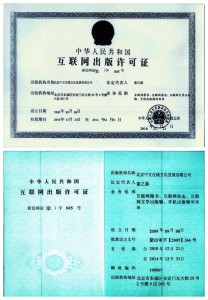
(By You Yunting) On the morning of 13th December, to most one’s inexpectation, Amazon.cn launched itsChinese Kindle Store. As indicated in the web page, it is run by Chineseall.com, a licensed online publisher. That hints Kindle reader would come to China soon. And on the eager of Chinese users,a media report on 14th December (Note: the link is in Chinese) claimed Kindle Store has been halted by the General Administration of Press and Publication (the “GAPP”) for its violation against the law.
“Mr. Wang Qiang, the chief of digital publication section of the Science & Digital Publication Department of GAPP said in his interview that Amazon’s Kindle Store is violating the law for its license borrowed from business cooperation”. Also, it is mentioned in the report that GAPP has inquired and investigated Amazon.cn and Chineseall.com, but yet no result is available now. It is obvious that to Amazon’s plan, it would like to settle the license obstacle by using others’ license. In today’s post, we would like to discuss legal issues concerning licenses on electronic book business.
I. What license is necessary for e-book business?
The qualification of e-book business is mainly regulated in department rules of GAPP. Possibly due to a faster development in science and outdated regulations, the rules are actually could not been seen as an official legislature. It is called Opinions on Developing E-book Industry by GAPP. (Note: the link is in Chinese) By its Article 14, the e-book business of Amazon involves the edition, publish and sales of the e-publication, and thereby shall correspondently apply for three licenses.
Before the e-book, the online game industry is also facing the license problem to publishing the user terminal. At then, two ways are mainly adopted by game companies for the acquisition of business license: 1) the game companies with online publish license could directly submit the game to the GAPP for approval in his own name; 2) those companies with no such qualification, they would present the games to the electronic audio and video publishing house and afterwards to gain the e-publication license. But unlike the publish of online game, for which hundreds of games could be run by a single company and they are possible to gain the license through the publishing house, the release of the e-book may involves millions of works, once they are published through publishing house, all their gains may be inadequate for the payment to the publishing house.
II. Why Amazon did not apply for the license directly?
Could Amazon directly apply for the license for online publication? The answer is no. The shareholder of Amazon.cn is Amazon USA, which makes it a foreign invested company. And by the Guideline of Foreign Invested Industry issued by the Ministry of Commerce, the field of video & audio production as well as the electronic publication and making is prohibited for foreign investment. For this reason, Amazon.cn could no apply for the license solely by itself or in its name.
III. What problems for the cooperation between Amazon and Chineseall.com?
According to the page of Amazon’s e-book:
“The e-book store of Kindle is supported by Chineseall.com, Xinchuwangzheng (jing) No.045”. The Chineseall.com is a licensed corporate, and obviously by Amazon’s plan,it would like to settle the problem of license through the cooperation with a licensed company. But to my personal opinion, the current operation model is defected. To my experience, the domain name, server room, software for reading and payment for book purchase of Kindle e-book store are all supported by Amazon.cn, and it has no connection with Chineseall.com, so where could see the support from Chineseall.com? Therefore, it is not groundless in law that the official from the GAPP said Amazon’s operation under others’ license is violating the law.
Before closing, just half month ago, Xiaomi Inc., a private high tech company, released its set top box–Xiaomi Box, which was also halted by the administration. For that, the author has also written two articles to criticize the authority. For this time, the international giant Amazon couters with the same problem in the publish field. However, either Xiaomi or Kindle Store leads the development direction of science and advanced culture. Their experience in the government’s administration could also explain their “advance”, and the outdate of Chinese authority. And by te existing system in China, no judicial relief is available to Chinese companies when in such situation, and they could not file an administrative lawsuit. The main risk for it is the administration supervision could kill the update and upgrade of high-tech products, which would eventually make our science development legging behind the global trend.

READ MORE

How Much Income Tax Should Be Paid for Foreigner’s Income in China ?

 (By Albert Chen)“Nothing is certain but death and taxes.” Although neither is pleasant to encounter, they are both unavoidable. So then, this post focuses on how foreign nationals working in China pay individual income tax for their gains in China.

I. For what income shall individual income tax be paid?

The taxable items most related to foreign nationals working in China as stipulated by Article 2 of the Individual Income Tax Law of the PRC include:

(1) Income from wages and salaries;

(2) Income from remuneration for services;

READ MORE

Jurisdiction of the Criminal Investigation by Police in the Taobao Malicious Reviewer Case

(You Yunting) In the widely-covered corporate espionage dispute between Sany Heavy Industry (“Sany”) and Zoomlion Heavy Industry Science & Technology Development Co., (“Zoomlion”), Sany has criticized the Hanshou Public Security Bureau (“Police”) in Changde City, Hunan Province, stating that it did not have jurisdiction to investigate the case and that its investigation was in violation of the law. The Hanshou Police, however, replied there is no problem with it handling this investigation. As of now, there has been no final decision in the case, but the jurisdiction issue it has raised has captured the public attention. Coincidently, the author also believes that there are Police jurisdictional issues in the recent Tabao malicious review extortion case.

READ MORE

What Legal Risk May Come to Companies Enrolled in the Non Bank Loan in China?

(By Albert Chen) The capital shortage is inevitable during the company operation, and many operators could be head aching with the financing. Due to the strict demands and procedures for the credit approval in the banks, the company may suffer from the refusal of loan application or delay in lending. At that time, the non-bank loan could play another main role in the company financing. Then what risks may come to foreign invested companies as they enrolled in the non-bank loan when running business in China? Please check today’s post for the answer.

READ MORE

How to Acquire the Trademarks of Companies Whose Business Have Been Canceled or Whose Licenses Have Been Revoked in China?

By Albert Chen

Trademark assignees may sometimes encounter an awkward situation: the target trademark is in the hands of a company that has had its business license revoked or that has been cancelled. Although the trademark is still valid, others seem to have no legitimate means to acquire it. So, under these circumstances, does the assignee really have no means to acquire the trademark? In today’s post, you will find the answer.

I. Why would trademarks be left unused?

According to relevant statistics, the average life of Chinese companies is seven years, and the average of life of privately owned companies is only 2.9 years. On the other hand, however, the validity period of a trademark is ten years, and there is nothing in Chinese law that states that the trademark shall automatically become invalid when the business license of its holder is revoked or the company is cancelled. Especially when the business license has been revoked, the company still has legal capacity. It is merely incapable of conducting civil acts, including the use and transfer of trademarks, because its business license or chop has been announced invalid or has been confiscated under the punishment of business license revocation.

READ MORE

Solutions to Labor Dispute on the Employment of Foreigners in China

By Albert Chen

A subscriber of our website raised a question to us: what to do when countered a labor dispute for foreigners in China, who shall also be protected by local laws? To this question, you may find your answer in today’s post.

I. Are Chinese laws and regulations applying to labor disputes of foreigners?

The main existing laws regulating the employment of foreigners in China is RULES FOR THE ADMINISTRATION OF EMPLOYMENT OF FOREIGNERS IN CHINA (Rules) issued by police, labor and other two departments. According to Article 26 of the Rules:

READ MORE

How to Respond Employees’ Compensation Claim for Office Relocation in China?

By You Yunting

A subscriber of our website asked that what the company shall reply when the employee hand in his/her resignation for the inconvenience occurred from relocation of the office and as for the employee’s claim of compensation.

We reply as follows: Obviously, it could come to the employee’s consideration that the relocation of the office is the statutory situation of “A major change in the objective circumstances relied upon at the time of conclusion of the employment contract renders it unperformable”, and it is also resulted by the employer, and for this reason, they would claim an extra one month salary and compensation.

READ MORE

Could Apple Use Objection to Jurisdiction to Prolong the Litigation Period?

By Albert Chen

The most watched copyright battle between Chinese Writer Alliance (the “Alliance”) and Apple was heard in Beijing No.2 Intermediate People’s Court on the 11th of this month. You may have read our previous essay on the private hearing of the case, and in fact, Apple has also filed an objection to the jurisdiction in the case. Nonetheless, the application was refused by the intermediate court and upheld by the high court after appeal. The lawsuit has been delayed by procedure for nearly half a year, as favored by Apple. Today, we are going to introduce the regulation on the objection to civil jurisdiction in China.

READ MORE

Has Apple Lost Opportunity of In-Camera Hearing on Its Case?

By Albert Chen

The most watched dispute between Baidu (NASDAQ: BIDU) and Chinese Writers Alliance (the “Alliance”) is heard on 11th of October in Beijing No.2 Intermediate People’s Court. That lawsuit is filed following the battle against Baidu by the Alliance. Before the hearing on 11th, Apple applied to the court for the hearing in camera with the claim that the case is with trade secret related. After the consideration by the court, such an application was refused by the judge, yet it still decided the procedure may switch into be in private when one the interrogation involves the business secret. In today’s post, you may see our analysis on the “lawsuit in camera” in China.

READ MORE

Analysis on Common Legal Risk of Chinese Company’s Ads

By You Yunting

The competition in Chinese market is so fierce that the company would strive to make their ads be more outstanding, yet that could also bring them the risks of administrative punishment. In today’s essay, you will see our analysis on the common risk for corporate propaganda.

I. No fulfilling to the promise in propaganda

The most typical case shall be the ads from Beijing Hyundai (note: the link is in Chinese), the joint venture of Hyundai in China. As claimed in the its ads, the chief of the company promised not to reduce the sales price of its vehicle in the coming 2 years, which soon be overthrown by its price adjustment within 120 days after that with the pressure from market competition. On that, we saw the consumer filing a group lawsuit against its break-in of promise. Despite as investigated by the company that, the words of the chief is not quit the same as claimed in the media report, and Hyundai was therefore judged of no liability, the Korean brand faced a devaluing of social reputation in China. In our opinions, the losses of intangible asset of the car maker are much more than the claimed compensation. And that shall mainly lie with the over promise by the company.

READ MORE
