Analysis of the Assumption of Liability for E-Merchants in IPR Disputes in China, I

—Interpretations on Solutions to Several Issues in Hearing E-Commerce IP Infringement Cases

(By Luo Yanjie) In recent years, E-Commerce in China has thrived along with the development of online shopping. According to some news reports, the volume of the transactions from 360buy.com totaled more than RMB sixty billion Yuan, and Suning’s online sales achieved a comparatively paltry RMB 18.336 billion Yuan. With respect to Taobao.com and its affiliated websites, their business gains have vastly superseded all other rivals. By November 2012, Taobao.com and Tmall had sales of over RMB 1000 billion Yuan, which is almost three times that of Bailian Group, Suning and Gome’ s annual income in 2011 combined. The aforesaid three companies are currently the top three retail chains in China.

READ MORE

Whether Sales Agents Are Included in the Trademark Agent Squatting Articles of China Trademark Law?

360截图-12690338

(By Luo Yanjie) Due to the late establishment of the relevant law and system, the trademark squatting situation in China is quite serious, and much squatting is conducted by trademark agents or partners. Article 15 of the Trademark Law provides that:

“Where any agent or representative registers, in its or his own name, the trademark of a person for whom it or he acts as the agent or representative without authorization therefrom, and the latter raises opposition, the trademark shall be rejected for registration and prohibited from use.”

READ MORE

Is it Infringing LV’s Trademark Right when Registering Similar Images as Patented Design?

20130215-周五

(By Albert Chen)  Brief of the case:The Louis Vuitton Company (the “LV Company”) holds the rights to the “LV” trademark in Mainland China, and it registered the trademark “LV” as early as January 15, 1986. At present, the term of protection of the mark has been extended to January 14, 2016. The registered classes for the “LV” trademark include toys, Chinese checkers, Backgammon, golf gloves, etc. On November 13, 2003, Guo filed an application for a patented design called “Mahjong (23)”, and the application was approved and published on July 14, 2004. The published patent includes 5 pictures, which contain the front view, left view, back view, top view and three-dimensional views. Among them, the front view contains an image consisting of the letters “L” and “V.”

READ MORE

Analysis on Trademark Infringement Case of Adidas

20130214-周四

 (By Luo Yanjie) In 2001, the globally known sportswear brand Adidas acquired a trademark certificate issued by the Trademark Office of the State Administration of Industry and Commerce (“SAIC”), namely a certificate numbered 1489454 for the “three slants” trademark, which was approved in Class 25 for clothing, ball shoes, hats, socks and other similar products; in addition, the certificate numbered 1536558 for the “three slants” trademark was approved in Class 18, which covers bags, clothing case, traveling bags and belts. On June 21 2003, Adidas transferred the trademarks to its affiliates.

READ MORE

Why Pfizer Did Not Win the Blue Pill Trademark Infringement Case?

360截图20130209162739984

(By Luo Yanjie) Pfizer is the holder of a blue, diamond-shaped mark (the “Pfizer trademark,” number: 3110761). The trademark was approved in Class 5 for pharmaceutical preparation, medicines made for human consumption, antibiotics, medical nutrition supplements, cleaning agents, and veterinary preparation. The registration period for the trademark commenced on May 28, 2003 and will expire on May 27, 2013.

On July 21, 2005, Pfizer representatives purchased a box of medicine priced at RMB 50 yuan from the New Concept Company. The medicine was mainly intended to cure “erectile dysfunction.” The front and back cover of the package contained both “Viagra”[1] and “TM,” which was underlined and accompanied by the diamond image. The manufacturer was printed as “Jiangsu Lian Huan Pharmaceutical Co., Ltd” (“Lian Huan”) dated on April 14, 2005. The opaque inner packaging also contained the words “Viagra” and “TM,” as well as the manufacturer “Lian Huan.” The packaging of the medicine was also diamond-shaped, in accordance with the shape of the tablet. The medicine itself was light blue in color, diamond compass shaped, and contained the words “Viagra” and “TM.” Pfizer believes that these products constituted three-dimensional trademark infringement and thereby sued the manufacturer and seller.

READ MORE

Analysis on Proof Requirements in Figurative Trademark Infringing Others’ Copyright Cases by China Court

360截图-3444018

— A trademark certificate cannot be taken as evidence of copyright ownership

(By Luo Yanjie) On June 27th 2002, Hua Yuan Company (hereinafter “Hua Yuan”) filed an application to revoke the disputed trademark “老人城LAORENCHENG” (hereinafter Lao Ren Cheng) pursuant to on Article 31 of the Trademark Law, with the claim that the trademark infringed upon Hua Yuan’s first rights in the mark. The disputed trademark was applied in Class 25 with registration number 1497462. During prosecution of the trademark, Hua Yuan submitted certificate of the No. 590673 trademark and No. 696935 trademark as evidence of its first rights in the mark. As indicated by the documents, the trademarks were registered before the trademark “Lao Ren Cheng.” Considering the opposition was mainly filed on the ground that Hua Yuan’s first rights had been infringed rather than due to similarity of the trademarks, the focus of this particular case depends on whether a trademark certificate may be treated as evidence of trademark ownership.

READ MORE

Comparison of Administrative and Judicial Methods of Domain Name Dispute Settlement in China

(By Albert Chen) Currently, the main dispute resolution channels for domain name disputes include semi-administrative settlement and judicial settlement. In terms of regulation, the Measures for Settlement of Domain Name Disputes (the “Measures”) were promulgated as early as 2002 and then amended in 2006. The Measures are the primary basis for semi-administrative settlement of domain name dispute. As to judicial methods, the main basis is the Interpretation on Several Issues Concerning Application of Law in the Hearing of Computer Network Civil Disputes” (the “Interpretation”) promulgated by the Supreme People’s Court.

READ MORE

A Brief Introduction to China’s Collective Trademark Application and Use System

d商标

(By Luo Yanjie) A recent report said that the National Tourism Resort Brand Association for the well-known tourist attraction, Dian Lake in Kunming, received approval for a “D” type trademark certificate from the State Trademark Office—Yunnan Province’s first collective trademark. The above report shows that the collective trademark is of great value, but currently very few have been registered. What then are the features of the application and registration for collective trademarks compared with the normal ones? And, what factors should be noted for their use? In today’s post, we would like to share China’s collective trademark system with the reader.

READ MORE

Is OEM the Safe Harbor for Trademark Infringement in China?

(By Albert Chen) Whether original equipment manufacturing (OEM) can lead to trademark infringement has been long argued. The opinions on it may vary among the judicial organs in various regions and between the judicial department and various administrative departments. A Shanghai court once confirmed that a processing party should not assume infringement liability in the case Shenda vs. Jolida. Following this decision, some began to advocate the idea that OEMs could be considered a safe harbor in the seas of trademark infringement. Can that point of view reasonably be established in China? In today’s post, we would like to introduce you to Chinese cases and popular opinions in judicial circles concerning OEMs and trademark infringement.

READ MORE

Why Apple Failed to Stop the Application of Apple-Trademark by Others?

20121220093547935

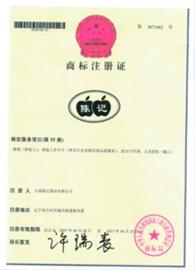
(By Luo Yanjie) Two companies with a great gap in their relative strength have been seen battling with each other over the trademark of an apple image; they are the globally known Apple Inc. and a fruit food making company in Zhuang He, a small city of China. At the end of the battle, the small company won the fight, Dalian Chenji Guopin Co., Ltd. (the “Chenji”) was supported by the authority in the dispute lasted for 5 years. The dispute was triggered by Chenji’s design, which consists two apples overlapped together, and the Chinese characters “陈记” written on them. In examining the mark, we can find the apple resembles that of Apple’s, which appears to have been bitten by someone. For this reason, Apple filed the trademark opposition with the trademark office.

READ MORE

All General Vocabulary Cannot Be Registered As Trademarks in China?

1101051007434

(By Luo Yanjie) Early in this year, JDB Inc., the famous herbal tea manufacturer argued with Guangzhou Pharmaceutical Company (the “GPC”) regarding ownership of the Wang Lao Ji trademark, which concluded in JDB being ordered to cease its use of the trademark. Now, JDB has begun its second battle with GPC, this time accusing GPC of infringeing the trademark “Ji Qing Shi Fen (吉庆时分).” Wanglaoji Health Industry Co. Ltd. (Guangzhou Wanglaoji Company) affiliated with GPC, recently made a statement that the State Trademark Office had accepted its application to revoke the registration of “Ji Qing Shi Fen (吉庆时分)”, the main reason being that the mark is considered generic in the sense that it is vocabulary in common use. Due to this, the State Trademark Office further advocated that it is uncertain whether there can be any exclusive right in the use of the registered mark.

READ MORE

Why Nippon Lost Its Lawsuit against Trademark Infringement by Taobao Sellers?

u=2281873618,2747446169&fm=23&gp=0_副本

(By Luo Yanjie)In March 2011 the globally well-known paint producer Nippon Paint Co. Ltd. (“Nippon”), discovered Zhanjin Company had set up a shop on Taobao.com, the biggest online market in China, and had been using Nippon trademarks, ads and trade dress concerning Nippon products with no approval or license from it. With no reply from Taobao.com after filing a complaint, Nippon sued Zhanjin and Taobao in court, and yet the complaint was rejected by the judge. Dissatisfied with this result, Nippon made an appeal to the Shanghai No.1 Intermediate People’s Court, who ruled that the adoption of Nippon’s trademark by Zhanjin is for product information display only, and it could lead to no likelihood of confusion among the public. In addition, the court ruled that no commercial interests of the plaintiff would be damaged. Based on these rulings, the alleged trademark infringement claim could not be established, and therefore the original decision was maintained.

READ MORE

How Large Is the Scope of Protection for Well-Known Trademarks in China? (II)

2e2eb9389b504fc29c72b99de5dde71190ef6d7c

In yesterday’s post, we introduced trans-class protection for well-known trademarks and the factors that might lead to this status being granted. Today, we would like to conclude by explaining situations in which well-known trademarks will not be granted trans-class protection.

III. Situations where trans-class protection will not be granted to well-known trademarks

As discussed above, well-known trademarks only enjoy trans-class protection when meeting the following conditions. Now, we will introduce some common situations where trans-class protection cannot be achieved:

READ MORE

How to Settle Trademark and Trade Name Conflict in China

By Albert Chen

For the prior approval on the company name by the administration of industry and commerce as well as the preliminary examination by the trademark authority in China, no material checks on any conflict against first rights would be conducted. And that has resulted in the numerous conflicts between the trade name and trademark. In today’s post, you could see our opinions on the settlement of the conflict.

I. The administrative way

It is feasible to settle the trademark and trade name conflict through administrative way in China. By Opinions on Several Issues concerning the Settlement on the Conflict between Trademark and Trade Name (the “Opinions”) issued by the SAIC (the State Administration of Industry and Commerce), the conflict occurred within a province shall be settled as in charge of the provincial administration of industry and commerce, and those involves different provinces, shall be settled by SAIC.

READ MORE

Is It Infringing to Show Others’ Trademarks on Exhibitions?

By Luo Yanjie

Previously, our website introduced issues of trademark and patent in China exhibition: Legal Issues concerning Trademark during the Exhibition in China, Patent Issues for Attention on the Exhibition in China. Recently, a customer told our attorneys that they found a company using their registered trademarks for the promotion on similar goods in an exhibition. The company learned a little Chinese law and they know only Chinese patent law provides that “offer to sell” is infringement. So they ask our advice about that if using other’s registered trademarks constitute trademark infringement?

READ MORE