
(By Zhan Yi) On August 30, 2013, the Standing Committee of the National People’s Congress promulgated Decisions of the Standing Committee of the National People’s Congress Concerning Alterations to the Trademark Law of the People’s Republic of China, which shall be implemented on May 1, 2014. Our website previously translated the Full text of 2013 China Trademark Law, we provided a Comparison Version highlighting the differences between the 2001 and 2013 Trademark Law. In today’s post, our website will introduce and discuss the revised content within the 2013 Trademark Law. Without further ado, we will now move on to the second part of our examination of the 2013 Trademark Law.
Introduction to the 2013 China Trademark Law, Part I
(By Zhan Yi) On August 30, 2013, the Standing Committee of the National People’s Congress promulgated the Decisions of the Standing Committee of the National People’s Congress Concerning Alterations to the Trademark Law of the People’s Republic of China, which shall be implemented on May 1, 2014. Our website has already translated the Full text of 2013 China Trademark Law in a previous post, and compiled and provided a comparative version highlighting the differences between the 2001 Trademark Law and 2013 Trademark Law. Starting with today’s post, we will introduce and discuss the most important revisions and changes found in the 2013 Trademark Law. In today’s post, we will introduce the first part.
Why did the Court not Approve the Trademark Coexistence Agreement?

(By Luo Yanjie)Abstract: Current laws have no provisions as to whether a trademark coexistence agreement made by and between the trademark holder with a prior trademark and the trademark applicant with a latter trademark could impact the validity of the latter trademark. Under such circumstances, the courts shall consider and decide whether to approve the above-mentioned agreement. Where litigation concerning trademark ownership affirmation takes the form of an administrative suit, the courts shall, within the scope of the Trademark Review and Adjudication Board’s (the “TRAB”) administrative acts, decide whether its administrative acts are valid and rational.
The Establishment Procedure of Foreign-Capital Enterprises in Shanghai FTZ
(By Bai Lituan) On August 30, 2013, the Standing Committee of the National People’s Congress enacted the Decision of the Standing Committee of the National People’s Congress on Authorizing the State Council to Temporarily.
Adjust the Administrative Examination and Approval of Relevant Laws in China (Shanghai) Free Trade Zone (the “DESIVISION”). The DESIVISION authorizes the State Council to temporarily adjust about 11 administration examinations and approval of the establishment and merger of foreign-capital enterprises including the wholly foreign-owned enterprises, Sino-foreign cooperative joint venture and Sino-foreign equity joint ventures in the Shanghai Pilot Free Trade Zone (the “FTZ”). Earlier reports once said that it would temporarily suspend the implementation of the Law on Wholly Foreign-Owned Enterprises, the Law on Sino-Foreign Cooperative Joint Ventures and the Law on Sino-Foreign Equity Joint Ventures in the FTZ. In effect, those three laws involve the establishment, business structure, foreign exchange management, labor and personnel, finance and accounting, dissolution and liquidation, etc. The DESIVION of the National People’s Congress just temporarily suspends 11 administration approvals and changes them into filling administration. The Law on Wholly Foreign-Owned Enterprises, the Law on Sino-Foreign Cooperative Joint Ventures and the Law on Sino-Foreign Equity Joint Ventures will still be enforced in the FTZ and be temporarily adjusted.
China’s Telecom Anti-Monopoly: What Troubles is the China National Development and Reform Commission Meeting?

(By You Yunting) According to media reports, the officer in charge of the China National Development and Reform Commission (the “NDRC”) in a recent statement was quoted as saying that the NDRC had always, and would continue to supervise the monopoly issues in relation to broadband access provided by China Telecom and China Unicom, and that the NDRC suffered from various reactions when it announced its investigation into China Telecom and China Unicom at the end of 2011. He also said that currently the 10G of bandwidth provided by China Telecom and China Unicom had been extended to 100G, and that it would still urge China Telecom and China Unicom to rectify this issue within a period of three to five years.
Why did the “Gatekeeper” of the Capital Market Fail to Fulfill its Duties?
(By Yu Zhiyuan and Bai Lituan) In the capital market, agency institutions’ participation greatly reduces the degree of information asymmetry of market subjects, and plays a significant role in the capital market; thus, the agency institutions and their professionals are named by the industry as the “gatekeepers” of the capital market. Ever since the Enron Corporation scandal became public and the Sarbanes-Oxley Act (SOA) was published, in order to better protect the interests of public investors, all countries are attempting to apply new approaches to security supervision. Thus far, enhancing the gatekeepers’ obligations is one of the ways to realize investor protection. Recently, fraudulent securities issuances and severe distortions of information disclosure are occurring frequently in China’s capital market, and this has a direct causal relationship with the gatekeepers’ mechanism failure.
Why QQ Pinyin suffered due to Unfair Competition from Sogou Pinyin?

(By You Yunting) Abstract: Although the Advertising Law stipulates that advertisements may not make excessive use of superlatives in advertising products and services, a business operator using absolutist phrasing and imagery alone is insufficient to find one guilty of unfair competition. Although it is true that many methods of advertising on the Internet are not yet clearly defined in the laws, if a company’s methods would be considered to go beyond those of a normal business practice, it can be assured that those operators may face the possibility of lawsuits and possible criminal actions.
Why could China’s Courts Decide for Audi’s “TT” to Apply for a Trademark?

(By Luo Yanjie) Abstract: as for whether trademarks are similar, many times, it is decided on the subjective cognition of the judge. Furthermore, considering the fact of the distinctiveness of a trademark, whether the “TT” trademark has distinctiveness is still in doubt.
Automobile models are always composed of simple numbers and English letters. Sometimes manufacturers of bestselling cars once hoped to register these simple models as trademarks but all failed (for example, A6, A4, etc.). However, Audi canceled the rules handled down by the Trademark Review and Adjudication Board through administrative litigation processing, thus possibly obtaining trademark registration:
Four Problems of China Supreme Court‘ s Judicial Interpretation on Crackdown of Web Rumor
(By You Yunting) Recently, the Supreme People’s Court and the Supreme People’s Procuratorate jointly issued the Interpretations on Some Issues Concerning the Application of Laws for in the Handling of Defamation via Information Networks and Other Criminal Cases (hereinafter the “Judicial Interpretation”).
Upon reading the whole text of the Judicial Interpretation, in the author’s opinion, this Judicial Interpretation has a bad negative impact upon the rule of law and freedom of speech rather than the positive value of cracking down on web rumors and purifying the environment of internet, because of considering that this Judicial Interpretation attempts to use the idea of “governing the country with severe law during the trouble times” to solve the web rumors so that current crackdown against web rumors is too hard and the legislative proceedings of this Judicial Interpretation are defective .
II. The Problem in Violation of the Principle of Legality
Infringing Goods shall not be Determined as Well-Known Goods

Abstract: Under the circumstances of prior trademark rights on the same goods, determining similar trade name used by another person as the special name belonging to a well-known commodity shall be limited. Furthermore, the courts shall necessarily review the ownership of prior trademark as the fact of a case.
(By Luo Yanjie) The special name belonging to a well-known commodity is a protective approach for an unregistered trademark. In particular, the special name shall have no severability itself; otherwise, it shall be limited. In today’s post, we will introduce a case with this element with the following analysis:
Why Procter &Gamble’s “Pantene” Trademark cannot Obtain Cross-Protection?

(By Luo Yanjie) Abstract: Only if another trademark would “mislead the public and injure the interests of the registrant of a well-known trademark, the well-known trademark could obtain “across protection”. The court shall apply on leniency protective conditions of “injure the interests of the registrant of a well-known trademark” to cross-protection for well-known trademark.
Generally speaking, the well-known trademark can get the trademark cross protection, in particular, the “cross-category” does not mean that the well-known trademark can obtain only related categories’ protection , not all categories. A case in our today’s post is about a well-known trademark failure to get the cross protection sharing with readers as follows,
Full text of 2013 China Trademark Law
Notice: On August 30, 2013, China issued a new revision of Trademark Law which will come into force on May 1, 2014. We spent a week to translates the new revision of the Trademark Law into English and post it today. If any one needs to reprint our translated revision on web, please note the following content on the reprint page: This law is translated by Bridge IP Law Commentary http://www.chinaiplawyer.com.
Trademark Law of the People’s Republic of China
( Adopted at the 24th Session of the Standing Committee of the Fifth National People ‘s Congress on August 23, 1982, as amended according to the “Decision on the Revision of the Trademark Law of the People’s Republic of China” adopted at the 30th Session of the Standing Committee of the Seventh National People’s Congress on February 22, 1993, and the “Decision on the Revision of the Trademark Law of the People’s Republic of China” adopted at the 24th Session of the Standing Committee of the Ninth National People’s’ Congress on October 27 2001, and amended for the third time according to the “Decision on the Revision of the Trademark Law of the People’s Republic of China” adopted at the 4th Session of the Standing Committee of the Twelfth National People’s’ Congress on August 30, 2013 )
Trademark Law of the People’s Republic of China (2013, Comparison Version)
Noctie: On August 30, 2013, China issued a new revision of Trademark Law which will come into force on May 1, 2014. We spent a week to translates the new revision of the Trademark Law into English and post it today. If any one needs to reprint our translated revision on web, please note the following content on the reprint page: This law is translated by Bridge IP Law Commentary http://www.chinaiplawyer.com.
To help foreign friends better understanding of Chinese laws, today we would first publish a comparison of different versions between the 2001 version and the 2013 version.
Introduction to China Courts’ Evidence Preservation System in Software Litigation
(By You Yunting) China’s computer software infringement is very severe. In litigations of cracking down on computer software infringement, however, how to fix infringement evidence is always a real problem for right holders. In practice, there are two means of computer software evidence perseveration: one is evidence preservation taken by the right holder, and the other is applying for the court to take evidence preservation.
Right holders always would like to take pretrial evidence preservation in network software infringement, cases of installing infringing computer software in public places such as Internet bar. As for enterprises that use unauthorized software for commercial use in workplaces, however, in most cases, evidence preservation is taken by the administrative authorities of copyright or people’s courts. At present, China’s administrative organization have involved less and less in software infringement litigation, because the mainstream opinion is that administrative organizations shall handle with the cases involving in infringing public interests whereas software infringement cases regarding as civil disputes between right holders of software and unauthorized users of aforesaid software shall be settled down though civil proceedings. In our today’s post, we would like to introduce some legal ground of software pretrial evidence preservation taken by the people’s courts in China.
Introduction to the New Laws and Policies in the Shanghai Free Trade Zone
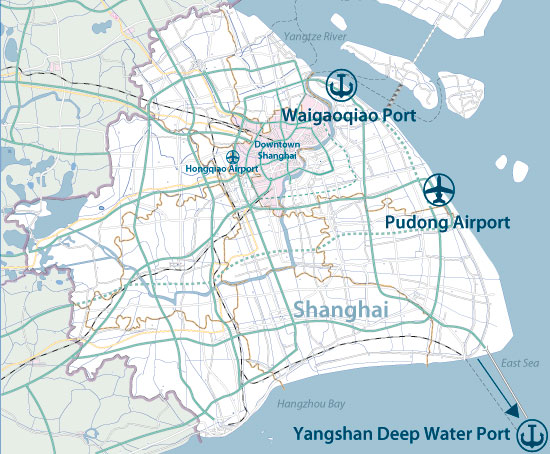
(By Dr. Qiao Wenbao) On August 22, 2013, the State Council officially approved the establishment of the China (Shanghai) Free Trade Test Zone (the “FTZ”). Compared with regular domestic bonded zones, export-processing zones, and the Qianhai Bay economic zone previously approved, the FTZ is of profound significance upon the degree of openness and the influence of China’s development in the future.
The FTZ occupies an area of 28.78 square kilometers, including the Yangshan Free Trade Port Area, the Waigaoqiao Free Trade Zone, Waigaoqiao Free Trade Logistics Park, and the Shanghai Pudong Airport Comprehensive Free Trade Zone. The FTZ, centered on the Waigaoqiao Free Trade Zone and combined with Yangshan Free Trade Port Area and Shanghai Pudong Airport Comprehensive Free Trade Zone, is quickly becoming the new experimental field in China’s economy, promoting the development of Shanghai’s financial, trade and shipping center.