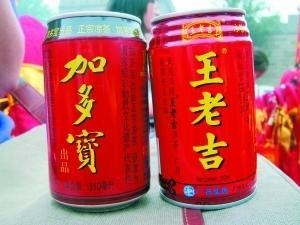
Will the Wang Lao Ji Brand Holder’s Litigation Injunction Application Against Jia Duo Bao Be Approved?

u=1733134819,3834264073&fm=23&gp=0

(By Albert Chen) The hearing in the false advertising dispute between Guangzhou Pharmaceutical Holding Company (“GPHC”) (SSE: 600332) and Jia Duo Bao (“JDB”) was held in January of 2013 in the Guangzhou Intermediate People’s Court. In addition to the arguments over false advertising, the application for a litigation injunction has been hotly debated. Today, we would like to introduce you to the injunction, which is called “preliminary execution” in China’s Civil Procedure Law.

READ MORE

Is It Lawful for News Websites to Demand Payment of Fees for Google and Baidu Searches

(By You Yunting) According to a report in the New York Times, as also reported by some European websites, Google is recompiling its searched news results as a news page. It may be said that this method could infringe the copyright of the original publishing websites and, as a result, Google should pay fees for the websites. This idea has received support from both the French and German Governments, yet Google believes that its behavior fully conforms to the law, and thus should not have to pay any fees. In China, the main search engines Google and Baidu provide this kind of news search service, and today’s post will discuss whether it is lawful for news websites to claim fees from the search engines.

READ MORE

The Judicial Jurisdiction of Network Infringement in China

By Albert Chen

In the post Could Apple Use Objection to Jurisdiction to Prolong the Litigation Period?, we introduced the objection to jurisdiction Apple submitted to the Beijing Second Intermediate Court after it was sued by the China Writers Alliance over downloads in Apple’s App Store. In China, the infringement or tort cases shall be brought to the court of infringement place or the domicile of the defendant, and the infringement place may include the place where the infringement takes place or the place where the consequences of the infringement are felt. With regard to network infringement, could the place where the consequence of infringement is felt include any computer terminal? Today, we will introduce the relevant system.

READ MORE

Different Judicial Opinions from Cases on Name Trademarks and Domain Name Conflicts in China

By Albert Chen

In the first half of this year, our website posted an essay discussing the domain name dispute heard in the Shanghai No. 2 Intermediate People’s Court (“Shanghai Court”) concerning the renowned comedian Zhou Libo. Recently, the Beijing No. 1 Intermediate People’s Court (“Beijing Court”) decided a very similar case. Yet there were very different standards used to decide the different cases in Beijing and Shanghai. The most critical point is the determination of whether, after receiving the invitation to buy the domain name, the rights holder had bad faith during registration and use of the domain name.

READ MORE

Analysis on Legal Risk of Out-of-Account Kickback by Foreign Invested Companies in China

By Luo Yanjie

As the mid-autumn festival is drawing on, the producers and sellers of moon cakes in cities throughout China (note: the link is in Chinese) are keen in the promotion of the snack. And by the investigation of some reporters, some merchants even try to get a big order for the moon cake by risking the kickback, and by one case, the reporter pretended to order 200 boxes of moon cakes in the name of a company, the kickback offered to him is 6% of each 10 thousand purchase, that means a total feedback of RMB 2, 400 will be paid to the reporter for the 200 boxes purchase. And in addition to the official kickback, another part of rebate from the salesman is also available.

READ MORE

Is It Illegal for 360buy Blocking Etao’s Price Comparisonand Plugin?

Today we are going to discuss legal problems concerning the 360buy blocking Etao.com, Alibaba’s price comparison website,’ and its plug-ins. And it shall be first pointed out, the author has no relation with either party of the event. The introduction to the event background:

In November of 2011, 360buy took technical measures to block the price search engine of Etao, who afterwards replied it would no longer index the price data of 360buy by Weibo. Yet in the price war between 360buy and Suning, Etao again published the live price comparison between 360buy and other online shopping stores. And in recent, 360buy further blocked the browser plug-in of Etao on 360buy.com, and the plug-in is designed to show the prices on different websites of the same product. Etao stated 360buy is paralyzing its software.

READ MORE

Analysis on Search Promotion’s Infringement Liability against Trademark and Fair Competition

By Luo Yanjie

In recent, 360buy.com, also called Jingdong Market, which is a famous online retailer in China, lost its lawsuit in an unfair competition dispute. In the case, another company called Jingdong Rubber registered the domain name of jingdong.cn, who recently found 360buy.com (Jingdong Market) will be on top of the search result of www.jingdong.cn, and right to the results is the link of “brand propaganda”. Then Jingdong Rubber filed a lawsuit against 360buy.com and Baidu (NASDAQ: BAIDU), accusing the defendants of unfair competition. After the hearing of the 1st instance, 360buy.com was deemed liable for unfair competition, yet meanwhile, Baidu was decided free of liability.

READ MORE

Damages from Over Promotion by E-retailers

Recently, a sale’s promotion campaign (note: the link is in Chinese) is launched by China e-commerce merchants on Weibo, a twitter like website. On 14th August, Mr. Liu Qiangdong, CEO of 360buy.com made a statement on Weibo that all the major home appliances sold on his website will maintain ZERO gross profit in the coming 3 years, and will also be 10%  cheaper than those sold by Sunning and Gome, who are also the major E-retailers in China. Facing the challenge, Sunning (SZSE: 002024) and Gome (SEHK: 493) replied that all their commodities will be cheaper than 360buy.com. After that, both sides announced they will adjust the prices in time to ensure its own prices are lower than the opponent. The quarrel on Weibo triggered a promotion battle between the e-retailers, and after the 1st day of fighting, 360buy.com said the total sales of the day had been over RMB 200 million.

READ MORE

Cartier sues Walmart’s Yihaodian of Trademark Infringement and Non-fair Competition

—Complementation between Anti-unfair Competition Law and Trademark Law

By Luo Yanjie

Anti-unfair competition law, trademark law, Walmart, Cartier, Yihaodian, yihaodian.com, Yihaodian being charged, Cartier sues Yihaodian, malicious competition in market, unfair-competition infringement, trademark infringement, trademark lawyer, trademark infringement definition, establishment of unfair-competition, legal protection of trademark in unfair competition law, false propaganda, revision of anti-unfair competition law, completion of anti-unfair competition law,

READ MORE

How to Avoid Online Game’s Risk of Gambling in China?

Zhengtu is a online game operated by Giant China

By Albert Chen

In recent, the report of the online game gambling in some regions in China again hits the headline of the newspaper, and accordingly, the Ministry of Culture of China (MOC), the department supervising and managing the operation of online game, issued the notice (note: the link is in Chinese), demanding a new round of special examination on the online broad game in this May to June.

Actually, this is not the first time we have seen the special notice by MOC on the online gambling. Before that, MOC has respectively with the Ministry of Public Security and the Ministry of Commerce publicized Notices on the Regulation of Online Games Operation Order and Prohibit Gambling in Online Games (the “Notice I”) and Notices on Reinforced Management on Virtual Currency in Online Game (the “Notice II”). Basing on these notices, MOC afterwards promulgated the Interim Measures on the Online Game Management (the “Management Measures”) in June of 2010.

READ MORE

Legal Analysis on Conflict between Domain and Name Right According to Chinese Law, II

By Albert Chen

III. What are the user’s interests on the domain and fair reasons to the registration and using?

At present, the standard in practices to judge the user enjoys the interests on the domain is to determine whether there’s a connection between the user and the domain or the main part of the domain, and this connection involves the overlap or correspondence between the name, company name or trademark of the user and the domain.

Surely, it also comes to our attention that even there’s no overlap or correspondence as mentioned above, the interests on the domain of the user or a fair reason to the registration or using of the users could also be established when a domain has been operated for a long period and thereby accumulates the social reputation, like the 163. com of Netease and 360buy.com of Jingdong.

READ MORE

Legal Analysis on Conflict Between Domain and Name Right According to Chinese Law, I

By Albert Chen

In recent, one of the hot news in China, might be Mr. Zhou Libo’s taking back the network domain in his name (Zhou is the comedian star of Shanghai style small talk, a talk-show like performance in Shanghai dialect). Ms. Yue from Beijing registered “zhoulibo.com” (the “domain”) in 2007, and in September of 2011, Mr. Zhou filed the arbitration in the Asian Domain Name Dispute Resolution Centre (ADNDRC), claiming that the main part of the domain is as same as the pinyin of his name which is highly possible to result in the misunderstanding among the public. The ADNDRC finally adjudicated the domain to Mr. Zhou. For the dissatisfaction with the decision, Ms. Zhou brought the dispute to Shanghai No.2 Intermediate People’s Court, but the court refused all the claims of her.

READ MORE

Can Court Challenge Leviathan with New Anti-monopoly Judicial Interpretation?

By Frank Yu

China anti-monopoly law, judicial jurisdiction, burden of proof, liability scope, anti-monopoly judicial interpretation, administrative monopoly, the industries which exercise monopoly over the production and sale of certain commodities, price supervision, public company, operator with monopolic position, abuse dominant position in the market, market structure, competition condition, market dominant position determination, regulation on monopolic conduct, sell with price lower than cost, refuse to transact, different treatment of price, fairness, justice, independence of courts, large scale state-owned enterprise, fair competition, economy operation efficiency, consumer interests, social public interests, administrative level, anti-monopoly lawsuit social effect, state secret, business secret, personal privacy, opened hearing, showed to the agent, confidentiality commitment, expert witness, cross inquiry

READ MORE

The Highlight of the Anti-Monopoly Judicial Interpretation

By You Yunting

On 8th May of 2012, the Supreme People’s Court (the “SPC”) issued the Regulations on Several Issues concerning the Law Application in the Hearing of Civil Disputes Arising from the Monopolistic Conduct (the “Judicial Interpretations”). By the Judicial Interpretations, the people’s court shall accept the lawsuit filed by the citizens for the monopolistic conduct; for the joint-price-increasing and other monopolistic conducts, the alleged company shall take the burden of proof. According to the statement of the SPC, the anti-monopoly lawsuit shall be no longer pre-conditioned by the administrative determination. The regulation will come into effect from 1st of June. This is another major event after the enforcement of Anti-monopoly Law from 1st August 2008, today, we will make introduce you the highlight of the new regulation.

READ MORE