Introduction to the Resolution to the “Two Boards” Issue in China Listed Companies

(By Yu Zhiyuan) Recently, the author was interviewed by the media on the issue of the “two boards” of Jiulongshan, a Chinese listed company. The author would like to analyze the basic legal principles concerned in the “board battle” in this particular case.

I. The ummary of the Issue

Shanghai Jiulongshan Travelling Co. Inc. (hereinafter “Jiulongshan”) is a listed company, and recently, its original biggest shareholder (represented by Mr. Li Qin Fu, chief of the company board) transferred approximately 29.9% of the company’s share options to HNA Property (hereinafter “HNA”). As a result of that transaction, HNA became the biggest shareholder and company registration with the Ministry of Industry and Commerce was amended to reflect those changes. However, HNA has not completed its payments in consideration of the stock transfer. On 21st December 2012, HNA called an impromptu shareholders’ meeting as the company’s biggest shareholder. At the meeting, it passed on the suggestion to recall Mr. Li Qin Fu to act as head of the board of the company, and thereafter voted in new board members. Beijing Kang Da Law Firm filed a brief to affirm the legal effectiveness of the decision and the voting. In reply to Kang Da’s brief, Jiulongshan held its own board meeting on 25th December 2012, at which most board members claimed that HNA lacked the ability to hold its own impromptu shareholders’ meeting. In addition, the board made an announcement, supported by the legal opinions of Shanghai-based Yan Yi Ming Law Firm, that any decisions made by the temporary shareholders at their previous meeting on 21st December 2012 were invalid.

READ MORE

China’s Latest Laws and Regulations in January 2013 (II)

VI. Thirteen Departments Jointly Issued Opinions on the Protection of the Rights and Interests of the Inventors of Service Inventions.

On January 1, 2013, thirteen departments, including the State Intellectual Property Office, the Ministry of Education, and the Ministry of Science and Technology jointly published the Several Opinions on Further Improving the Protection of the Rights and Interests of Inventors of Service Inventions to Promote the Implementation of Intellectual Property (the “Opinions”). The Opinions aim to protect the legal rights and interests of the inventors of the service inventions, particularly in state-owned enterprises, public institutions, and army units.

READ MORE

China’s Latest Laws and Regulations in January 2013 (I)

I.  The Standing Committee of the National People’s Congress Adopted the Decision on Amending the Labor Contact Law.

On December 28, 2013, the Standing Committee of the National People’s Congress adopted and issued the Decision on Amending the Labor Contact Law of the People’s Republic of China, which will take effect on July 1, 2013. Four articles were revised, all relating to labor dispatch. The changes include an increase in the minimum registered capital of labor dispatching companies and administrative licensing to initially engage in the labor dispatch business; emphasizing the dispatched worker’s right of “equal pay for equal work;” declaring labor dispatch is a supplementary arrangement of employment and limiting the usage of labor dispatch; and imposing more serious liabilities on labor dispatching companies and the companies receiving the dispatched workers.

READ MORE

Who Has the Burden of Proving “Profit After Tax” When Calculating Remuneration for a Patented Invention?

(By Albert Chen) In the previous post, the author introduced how to determine the unit granted the patent right by looking at a case decided by a Shanghai court. Today, the author will use a case from a Guangdong court to introduce how the court there held on who must prove “the profit after tax” when a dispute breaks out on invention remuneration payable by the unit granted the patent right.

Summary of the case:

The employee inventor, Mr. Zhu, worked for Dongguan Wei Ba Cleaning Equipment Co., Ltd (the “Wei Ba Company”) from 1998 to 2006. During his employment, Mr. Zhu participated in the development of sixteen patents and was also registered as a joint inventor in the company’s patent applications. Afterwards, the Wei Ba Company exercised some of the patents but did not pay Mr. Zhu any remuneration. For this reason, Mr. Zhu filed a lawsuit against the Wei Ba Company, claiming that remuneration payable for his invention should be calculated based on the 2004 Annual Joint Inspection Report that the Wei Ba Company submitted to the Ministry of Commerce, which indicated the company’s total profit after tax. Moreover, Mr. Zhu claimed that the remuneration shall be calculated for the past two years.

READ MORE

Shall Parent Company Make the Payment for Subsidiary Employees’ Invention for Hire?

(By Albert Chen) In past essays, the author has introduced the legal issues related to the establishment of remuneration for inventions developed under work for hire schemes, and payment of said remuneration. Through a study of two recent cases, the author has found that the comments made by the judge in them is of reference value when deciding the “unit granted the patent right” and the “one liable to prove after tax profits”. In the meantime, the author would like to share his interpretation and analysis in these two posts.

READ MORE

Analysis on Proof Requirements in Figurative Trademark Infringing Others’ Copyright Cases by China Court

360截图-3444018

— A trademark certificate cannot be taken as evidence of copyright ownership

(By Luo Yanjie) On June 27th 2002, Hua Yuan Company (hereinafter “Hua Yuan”) filed an application to revoke the disputed trademark “老人城LAORENCHENG” (hereinafter Lao Ren Cheng) pursuant to on Article 31 of the Trademark Law, with the claim that the trademark infringed upon Hua Yuan’s first rights in the mark. The disputed trademark was applied in Class 25 with registration number 1497462. During prosecution of the trademark, Hua Yuan submitted certificate of the No. 590673 trademark and No. 696935 trademark as evidence of its first rights in the mark. As indicated by the documents, the trademarks were registered before the trademark “Lao Ren Cheng.” Considering the opposition was mainly filed on the ground that Hua Yuan’s first rights had been infringed rather than due to similarity of the trademarks, the focus of this particular case depends on whether a trademark certificate may be treated as evidence of trademark ownership.

READ MORE

“Do Not Hire Agreements” among Google, Intel, Apple and Other Tech Firms Violates Chinese Laws?

u=192487636,1824686138&fm=23&gp=0_副本

(By You Yunting) As reported, the CEOs of tech giants Apple, Intel, and Google might be forced to go to court to account for mutual unwritten agreements about not soliciting each other’s workers for employment. These cases started due to the dissatisfaction of relevant employees, who believed that such “do not hire agreements” damaged that legal rights and interests. The news has also revealed emails from former Apple CEO, Steve Jobs, threatening Palm and Google and demanding that they stop using headhunters to obtain the email addresses of Apple employees. This news also raised the concerns within the industry.

READ MORE

Is Tencent’s 51Buy’s “Higher Price Reimbursement” Strategy against 360buy Illegal?

360截图-29354723_副本

(By You Yunting) As reported by the media, the e-commerce site 51buy.com has instituted a so-called “higher price compensation” strategy: if clients of 51buy.com, an affiliate of Tencent, find a lower price for an item on 360.com, then 51buy.com will refund the price difference to the client as credits. According to 360buy.com, however, this action violates the Anti-unfair Competition Law and relevant commercial ethics. 360buy.com therefore sent a warning letter to 51buy.com. In reply, 51buy.com used its Weibo to state that the activity is legitimate and will continue.

READ MORE

Will the Wang Lao Ji Brand Holder’s Litigation Injunction Application Against Jia Duo Bao Be Approved?

u=1733134819,3834264073&fm=23&gp=0

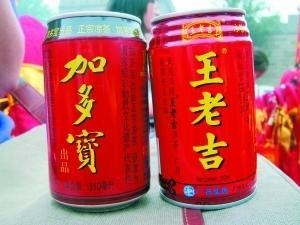
(By Albert Chen) The hearing in the false advertising dispute between Guangzhou Pharmaceutical Holding Company (“GPHC”) (SSE: 600332) and Jia Duo Bao (“JDB”) was held in January of 2013 in the Guangzhou Intermediate People’s Court. In addition to the arguments over false advertising, the application for a litigation injunction has been hotly debated. Today, we would like to introduce you to the injunction, which is called “preliminary execution” in China’s Civil Procedure Law.

READ MORE

Summary of Administrative Case Verdict on “Britney Spears” Trademark Squatting (II)

We introduced you to the first instance of Britney Spears’ trademark administrative lawsuit yesterday, and today we will continue that discussion concerning the second instance and provide our comments on the case.

In February 2012, Britney Spears appealed to the Beijing High People’s Court citing her dissatisfaction with the first instance decision. The court of second instance decided that as a first right, the right of publicity and use of one’s name is protected by Trademark Law. Furthermore, any unlicensed registration of the trademark would cause damage to the right of name when the relevant public mistakes the origin of the product or service with the name owner, or when the relevant consuming public believes there is an association between the two parties. Therefore, to determine whether a disputed trademark will harm the right to use one’s name, one must first consider whether the owner of the name is well known or popular. Moreover, to determine whether the relevant right will be regarded as a first right, the relevant date is the registration date of the disputed trademark. The focus of this case is whether Britney Spears was widely known in Mainland China among the relevant consuming public before the registration date of the disputed trademark, in this instance November 20, 2000; also, whether the relevant consuming public would be confused as to the source or origin of “布兰妮” or “Britney” as being substantially similar to the name Britney Spears, and thus inferring a relationship between the two parties. 

READ MORE

Summary of Administrative Case Verdict on “Britney Spears” Trademark Squatting (I)

(By Luo Yanjie) In past posts, we have introduced you to the trademark squatting of Yi Jian Lian, which is the name of a well-known basketball player in China. Today, we are going to show you another similar decision:

On 20th November 2000, Suzhou Yisheng Fashion Co., Ltd. (the “Yisheng Company”) applied for the trademark “布兰妮Britney” in Class 25, covering clothing articles, such as shirts, suits, coats, overcoats, skirts, t-shirts, wind coats and down jackets. The Trademark Office of the State Administration of Industry and Commerce (the “Trademark Office”), after conducting a preliminary examination, published the application on its No. 807 Trademark Announcement. Britney Spears filed an opposition to the Trademark Office within the statutory period.

READ MORE

Summary of the Administrative Case Verdict in the Yi Jian Lian Trademark Squatting Case

09bb4f3dea0808a73c6d974e

We are often consulted by clients asking what standards are used to determine trademark squatting, and why was malicious squatting found against Sony Ericson and HERMES but denied against COCA COLA or LANDROVER? Furthermore, once a trademark application has damaged anothers’ name right, copyright, or trade name right, what standards do courts use to determine infringement. Under the Trademark Law, what measures can be taken to protect the trademarks of well-known fictional figures, such as 007 or Harry Potter?

READ MORE

Is It Necessary to Receive Approval from the Rights Holder of an Original Work in Order to Use Adapted Work?

s2366722

(By Luo Yanjie) Recent internet news has stated that the film adaption rights for Big Breast & Wide Hips, the work of 2012 Nobel laureate, Mo Yan, have sold for RMB 11,180,000 yuan, and the film will be directed by Zhang Yimou. Although Mo Yan’s agency ultimately confirmed that this was a false rumor, the cinematographic adaption of Mo Yan’s work has garnered public attention. With the trend of greater diversity in forms of work, we have seen more and more works recomposed in other artistic forms. Legally speaking, this re-composition actually belongs to adaption under the Copyright Law, and the work created is therefore adapted work. Today’s post will introduce the Chinese system for adaption of the film and cinematographic works.

READ MORE

Comparison of Administrative and Judicial Methods of Domain Name Dispute Settlement in China

(By Albert Chen) Currently, the main dispute resolution channels for domain name disputes include semi-administrative settlement and judicial settlement. In terms of regulation, the Measures for Settlement of Domain Name Disputes (the “Measures”) were promulgated as early as 2002 and then amended in 2006. The Measures are the primary basis for semi-administrative settlement of domain name dispute. As to judicial methods, the main basis is the Interpretation on Several Issues Concerning Application of Law in the Hearing of Computer Network Civil Disputes” (the “Interpretation”) promulgated by the Supreme People’s Court.

READ MORE

New Rules on the Protection on the Patent Made for Hire in China

(By Albert Chen) In previous posts, we introduced our readers to ways to pay remuneration for the invention made for hire, and the standard adopted by Chinese courts in related disputes. On 26th November 2012, the State Intellectual Property Office (the “SIPO”), accompanied by 12 other authorities, jointly released the “Several Opinions on Further Strengthening the Protection of Service Inventor’s Legal Interests and Promoting IPR Implementation (the “Opinions”), which demand a strengthened protection on the rights of service inventors in several aspects. In today’s post, you will be able to become more familiar with the main points contained within the Opinions.

READ MORE