Introduction to China Courts’ Evidence Preservation System in Software Litigation

(By You Yunting) China’s computer software infringement is very severe. In litigations of cracking down on computer software infringement, however, how to fix infringement evidence is always a real problem for right holders. In practice, there are two means of computer software evidence perseveration: one is evidence preservation taken by the right holder, and the other is applying for the court to take evidence preservation.

Right holders always would like to take pretrial evidence preservation in network software infringement, cases of installing infringing computer software in public places such as Internet bar. As for enterprises that use unauthorized software for commercial use in workplaces, however, in most cases, evidence preservation is taken by the administrative authorities of copyright or people’s courts. At present, China’s administrative organization have involved less and less in software infringement litigation, because the mainstream opinion is that administrative organizations shall handle with the cases involving in infringing public interests whereas software infringement cases regarding as civil disputes between right holders of software and unauthorized users of aforesaid software shall be settled down though civil proceedings. In our today’s post, we would like to introduce some legal ground of software pretrial evidence preservation taken by the people’s courts in China.

READ MORE

Can a database be Protected by the Copyright Law in China?

Abstract: in order to be considered a compilation, such works should typically possess a number of characteristics, such as the selection or arrangement of the data, and the originality in the presentation of said data. In other words, compilations generally require a modicum of originality and ingenuity present in order to receive some form of protection as an original work.

(By Luo Yanjie) Generally, the copyright of a database protects the arrangement of the database rather than to the contents. The case in today’s post demonstrates this point, and at the same time, provides a bit of good for thought. The following is the introduction to the case.

READ MORE

Trade Secret Litigation Injunction Rulings in China

1

(By You Yunting) According to media reports (note: the link is in Chinese), Eli Lilly and Company and Eli Lilly (China) sued an employee named Huang in the Shanghai No.1 Intermediate People’s Court. That court recently issued the first trade secret litigation injunction in China’s history, and ruled a litigation preservation that prohibited Huang from disclosing, using, or allowing any third party to use 21 documents that were protected as trade secrets by the plaintiff.

Inductions to the Case:

READ MORE

Is RSS Output in Websites Kinda Fair Use in the Copyright Law?

 (By You Yunting) A user on Zhihu.com asked some question about RSS

  1. Is it kinda fair use of RSS?
  2. Is it kinda fair use to transfer the excerpt context RSS to the full text RSS?
  3. Is it kinda fair use of Flipboard and similar applications’ excerpt context which do not use RSS?

In terms of the first question: ,Is it kinda fair use of RSS?

If a website supports full content RSS output, then it is actually the using on the license of the copyright holder instead of the fair use. While, where a website only supports excerpt context RSS and if a third party scraps the content into a full context RSS, it is infringing as it has used the content without any license.

Let’s first check the definition of RSS. We could find a clear definition in Wikipedia (http://en.wikipedia.org/wiki/Rss.): If a website placed the RSS file on its page, user could use a RSS feed to read the latest contents if he cannot open the content page. Based on the said character of RSS, in author’s opinion, RSS actually is a form of authorization from the site owners. If the website provides RSS file, it licenses users to read the content without visiting its website. According to the Copyright Law, Fair use means that under the specific circumstance we can use the content without the copyright’s holder’s permit and with payment of remuneration. The transliteration of a published work into Braiile and into minority nationality languages and free performance of a published work belong to fair use.

READ MORE

Whether using the Name of Another’s Work Constitutes Copyright Infringement or Unfair Competition

Abstract: The Copyright Law and the Anti Unfair Competition Law supplement each other, but they also compete with each other.

(By Luo Yanjie Unfair competition refers to an operator’s misconduct that violates principles of fairness, justice, and good faith; it is also considered any behavior that violates widely adopted commercial ethics. As for copyright, as a kind of exclusive right, it mainly focuses on granting the right holder a monopolistic right in conformance with the law, and thereby grants the right holder monopoly rights as well as a competitive advantage through the exploitation of his/her own intellectual works.

READ MORE

Could NetDragon’s Providing Plants vs Zombies 2 Be Protected under the Safe Harbor Principle?

13734375027257

(By You Yunting) In recent days, Plants VS Zombies 2, the sequel to the global hit game Plants VS Zombies, came on the market in Apple’s AppStore in Australia. Afer initial release, millions of users downloaded the app from the Australia store. In China, however, the situation is quite different. As reported by the media, within the first 24 hours of the game’s release, many unlocked versions of the application were uploaded to third party media providers, like ZS91.com, and that the encrypted in-game items had been cracked.

READ MORE

Why China Court Protects Violation Against GPL License Agreement?

(By You Yunting) We could find no regulation in China’s Copyright Law and Regulation on the Protection of Computer Software with regard to the open source software. In a dispute judged by Haidian People’s Court in the 1st instance and Beijing No.1 Intermediate People’s Court in the 2nd instance, though both courts determined the validity of the open source agreement, they supported those violating the GNU GPL as failed in disclosing newly added source code could claim the copyright over the new work. To our understanding, the case, on the  one hand, had showed the pragmatism of China courts, and on the other hand, it also demonstrated that the open source software organization is necessarily to be seen in the right protection on the OSS software.

READ MORE

China’s Courts Found Non-Infringement for Unauthorized Remake of Song

(By Luo Yanjie) Abstract: The scope of the statutory license includes the manufacturing of the audio recording, and also includes the distribution of the work afterwards. Judging from the latest case, the written statement of the right holder must explicitly exclude the application of statutory license, and cannot simply exclude it by claiming “chasing any infringement.”

The statutory license provided in the Copyright Law is to prevent a monopoly in the music market, but the law also regulates that the right holder has the right to exclude that license. ” However as to what kind statement shall be made within such exclusion statement, we have found no such regulation in law. According to the case described in this essay, the recording industry tends to use the term “copyright reserved, and infringement chased”, which in fact is not within the scope of the license due to the followings:

READ MORE

Is It Illegal to Auction off Qian Zhongshu and Yang Jiang’s Letter Manuscripts?

(By You Yunting) Recently, we noticed that a Beijing-based auction company was interested in selling letters and manuscripts, including those from the couple Mr. Qian Zhongshu and Ms. Yang Jiang (it should be noted both Mr. Qian and Ms. Yang are noted scholars in China). In addition, we have also seen letters from their daughter Ms. Qianyuan to Li Guoqiang, the chief editor of Hong Kong based magazine Guang Jiao Jing, and a manuscript of Mr. Qian’s work. In the meantime, some of the letters’ content has been disclosed to the media; in fact, following these disclosures there was apparent dissatisfaction from Mr. Qian’s widow, Yang Jiang, alleging that these public disclosures were in fact a violation of one’s private communication, and any public disclosure, by the media or otherwise, would be considered improper.

READ MORE

Whether using the Name of Another’s Work Constitutes Copyright Infringement or Unfair Competition

Abstract: The Copyright Law and the Anti Unfair Competition Law supplement each other, but they also compete with each other. In the case introduced in this article, the first instance court denied the copyright infringement claim, but confirmed liability under the principles of unfair competition. This seems to be logically contradictory, and the court in the second instance corrected this glaring mistake.

(By Luo Yanjie Unfair competition refers to an operator’s misconduct that violates principles of fairness, justice, and good faith; it is also considered any behavior that violates widely adopted commercial ethics. As for copyright, as a kind of exclusive right, it mainly focuses on granting the right holder a monopolistic right in conformance with the law, and thereby grants the right holder monopoly rights as well as a competitive advantage through the exploitation of his/her own intellectual works. In this particular aspect, it shares a similar purpose with the Anti Unfair Competition Law. For this reason, the Copyright Law and the Anti Unfair Competition Law supplement each other, yet on the other hand they also compete with each other.

READ MORE

Has Apple Protected Its APP through the BSA?

The Second Record of the Day Four of the US Visit

(By You Yunting) In late March, the author had the opportunity to make a journey to the United States at the invitation of the U.S. government in order to better understand how the U.S. IPR system operates. On the morning of the fourth day of the journey, the writer visited the Business Software Association (BSA), which originally was not on the list of places to visit; it was later added on the recommendation of the writer. Despite this, the BSA received us with a chief inspection officer. The following is a record of our discussion carried out on that day. The topic of this post only concerns part of the discussion, and the reader may skip to the last part of this article if it interests you.

READ MORE

How to Determine Infringement Conducts in Copyright Disputes in China Courts?

(By Luo Yanjie) The Getty Images (Beijing) Co., Ltd. (hereinafter “Getty”) provided the court with a product brochure naming defendants Shanghai Shuote Co., Ltd. (hereinafter “Shuote”) and Shanghai Yikang Co., Ltd. (the “Yikang”). Getty claimed that the brochure was procured from the 6th International Tire Exhibition in Shanghai during 19th to 20th of May 2009. The defendant argued that they had neither printed nor used the brochure. However, the plaintiff provided substantial evidence to prove that the brochure could only have been printed by the defendant; regardless, the defendants failed to provide any explanation proving otherwise. On the other hand, the court had solid reasons to presume both defendants had engaged in the printing and using of the brochure.

READ MORE

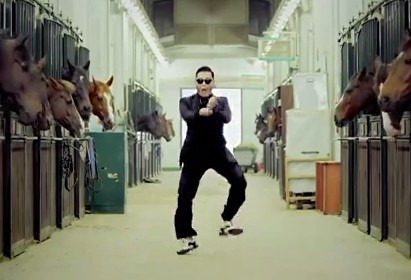
Is It Copyright Infringement to Perform “Gangnam Style” at a Corporate Annual Gala in China?

506313c1c4cc11b2309016

(By You Yunting) PSY, the most popular South Korean Artist, has achieved more than 1 billion clicks, or views, on Youtube for his music video “Gangnam Style,” and has earned a global reputation. To perform Psy’s signature “horse-riding” dance has become an integral part of domestic corporate annual galas in China. In fact, the partners of our law firm have been encouraged by colleagues to perform the dance for everyone’s amusement. The problem was that none of us could actually perform the “horse-riding” dance properly. When facing such horrible demands from coworkers, a question raised by one of our associates interested me: would a performance of “Gangnam Style” infringe others’ lawful rights?

READ MORE

Which Copyright Should Internet TV Operators Purchase?

Analysis on the Prohibition of Xiaomi Box and Legal Issues Concerning Internet TV

(By You Yunting) Recently, Xiaomi Tech (the “Xiaomi”), a thriving Chinese smart phone maker, released its “Xiaomi Box” (the “Box”), which enables the user to play online video on their television. Moreover, it also supports TV, games, music, and photos. Strangely, however, the Box ceased its video service under the claim of system maintenance only one week after its release.

According to some media reports (note: the link is in Chinese), the Box is a kind of set top box, and according to the rules of the State Administration of Radio, Film and Television (“SARFT”), such products must first be administratively approved before they can be used in online TV. Despite the cooperation made with WASU, other content available from Xiaomi’s box, such as video from Sohu, Tencent, PPTV, or iFeng are against Notice No. 181 issued by SARFT, which regulates that each set top box can only provide content from licensed video providers.

READ MORE