How Samsung Obtained Its Camera Trademark Under Class 9 Through Litigation in China

Samsung

(By You Yunting) Initially in its application, SAMSUNG failed to obtain its Chinese-transliterated trademark for cameras by virtue of a prior-registered trademark under Class 9 for screen products.

READ MORE

China Court Decision Repeals TRAB’s Ruling for Unified Review Standard

zenpep商标

(By Luo Yanjie)Abstract: Pursuant to Chinese Trademark Law, those applications having unhealthy influences shall not be used as trademarks. “Unhealthy influences” refers to a negative, or inactive influence that may detrimental to the interests and social order of the public, including political, economic, cultural, religious and ethnic allusions  which are a registered trademark itself or a mark that is applied to goods or services. However, the Chinese Trademark Office should have a consistent attitude regarding the trademark adjudication standard for these unhealthy influences.

READ MORE

Lessons to Be Learned from Apple Losing Their Apple Trademark for a Game Console in China

125px-Apple-logo.svg

(By You Yunting) In the end of 2013, the Beijing Higher People’s Court rejected Apple Inc.’s trademark opposition towards “苹果” trademark (read “Pingguo” in Chinese and referring to “Apple” in English) under Class 28 for game console against Zhongshan Readboy Electronics Co., Ltd. Thereafter, Apple Inc. has gone through 4 procedures, including the Trademark Office’s opposition proceeding, TRAB’s review procedure and two administrative actions and ultimately lost the “苹果” trademark under Class 28 for game console. The following are abstracts from the judgment of the final trial and our comments.

READ MORE

Why Could “Kellogg Company” not be Registered under Class 41 for Educational Services?

kello

(By You Yunting) Kellogg Company, an American multinational food manufacturing company, produces cereal and convenience foods, including cookies, crackers and fruit-flavored snacks. However, in China, someone tried to apply for “Kellogg” as a trademark under Class 41 for educational services. After discovering this, Kellogg Company filed an opposition, but suffered a setback at first in that both the TRAB and Beijing No.1 Intermediate People’s Court rejected its claim. After Kellogg Company appealed, Beijing Higher People’s Court supported its claims, on the ground that the disputed trademark infringed the prior enterprise name of Kellogg Company.

READ MORE

Why the TRAB Removed the Johnson & Johnson’s “ONETOUCH” Trademark?

Johnson-Johnson

(By You Yunting) U.S. drugmaker Johnson & Johnson (NYSE:JNJ) and Guilin Zhonghui Biotechnology Co., Ltd are in fierce competitions on blood glucose test strips in China. Johnson & Johnson has always accused Guilin Zhonghui Biotechnology Co., Ltd of producing counterfeits of Johnson & Johnson’s OneTouch blood glucose test strips used by patients with diabetes, but did not receive support of the courts in responding litigations. Recently, Guilin Zhonghui Biotechnology Co., Ltd won this dispute through revoking Johnson & Johnson’s ONETOUCH trademark. The followings are the case introduction and our analysis.

READ MORE

Why Only an Interested Party may File an Opposition to a Trademark Application in China

(By Luo Yanjie) Abstract: The new Trademark Law stipulates that only the interested party may file an opposition to a trademark application based on relevant grounds. Previous opposition proceedings were so complicated that the new Trademark Law removes the trademark opposition review proceedings completely, with the exception of the review period of twelve months.

Our Trademark Law has been revised many times since its inception in 1982. In August 2013, the National People’s Congress approved the latest revised Trademark Law. In today’s post, we will analyze and compare the two Trademark Laws from the standpoint of the revised opposition system.

READ MORE

Abuse of Internet keywords in Competitive Bidding may Constitute Trademark Infringement

(By Luo Yanjie) Abstract: Using another’s trademark as a promotion keyword in Baidu’s competitive bidding may constitute trademark infringement and unfair competition. The contents of “sale promotion (for others)” refer to providing advice, planning, promotion and consulting for others to sell goods or services, and does not include, in particular, enterprises whose main function is to sell goods, namely, activities of commercial enterprise.

   With the widespread use of Pay Per Click (the “PPC”) promotion, related legal problems also surface. In recent years, there are many trademark infringements regarding the bidding service of keyword PPC. The case in today’s post is a typical one considering the bidding service of keyword PPC as follows.

READ MORE

How to Solve the Language Conflict between Foreign and Chinese-Language Trademarks?

资生堂

(By You Yunting) When applying for trademark registration in China, foreign companies are often puzzled by an issue arising out of a translation of a foreign trademark into Chinese being rejected by the Trademark Office due to a language conflict with some preexisting trademark. In our experience, however, if an applicant can prove to the court that its trademark won’t cause confusion with previously registered trademarks, there is a great chance of success in a foreign trademark ultimately being registered. As follows, we will introduce a case where a Chinese court supported the Japanese Shiseido Ltd. Co. in applying for registration of its BéNéFIQUE trademark.

READ MORE

Should An Enterprise Change its Enterprise Name that Infringed a Registered Trademark in China?

巴黎春天

(By Luo Yanjie) Abstract: Marks that only bear the generic names, devices, or model numbers of the goods shall not be registered as trademarks. This restriction was just limited the generic names of the same goods. Trademark right is a unified national right all over the China and shall be under equal protection. In practice, for an act of an enterprise name infringing a registered trademark, the court may make a comprehensive judgment of different kinds of infringement liabilities.

With regard to some well-known brands, an act of using another’s well-known brand as an enterprise name is a typical infringement manner, which annoys the right holder. In today’s post, we’d like to introduce and share a typical case that the infringing party was finally convicted of infringement by the courts and ordered to stop using its enterprise name for the following.

READ MORE

China’s Courts won’t Prohibit a Trademark Squatting with Post-Approval

古珀行

(By Luo Yanjie) Abstract: “Agent” in conduct of Agent’s preemptive registration refers to “trademark agents, representatives or other agents and representatives based on sales and agency relationship such as distribution and agency”. Commodities that no agent or representative may apply for registration include commodities same as the commodities where the trademarks of the principals or the persons represented are attached to as well as other similar commodities. Considering trademark is a private right, judicial institutions shall fully respect parties’ autonomy.

READ MORE

How Mobile Game Protects its Intellectual Property Right?

捕鱼达人

(By You Yunting) Recently stock markets have heightened topics about mobile game and serious competition disputes of intellectual property rights (the “IPR”) between China mobile games enterprises are often appeared in the newspapers. According to the reports, Beijing Chukong Inc., the developer of popular “捕鱼达人”(Fishing Joy) mobile games, was engaged in a controversy of IRP because earlier in December the Guangzhou-based SEALY Technology suspected Beijing Chukong Inc.’s “捕鱼达人”(Fishing Joy) of plagiarism on its arcade game product “捕鱼达人”. In response, Beijing Chukong Inc. alleged that: first, the online time of its “捕鱼达人”(Fishing Joy) was earlier than that of SEALY Technology and its mobile game had been reported to the Ministry of Culture. Second, Beijing Chukong Inc. owns the “捕鱼达人”trademark. Third, there are significant differences in art images and playing methods between two products.

READ MORE

Why BURBERRY’s Classic Pattern Registered Trademark was Revoked in China?

23901

(By You Yunting) Earlier in November, China’s Trademark Office announced canceling Burberry’s trademark of the “Haymarket Check” in China, known as iconic tan, black and red tartan (the “disputed trademark”), under Class 18 for packaging and bags because Burberry had not even used the registered trademark for over three years in China by the media.

A Chinese bag and apparel maker Polo Santa Roberta, who had disputes with Burberry for many years, filed an application with the China’s Trademark Office for revoking the disputed trademark that Burberry had not used for over three years. The State Trademark Office decided to revoke Burberry’s trademark due to inadequate evidence from Burberry after consideration, but Burberry applied for review with the Trademark Review and Adjudication Board, triggering heated debates in China.

READ MORE

How A.O.SMITH Corporation Protects Its Interests against the Free Rider AOSIMIHE?

1

(By Luo Yanjie) Trademark infringement via the unauthorized use of an enterprise’s name is a common phenomenon in China. Since the requirements for registering a company in Hong Kong are well known for being comparatively lax, many companies attempt to register well-known trademarks as an enterprise name in Hong Kong, and then run a business in Mainland China using this registered name, effectively fulfilling its role as a “free-rider” of another’s well known trademark.

 The A.O.SMITH Corporation was founded over 100 years ago in Milwaukee, Wisconsin, USA, and is a global leader applying innovative technology and energy-efficient solutions to products marketed worldwide. However, the “American”AOSIMIHE (note: AOSIMIHE is a rough approximation of the name A.O. Smith transliterated into Chinese) Appliances (International) Group Ltd., registered in Hong Kong, is a free rider attempting to imply a connection between it and the United States-based A.O. Smith Corporation. Based on its Hong Kong company and trademark registration, the former succeeded in registering its “AOSIMIHE” trademark in Mainland China. Today, we’ll discuss how A.O.SMITH Corporation protected its legal interests against the “American” AOSIMIHE Appliances (International) Group Ltd.

READ MORE

Can Carnival Films Retake the Downton Abbey Trademark Squatted in China?

图片1

(By Luo Yanjie) According to a recent report by the British Broadcasting Corporation (BBC), the British television series Downton Abbey (In Chinese, translated as “唐顿庄园 Tangdun Zhuangyuan”), which is very popular in China, and Carnival Films, who produced Downton Abbey, was attempting to sell Downton (in Chinese, Downtown is translated as “唐顿 Tangdun”) branded wine in the North American, European and Australian markets. However, according to a disclosure by the State Trademark Office, some Chinese merchants drew first blood, registering the “唐顿庄园 Tangdun Zhuangyuan” trademark and subsequently obtaining rights in the trademark. This news also pointed out that a Shandong-based Merchant Li Xiangjun had already received ownership of the “唐顿庄园 Tangdun Zhuangyuan” trademark for wines in China.

READ MORE

Why the Calligraphic Character’s Copyright Failed to Defeat Trademark Right?

TM截图未命名

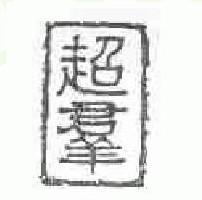
Abstract: To determine whether a prior copyright could defend itself against a later trademark right, whether the foundation of copyright exists should be the first enquiry. That is to say, it is worthy of discussion whether an author receives copyright for a single calligraphic character in calligraphic works.

Pursuant to China’s laws and regulations, prior ownership of copyright in a work is a defense against a later trademark right. In determining whether a prior copyright can defend itself against a later trademark right, however, the first matter to be decided is whether the foundation of copyright exists. That is, whether the author obtains copyright for a single calligraphic character in calligraphic works. In today’s post, we will introduce and discuss a typical case as follows:

READ MORE