Is OEM the Safe Harbor for Trademark Infringement in China?

(By Albert Chen) Whether original equipment manufacturing (OEM) can lead to trademark infringement has been long argued. The opinions on it may vary among the judicial organs in various regions and between the judicial department and various administrative departments. A Shanghai court once confirmed that a processing party should not assume infringement liability in the case Shenda vs. Jolida. Following this decision, some began to advocate the idea that OEMs could be considered a safe harbor in the seas of trademark infringement. Can that point of view reasonably be established in China? In today’s post, we would like to introduce you to Chinese cases and popular opinions in judicial circles concerning OEMs and trademark infringement.
READ MORE

Why Apple Failed to Stop the Application of Apple-Trademark by Others?

20121220093547935

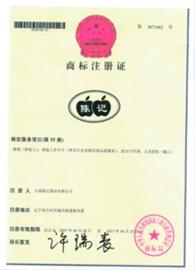
(By Luo Yanjie) Two companies with a great gap in their relative strength have been seen battling with each other over the trademark of an apple image; they are the globally known Apple Inc. and a fruit food making company in Zhuang He, a small city of China. At the end of the battle, the small company won the fight, Dalian Chenji Guopin Co., Ltd. (the “Chenji”) was supported by the authority in the dispute lasted for 5 years. The dispute was triggered by Chenji’s design, which consists two apples overlapped together, and the Chinese characters “陈记” written on them. In examining the mark, we can find the apple resembles that of Apple’s, which appears to have been bitten by someone. For this reason, Apple filed the trademark opposition with the trademark office.

READ MORE

Another iPad Like Battle for WeChat (微信) Trademark Dispute?

9090

 (By Albert Chen) In yesterday’s post, we analyzed why Tencent would confront with the trademark squatting, and mainly blamed it for the defect on the internal management. Today, we would continue our discussion, and share our opinions on how could Tencent take back or stop the first application by others.

Before the end of this year, no one would oppose “iPad battle” shall be the trademark dispute of the year, and yet with the breaking out of conflict on the trademark of “微信”, a LBS software from Tencent Inc. (the “Tencent”) and its English name is WeChat, that affirmation would be challenged.

READ MORE

WeChat Trademark And Tencent’ s Problem in Trademark Management

u=1364176128,1836969918&fm=11&gp=0

(By You Yunting) In recent, several medias have interviewed the author on the squatting of “微信” trademark, which is the name of a LBS software of Tencent Inc. (the “Tencent”), and the English name of it is WeChat. The story of it is: A company admitted in Beijing (the “Beijing Company”) made its trademark application of “微信” in Class 38 on 17th January of 2011. Tencent, who runs WeChat (“微信”) software, made its own application several a week later on 24th. For the first application principle, Tencent’s application has been refused by the authority. And part of Beijing Company’s application has also been refused, while part of it was opposed. Currently, WeChat (“微信”), the hit product of Tencent, is with no any records in Class 38, which is the most related class for the app.

READ MORE

All General Vocabulary Cannot Be Registered As Trademarks in China?

1101051007434

(By Luo Yanjie) Early in this year, JDB Inc., the famous herbal tea manufacturer argued with Guangzhou Pharmaceutical Company (the “GPC”) regarding ownership of the Wang Lao Ji trademark, which concluded in JDB being ordered to cease its use of the trademark. Now, JDB has begun its second battle with GPC, this time accusing GPC of infringeing the trademark “Ji Qing Shi Fen (吉庆时分).” Wanglaoji Health Industry Co. Ltd. (Guangzhou Wanglaoji Company) affiliated with GPC, recently made a statement that the State Trademark Office had accepted its application to revoke the registration of “Ji Qing Shi Fen (吉庆时分)”, the main reason being that the mark is considered generic in the sense that it is vocabulary in common use. Due to this, the State Trademark Office further advocated that it is uncertain whether there can be any exclusive right in the use of the registered mark.

READ MORE

Why Nippon Lost Its Lawsuit against Trademark Infringement by Taobao Sellers?

u=2281873618,2747446169&fm=23&gp=0_副本

(By Luo Yanjie)In March 2011 the globally well-known paint producer Nippon Paint Co. Ltd. (“Nippon”), discovered Zhanjin Company had set up a shop on Taobao.com, the biggest online market in China, and had been using Nippon trademarks, ads and trade dress concerning Nippon products with no approval or license from it. With no reply from Taobao.com after filing a complaint, Nippon sued Zhanjin and Taobao in court, and yet the complaint was rejected by the judge. Dissatisfied with this result, Nippon made an appeal to the Shanghai No.1 Intermediate People’s Court, who ruled that the adoption of Nippon’s trademark by Zhanjin is for product information display only, and it could lead to no likelihood of confusion among the public. In addition, the court ruled that no commercial interests of the plaintiff would be damaged. Based on these rulings, the alleged trademark infringement claim could not be established, and therefore the original decision was maintained.

READ MORE

How Large Is the Scope of Protection for Well-Known Trademarks in China? (II)

2e2eb9389b504fc29c72b99de5dde71190ef6d7c

In yesterday’s post, we introduced trans-class protection for well-known trademarks and the factors that might lead to this status being granted. Today, we would like to conclude by explaining situations in which well-known trademarks will not be granted trans-class protection.

III. Situations where trans-class protection will not be granted to well-known trademarks

As discussed above, well-known trademarks only enjoy trans-class protection when meeting the following conditions. Now, we will introduce some common situations where trans-class protection cannot be achieved:

READ MORE

How Large Is the Scope of Protection for Well-Known Trademarks in China? (I)

2e2eb9389b504fc29c72b99de5dde71190ef6d7c

 (By Luo Yanjie) Henan Dazhong Paint (Hongkong) Co., Ltd (“Paint Company”), a manufacturer of varnish and paint, recently applied for the trademark “多美滋,” which attracted the dissatisfaction of the International Nutrition Company (“INC”), a globally known Danish infant and children’s nutrition company and the trademark holder of “多美滋DUMEX.” As a result, INC filed an objection to the State Trademark Office (“Office”), but the objection and objection review were both refused by the Office and the Trademark Review and Adjudication Board (“TRAB”). After that, INC appealed TRAB’s decision to the Beijing No.1 Intermediate People’s Court. Recently, the Court made its decision and found that “the adoption of the trademark on the paint product could influence the interests of the plaintiff.” Based on this decision, the Court revoked TRAB’s decision to approve the registration of the trademark “多美滋” for paint.

READ MORE

How to Legally and Properly License Trademarks in China ?

The trademark license, as one of the means of using trademarks, has, in practice, encountered many unexpected disputes due to illegal and improper use. How then should one legally and properly license trademarks? And, what may benefits will the rights holder gain after going through the administrative procedures? This essay summarizes the author’s opinions on these issues.

I. How to make the trademark license record

(By Albert Chen) According to the Measures for Recording Trademark Licensing Contracts (“Measures”), the rights holder, either the owner of the trademark or the licensee, or the trademark agency representing these parties shall apply for recordation of the trademark license. If the licensors are foreigners or foreign companies, however, the record must be handled by trademark agencies. In the application, the applicant shall submit the licensing contract recordation application, a duplicate of the licensing contract, and a copy of the trademark certificate. If the documents are in foreign languages, translation shall also be provided.

READ MORE

Could Nike Get the Trademark “Liuxiang”?

(By Luo Yanjie) Recently, the lawsuit filed by Nike against China’s Trademark Review and Adjudication Board (“TRAB”) (note: the link is in Chinese) was heard in the Beijing No. 1 Intermediate People’s Court. The case was brought because TRAB refused Nike’s application to trademark Liu Xiang (刘翔) for the reason that the trademark had been registered by another company twenty six years ago, namely in July of 1986. At that time, a company named Shanghai Liuxiang Company applied for the trademark Liu Xiang Brand (刘翔牌) in the class of clothing, and the exclusive period for the use of that mark will last until 2017. Incidentally, the Liu Xiang Brand trademark happens to have the same name as the famous Chinese athlete, Liu Xiang. The case is currently being heard, but the author believes Nike has little chance of winning the case. Today’s will examine the issues involved in this case.

READ MORE

How Companies in China Apply for Reserve Trademarks and Defensive Trademarks?

(By Luo Yanjie) A reporter from China Industry & Commerce News asked the author how companies should apply for reserve trademarks and defensive trademarks. The interview is as follows:

1. How to decide between the registration of a reserve or defensive trademark?

Reserve trademarks are prepared for coming new business. Because the period from application to reservation requires one year, it is suggested to prepare some spare names for new products or services being prepared or under research and development. Then, before the product is released, the company can directly select and use a name it has already registered. Generally, it is only necessary to apply for the classes the company intends to adopt, and there is no need to register many other related classes.

READ MORE

How to Acquire the Trademarks of Companies Whose Business Have Been Canceled or Whose Licenses Have Been Revoked in China?

By Albert Chen

Trademark assignees may sometimes encounter an awkward situation: the target trademark is in the hands of a company that has had its business license revoked or that has been cancelled. Although the trademark is still valid, others seem to have no legitimate means to acquire it. So, under these circumstances, does the assignee really have no means to acquire the trademark? In today’s post, you will find the answer.

I. Why would trademarks be left unused?

According to relevant statistics, the average life of Chinese companies is seven years, and the average of life of privately owned companies is only 2.9 years. On the other hand, however, the validity period of a trademark is ten years, and there is nothing in Chinese law that states that the trademark shall automatically become invalid when the business license of its holder is revoked or the company is cancelled. Especially when the business license has been revoked, the company still has legal capacity. It is merely incapable of conducting civil acts, including the use and transfer of trademarks, because its business license or chop has been announced invalid or has been confiscated under the punishment of business license revocation.

READ MORE

What Geographical Names Can be Registered As Trademarks in China?

It is reported that (Note: the link is in Chinese) Wakayama County of Japan recently announced that the trademark application for “Ji Zhou” (纪州) filed by a Hong Kong company on the Chinese mainland concerns a publicly well-know geographical name. The County has also filed an objection with the Chinese Trademark Office because this name is not appropriate to serve as a trademark. The report also stated that Wakayama County has been paying close attention to trademark applications in China since 2010 and has already had two objections granted against trademark applications for “Wakayama.” Today, we would like to discuss whether geographical names can be registered as trademarks:

READ MORE

Does Chinese Trademark Law Permit the Coexistence of Identical or Similar Trademarks?

Last year, the Supreme People’s Court issued the final decision in the protracted dispute between LACOSTE and CARTELO. The decision clarifies cases involving long brand history and could guide future hearings on similar disputes in courts of all levels. In the decision, LACOSTE lost the lawsuit, and no infringement was found on the part of CARTELO. In the judgment, the Court took the first steps towards establishing a system of “trademark coexistence,” which means the coexistence of similar trademarks in the same class, for use in China’s trademark cases. Today’s post will provide an analysis of the application of this system in China.

READ MORE