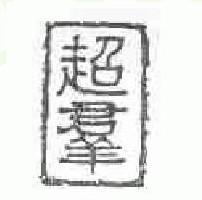
Why the Calligraphic Character’s Copyright Failed to Defeat Trademark Right?

TM截图未命名

Abstract: To determine whether a prior copyright could defend itself against a later trademark right, whether the foundation of copyright exists should be the first enquiry. That is to say, it is worthy of discussion whether an author receives copyright for a single calligraphic character in calligraphic works.

Pursuant to China’s laws and regulations, prior ownership of copyright in a work is a defense against a later trademark right. In determining whether a prior copyright can defend itself against a later trademark right, however, the first matter to be decided is whether the foundation of copyright exists. That is, whether the author obtains copyright for a single calligraphic character in calligraphic works. In today’s post, we will introduce and discuss a typical case as follows:

READ MORE

Why did the Trademark Office Reject Audi’s “A4” Trademark Application?

(By Luo Yanjie) The Audi A4, A6 and other series of Audi cars are popular classic cars in China. However, Audi’s trademark applications for the A4, A6 etc., are always rejected. In today’s post, we will introduce a typical case regarding these trademarks, followed by our analysis for our readers.

Introduction to the Case:

In January 2007, Audi China filed an application with the State Trademark Office to register its “A4” mark (the “disputed trademark”). The State Trademark Office upheld that “A4”, a common vehicle model, lacked distinctiveness. Based on this finding, the Trademark Office rejected Audi’s application. After Audi applied for a trademark reexamination with the Trademark Review and Adjudication Board (the “TRAB”), the TRAB held that, the disputed trademark comprised of the English Letter “A” and Arabic numeral “4” was so simple that it would be difficult to distinguish the function of the source of goods; in addition, it lacked distinctiveness, a requirement pursuant to the Trademark Law. Again, based on these findings, the TRAB rejected Audi’s application for reexamination.

READ MORE

How to Determine the Competent Jurisdiction for Online Infringement?

(By Luo Yanjie) Abstract: The Supreme People’s Court’s decision concerning jurisdiction in terms of determining the domicile of a transit server seems rather amiss against the principle of the doctrine of the plaintiff accommodating the defendant. The place where a plaintiff discovers infringing content should be the final choice of jurisdiction in cases involving network and online infringement. Unfortunately, laws and judicial interpretations in our country do not currently make a distinction between the right of goodwill and a legal person’s right of reputation.

READ MORE

China’s Latest Laws and regulations in October 2013, Part II

7. Circular by the General Office of the CPC Central Committee and the General Office of the State Council on Cessation of New Construction of Buildings, Halls and Chambers and Clearing Up Housing for Office Use of Party and Governmental Offices


Promulgated on July 23, 2013 by the General Office of the CPC Central Committee and the General Office of the State Council, the Circular on Cessation of New Construction of Buildings, Halls and Chambers and Clearing Up Housing for Office Use of Party and Governmental Offices was created in order to ensure the cessation in every aspect of the new construction of buildings, halls and chambers, and to regulate the management of housing for office use.

READ MORE

China Attempts to Utilize Patent to Protect Graphical User Interface for Software

(By You Yunting) In the epic battle of Apple Inc. v. Samsung Electronics Co. starting from 2011, Apple filed its lawsuit against Samsung in the United States, alleged that Samsung infringed several graphical user interface (the “GUI”). If Apple filed its lawsuit against Samsung in China, however, its complaint regarding infringing several GUI may not be filed because at present China has not accepted applications of patent for GUI. Nevertheless, good news comes that China’s governments are changing their attitude on the application for GUI.

READ MORE

China’ s Latest Laws and regulations in October 2013, Part I

1.Provisions of the Supreme People’s Court on the Procedures of Dealing with Self-Compensation Cases

Promulgated on July 26, 2013 by the Supreme People’s Court, the Provisions on the Procedures of Dealing with Self-Compensation Cases were effective on September 1, 2013.

The self-compensation cases in the Provisions refer to the cases of state compensation handled by a People’s Court where such court is the judicial organ liable for the compensation. The Provisions further indicates that the State compensation groups of primary People’s Courts, and compensation committees of the Intermediate People’s Courts or the People’s Courts of higher level shall each be responsible for the handling of self-compensation cases at the same level. In regard to compensation applications made by a claimant, the People’s Courts shall conduct an examination and file each case in accordance with the Provisions of the Supreme People’s Court on the Work of Case Filing of State Compensation Cases.

READ MORE

Why China Court Believe Google Books’ Scanning of Books Constitute Copyright Infringement?

[`QLB)()1C]KSA}DJ`HN9OK

(By Luo Yanjie)Abstract: The fair use system in China adopts a legislative model of “exhaustive listing”, and many judicial breakthroughs in recent cases appear to be more in conformity with principles of fairness and impartiality. Copyright Infringement against the right of reproduction shall be prohibited. However, an interesting question is whether the infringing party assumes liability for damages in cases where the copyright owner doesn’t actually suffer any losses.

Google Books has triggered global protest and litigation from publishers worldwide. The following is an introduction to a case that developed in China.

READ MORE

Essential points on Writing Noncompetition Clauses In a China Labor Contract

(By You Yunting) In today’s post, our website would like to introduce some essential points in writing noncompetition clauses in a labor contract in accordance with relevant Chinese laws and regulations. Pursuant to the Labor Law, the Labor Contract Law and related laws and regulations, combined with the specific conditions of employing units, when writing noncompetition clauses or agreements, we will pay particular attention to the following points:

I. How to determine the scope of the noncompetition clauses?

READ MORE

Logic and Practical Analysis of Foreign Investment Facilitation in the Shanghai FTZ

1

(By Gong Lier) The China (Shanghai) pilot free trade zone (hereafter called ‘the free trade zone’) was officially launched in Waigaoqiao, Shanghai on 29th Sept. 2013. Attention should be paid to the news that the, i.e., the ‘Negative List’, of the free trade zone was issued at midnight on the same day, on which the five Shanghai municipal governmental rules were also implemented one after another, including the China (Shanghai) Pilot Free Trade Zone Administrative Rules (No.7 municipal government’s order) (hereafter called ‘the Free Trade Zone Administrative Rules’), the China (Shanghai) Pilot Free Trade Zone Foreign Investors’ Funded Projects Filing Rules (H.F.F.(2013) No.71) (hereafter called ‘the Foreign Investors’ Funded Projects Filing Rules’), the China (Shanghai) Pilot Free Trade Zone Overseas Investment Projects Filing Rules (H.F.F.(2013) No.72) (hereafter called ‘the Overseas Projects Filing Rules’), the China (Shanghai) Pilot Free Trade Zone Foreign Investors’ Funded Enterprises Filing Rules (H.F.F.(2013) No.73) (hereafter called ‘the Foreign Investors’ Funded Enterprises Filing Rules’), and the China (Shanghai) Pilot Free Trade Zone Overseas Invested and Incorporated Enterprises Filing Rules (H.F.F.(2013) No.74) (hereafter called ‘the Overseas Invested and Incorporated Enterprises Filing Rules’).

READ MORE

Introduction to the 2013 Trademark Law, Part 2

(By Zhan Yi) On August 30, 2013, the Standing Committee of the National People’s Congress promulgated Decisions of the Standing Committee of the National People’s Congress Concerning Alterations to the Trademark Law of the People’s Republic of China, which shall be implemented on May 1, 2014. Our website previously translated the Full text of 2013 China Trademark Law, we provided a Comparison Version highlighting the differences between the 2001 and 2013 Trademark Law. In today’s post, our website will introduce and discuss the revised content within the 2013 Trademark Law. Without further ado, we will now move on to the second part of our examination of the 2013 Trademark Law.

READ MORE

Introduction to the 2013 China Trademark Law, Part I

(By Zhan Yi) On August 30, 2013, the Standing Committee of the National People’s Congress promulgated the Decisions of the Standing Committee of the National People’s Congress Concerning Alterations to the Trademark Law of the People’s Republic of China, which shall be implemented on May 1, 2014. Our website has already translated the Full text of 2013 China Trademark Law in a previous post, and compiled and provided a comparative version highlighting the differences between the 2001 Trademark Law and 2013 Trademark Law. Starting with today’s post, we will introduce and discuss the most important revisions and changes found in the 2013 Trademark Law. In today’s post, we will introduce the first part.

READ MORE

Why did the Court not Approve the Trademark Coexistence Agreement?

图片1

By Luo YanjieAbstract: Current laws have no provisions as to whether a trademark coexistence agreement made by and between the trademark holder with a prior trademark and the trademark applicant with a latter trademark could impact the validity of the latter trademark. Under such circumstances, the courts shall consider and decide whether to approve the above-mentioned agreement. Where litigation concerning trademark ownership affirmation takes the form of an administrative suit, the courts shall, within the scope of the Trademark Review and Adjudication Board’s (the “TRAB”) administrative acts, decide whether its administrative acts are valid and rational.

READ MORE

The Establishment Procedure of Foreign-Capital Enterprises in Shanghai FTZ

(By Bai Lituan) On August 30, 2013, the Standing Committee of the National People’s Congress enacted the Decision of the Standing Committee of the National People’s Congress on Authorizing the State Council to Temporarily.

Adjust the Administrative Examination and Approval of Relevant Laws in China (Shanghai) Free Trade Zone (the “DESIVISION”). The DESIVISION authorizes the State Council to temporarily adjust about 11 administration examinations and approval of the establishment and merger of foreign-capital enterprises including the wholly foreign-owned enterprises, Sino-foreign cooperative joint venture and Sino-foreign equity joint ventures in the Shanghai Pilot Free Trade Zone (the “FTZ”). Earlier reports once said that it would temporarily suspend the implementation of the Law on Wholly Foreign-Owned Enterprises, the Law on Sino-Foreign Cooperative Joint Ventures and the Law on Sino-Foreign Equity Joint Ventures in the FTZ. In effect, those three laws involve the establishment, business structure, foreign exchange management, labor and personnel, finance and accounting, dissolution and liquidation, etc. The DESIVION of the National People’s Congress just temporarily suspends 11 administration approvals and changes them into filling administration. The Law on Wholly Foreign-Owned Enterprises, the Law on Sino-Foreign Cooperative Joint Ventures and the Law on Sino-Foreign Equity Joint Ventures will still be enforced in the FTZ and be temporarily adjusted.

READ MORE

China’s Telecom Anti-Monopoly: What Troubles is the China National Development and Reform Commission Meeting?

TM截图未命名

(By You Yunting) According to media reports, the officer in charge of the China National Development and Reform Commission (the “NDRC”) in a recent statement was quoted as saying that the NDRC had always, and would continue to supervise the monopoly issues in relation to broadband access provided by China Telecom and China Unicom, and that the NDRC suffered from various reactions when it announced its investigation into China Telecom and China Unicom at the end of 2011. He also said that currently the 10G of bandwidth provided by China Telecom and China Unicom had been extended to 100G, and that it would still urge China Telecom and China Unicom to rectify this issue within a period of three to five years.

READ MORE

Why did the “Gatekeeper” of the Capital Market Fail to Fulfill its Duties?

(By Yu Zhiyuan and Bai Lituan) In the capital market, agency institutions’ participation greatly reduces the degree of information asymmetry of market subjects, and plays a significant role in the capital market; thus, the agency institutions and their professionals are named by the industry as the “gatekeepers” of the capital market. Ever since the Enron Corporation scandal became public and the Sarbanes-Oxley Act (SOA) was published, in order to better protect the interests of public investors, all countries are attempting to apply new approaches to security supervision. Thus far, enhancing the gatekeepers’ obligations is one of the ways to realize investor protection. Recently, fraudulent securities issuances and severe distortions of information disclosure are occurring frequently in China’s capital market, and this has a direct causal relationship with the gatekeepers’ mechanism failure.

READ MORE