
(By You Yunting) PSY, the most popular South Korean Artist, has achieved more than 1 billion clicks, or views, on Youtube for his music video “Gangnam Style,” and has earned a global reputation. To perform Psy’s signature “horse-riding” dance has become an integral part of domestic corporate annual galas in China. In fact, the partners of our law firm have been encouraged by colleagues to perform the dance for everyone’s amusement. The problem was that none of us could actually perform the “horse-riding” dance properly. When facing such horrible demands from coworkers, a question raised by one of our associates interested me: would a performance of “Gangnam Style” infringe others’ lawful rights?
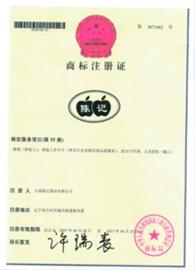
Why Apple Failed to Stop the Application of Apple-Trademark by Others?
(By Luo Yanjie) Two companies with a great gap in their relative strength have been seen battling with each other over the trademark of an apple image; they are the globally known Apple Inc. and a fruit food making company in Zhuang He, a small city of China. At the end of the battle, the small company won the fight, Dalian Chenji Guopin Co., Ltd. (the “Chenji”) was supported by the authority in the dispute lasted for 5 years. The dispute was triggered by Chenji’s design, which consists two apples overlapped together, and the Chinese characters “陈记” written on them. In examining the mark, we can find the apple resembles that of Apple’s, which appears to have been bitten by someone. For this reason, Apple filed the trademark opposition with the trademark office.
China’s Latest Laws and Regulations in December (II), 2012
V. The Ministry of Finance Issued Interpretation Number Five on Accounting Standards for Business Enterprises
Recently, the Ministry of Finance issued Interpretation Number Five on Accounting Standards for Business Enterprises, which provides interpretations on fives issues, including: business mergers, business launches, credit risk mitigation tools and related services, and how to process accounting step by step in cases where an enterprises invests equity in its subsidiary and ultimately loses its right of control through several transactions.
China’s Latest Laws and Regulations in December (I), 2012
I. The State Administration of Industry and Commerce and the Ministry of Justice issued the Administrative Measures for Law Firms Undertaking Trademark Agency Work, and DeBund Has Already Submitted a Renewal Record
On December 27, 2012, the State Administration of Industry and Commerce (“SAIC”) together with the Ministry of Justice issued the Administrative Measures for Law Firms Undertaking Trademark Agency Work (“Administrative Measures”), which were published on the SAIC’s website. The Administrative Measures clearly provide eight categories of work that law firms can provide related to trademarks, including: application for trademark registration or change, trademark renewal and transfer, pledge registration, license contract recording, opposition, cancellation, revocation, and Madrid System international trademark registration. According to the Administrative Measures, firms engaging in such business must apply for recordation with the Trademark Office of the SAIC. Additionally, the Administrative Measures list the matters handled by the State Trademark Review and Adjudication Board of the SAIC, such as reexamination of rejection, opposition, and cancellation and disputes concerning registered marks. The Administrative Measures come into effect on January 1, 2013.
Legal Analysis on the Preemption Dispute between Fosun and SOHO China
(by Bai Lituan) After six months of tense negotiation without any satisfactory result over a dispute of the 8-1 Pearl Project land plot on the Bund, Fosun (00656.HK) and SOHO China (00410.HK) finally chose to take the case to court in Shanghai. The first hearing of the case was in late November 2012. Before then, Fosun insisted that the share transaction between SOHO China and Shanghai Zendai Group damaged its right of preemption.
Publishing Regulation from GAPP: Make Most Chinese Websites Illegal in Their Operation
(By You Yunting) Several days ago, the author wrote an essay “Is It Illegal for Amazon.cn Running Kindle Store with A License Borrowed from Business Cooperation?” And in recent, the Office of Legislative Affairs of the State Council published the news that, the General Administration of Press and Publication (the “GAPP”) is working with other departments drafting the exposure draft of Management Measures of Online Publish Service (the “Measures”) (note: the link is in Chinese). According to the Measures, the foreign invested company shall not engage themselves in the online publishing. The domestic publishing units shall report their cooperation with foreign companies in the service of online publishing. For this reason, once the Measures would come into effect, the Amazon, a foreign invested company, would have no access to participate in the business concerning the online publishing service, and its cooperation with Chineseall.com shall be reevaluated for the security by the administration.
China Court: AppStore Could Not Enjoy Safe Harbor Principle in Apple VS. Writer Alliance (Updated)
(By You Yunting) Update: Apple made the following statement to the recently made court decision:
In AppStore, Chinese users could get more than 700,000 best apps from Apple developers. And as a holder of intellectual property, it has always been Apple’s awareness the importance of IPR protection, and thereby we carefully treat each infringement complaint. Apple cherishes the opinions and advices put forward by China Written Works Copyright Society, China Writers Association and Internet Society of China. For a better aid to the right protection of the content owners, Apple would continue improving the service quality.
Another iPad Like Battle for WeChat (微信) Trademark Dispute?
(By Albert Chen) In yesterday’s post, we analyzed why Tencent would confront with the trademark squatting, and mainly blamed it for the defect on the internal management. Today, we would continue our discussion, and share our opinions on how could Tencent take back or stop the first application by others.
Before the end of this year, no one would oppose “iPad battle” shall be the trademark dispute of the year, and yet with the breaking out of conflict on the trademark of “微信”, a LBS software from Tencent Inc. (the “Tencent”) and its English name is WeChat, that affirmation would be challenged.
WeChat Trademark And Tencent’ s Problem in Trademark Management
(By You Yunting) In recent, several medias have interviewed the author on the squatting of “微信” trademark, which is the name of a LBS software of Tencent Inc. (the “Tencent”), and the English name of it is WeChat. The story of it is: A company admitted in Beijing (the “Beijing Company”) made its trademark application of “微信” in Class 38 on 17th January of 2011. Tencent, who runs WeChat (“微信”) software, made its own application several a week later on 24th. For the first application principle, Tencent’s application has been refused by the authority. And part of Beijing Company’s application has also been refused, while part of it was opposed. Currently, WeChat (“微信”), the hit product of Tencent, is with no any records in Class 38, which is the most related class for the app.
How to Complain Infringement on Taobao.com after It Moved out of “Notorious Markets” List
(By Albert Chen & Huang Mengren) As said in a news report, the trade representative recently announced Taobao.com is removed from US notorious market list, and that could be contributed to Taobao.com’s effort in the last year, including the cleaning up on the website under the cooperation with the right holders and the industry association.
Really, in the last year, we have noticed the endeavor from Taobao.com. The website has executed a MEMO with MPAA, Motion Picture Association of America, to combat any illegal sales of the works registered in MPAA. And also we have seen the it launched the system of spot check over all the products sold on it, the IPR protection platform, and the amendment on IPR articles in Taobao Rules in accordance with its experience on IPR protection and the trend of the market.
All General Vocabulary Cannot Be Registered As Trademarks in China?
(By Luo Yanjie) Early in this year, JDB Inc., the famous herbal tea manufacturer argued with Guangzhou Pharmaceutical Company (the “GPC”) regarding ownership of the Wang Lao Ji trademark, which concluded in JDB being ordered to cease its use of the trademark. Now, JDB has begun its second battle with GPC, this time accusing GPC of infringeing the trademark “Ji Qing Shi Fen (吉庆时分).” Wanglaoji Health Industry Co. Ltd. (Guangzhou Wanglaoji Company) affiliated with GPC, recently made a statement that the State Trademark Office had accepted its application to revoke the registration of “Ji Qing Shi Fen (吉庆时分)”, the main reason being that the mark is considered generic in the sense that it is vocabulary in common use. Due to this, the State Trademark Office further advocated that it is uncertain whether there can be any exclusive right in the use of the registered mark.
Guideline for Foreigners to Apply Work Permit in China
(By Albert Chen) According to the statistics issued by the Ministry of Human Resources and Social Security (the “MOHRSS”) in 2012, the employment license released to foreign workers in China has totaled 200, 000. In fact the administration approval with respect to foreigner employment in China is not limited to this license. Considering we have been consulted for many times what approval is legally demanded for the employment of foreigners, today we gonna introduce you the specific procedure. And in general, the approval could include: 1) work permit of foreign employers; 2) work visa; 3) employment permit; 4) physical examination; 5) residence permit.
Should Employer Give Notice to Trade Union before Terminate Employment in China?
(By Albert Chen) The dispute over employment termination is quite common in labor conflicts, and whether the employer shall send a notice to the trade union before the termination is commonly seen in such disputes. What then, are the regulations regarding this aspect in China?
I. What is the function of trade union in China?
The role of the trade union is specified in Article 2 of Trade Union Law of PRC (the “Trade Union Law”):
“Trade unions are mass organizations formed by the working classes of their own free will.
Why Nippon Lost Its Lawsuit against Trademark Infringement by Taobao Sellers?
(By Luo Yanjie)In March 2011 the globally well-known paint producer Nippon Paint Co. Ltd. (“Nippon”), discovered Zhanjin Company had set up a shop on Taobao.com, the biggest online market in China, and had been using Nippon trademarks, ads and trade dress concerning Nippon products with no approval or license from it. With no reply from Taobao.com after filing a complaint, Nippon sued Zhanjin and Taobao in court, and yet the complaint was rejected by the judge. Dissatisfied with this result, Nippon made an appeal to the Shanghai No.1 Intermediate People’s Court, who ruled that the adoption of Nippon’s trademark by Zhanjin is for product information display only, and it could lead to no likelihood of confusion among the public. In addition, the court ruled that no commercial interests of the plaintiff would be damaged. Based on these rulings, the alleged trademark infringement claim could not be established, and therefore the original decision was maintained.
Beijing Love Story Is Confirmed as a Cooperative Work
(By Albert Chen) Recently, the Beijing Xicheng People’s Court made its decision on the dispute over copyright ownership of Beijing Love Story (“Story”) between Li Yaling and Chen Sichen, confirming that the Story was a cooperative work and that Li held copyright rights over it. After the Court’s decision, Li stated she would take the lawsuit a step further to invalidate the copyright transfer contract made unilaterally by Chen.
Although the author has certainly not seen the contents of the verdict, and the outlook on Li’s appeal to have the contract invalidated is pessimistic, to some extent, Li has already fulfilled her rights protection goals. At the same time, this case also serves as a reminder for other creators of TV series to pay more attention to copyright ownership and protection.