New Chinese Laws & Regulations of May, 2012 (1)

I.The Ministry of Commerce’s Approval of Google’s Acquisition of Motorola Mobility subject to Limitations

The Ministry of Commerce (the “MOC”) announced 2012 No. 5 Announcement on 19th May, 2012. Accordingly, it decides to approve Google’s acquisition of Motorola Mobility with limitations. The Announcement states that MOC has received Google’s declaration of concentration of business operator for Google’s acquisition of Motorola Mobility on 30th September, 2011. After MOC’s review and examination, it thought the declaration documents and materials are insufficient, and asked Google to supplement more. On 21st November, 2011, MOC confirmed the supplementary documents and materials are satisfied with requirements, and accepted such declaration to initiate preliminary review and examination. Through preliminary review and examination, MOC thought such concentration declared is likely to eliminate and restrict the competition effect on China’s market of mobile intelligent terminal operation system, as a result, the term of review and examination has been extended twice. On 15th May, 2012, Google submitted the final undertakings on resolution of competition issue. Ultimately, according to the Announcement, Google shall acquire Motorola Mobility subject to four obligations, including licensing Android platform on free and open basis, treating all original devices manufactures in non-discriminatory manner, obeying Motorola Mobility’s FRAND obligation on patent, and entrusting independent supervisors to supervise Google’s fulfillment of the obligations above.

READ MORE

Will JDB Revoke Wang Lao Ji Trademark Arbitration Award through Litigation?

By You Yunting

In recent, a spat over the established brand Wang Lao Ji, also known as Wong Lo Kat, which is the most valuable herbal tea trademark in China, has occurred. The biggest distributor of the drink in China, JDB group, claimed that it has filed the application to Beijing No. 1 Peoples’ Bank to revoke the adjudication made by the China International Economic and Trade Committee (CIETAC) on the dispute.

The basic facts of the case in the reports: Guangzhou Pharmaceutical Group Co., Ltd. (the “Guangzhou Pharmaceutical’, SZSE: 600332) is the registered owner of the Wang Lao Ji trademark, who signed a trademark license agreement with Hung To Group Co., Ltd. (the “Hung To”, the parent company to JDB), by which Hung To gets the loan of the trademark of 10 years.

READ MORE

How to Avoid Online Game’s Risk of Gambling in China?

Zhengtu is a online game operated by Giant China

By Albert Chen

In recent, the report of the online game gambling in some regions in China again hits the headline of the newspaper, and accordingly, the Ministry of Culture of China (MOC), the department supervising and managing the operation of online game, issued the notice (note: the link is in Chinese), demanding a new round of special examination on the online broad game in this May to June.

Actually, this is not the first time we have seen the special notice by MOC on the online gambling. Before that, MOC has respectively with the Ministry of Public Security and the Ministry of Commerce publicized Notices on the Regulation of Online Games Operation Order and Prohibit Gambling in Online Games (the “Notice I”) and Notices on Reinforced Management on Virtual Currency in Online Game (the “Notice II”). Basing on these notices, MOC afterwards promulgated the Interim Measures on the Online Game Management (the “Management Measures”) in June of 2010.

READ MORE

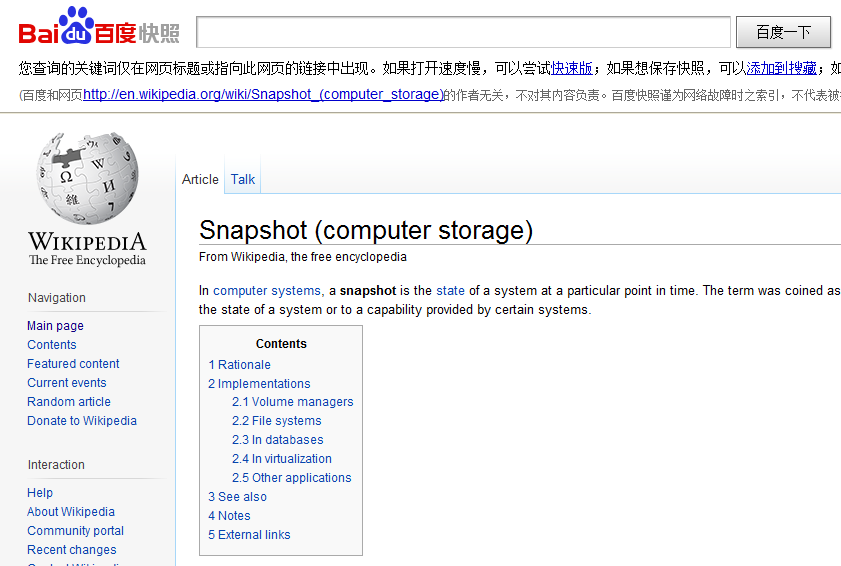
Search Engine in China: Liability to Infringement in Snapshot?

the Baidu snapshot

By Luo Yanjie

With the increasing sense of legal protection, the copyright owner are paying more and more attention to the infringing works spread in the internet, especially for the ICP of infringing works, like the video search engine and Wenku (namely the online library). But to the annoy of the copyright owners, when the ICP deletes the infringing content, the page may be remained in the snapshot of the search engine available to the visitors, which makes the effect of right protection may be discounted. Today, we would like to share our opinions on the copyright infringement by snapshot of the search engine in this post:

READ MORE

Microsoft ‘s New Anti-piracy Development in China: An Ever-long Criminal Sentence for IPR Infringement

The screen print of POTATO windows’ desk, a pirated windows system in China

By You Yunting

The maximum imprisonment in China Criminal Law concerning the crime of intellectual property is 7 years, but a recent judgment in Beijing against the criminal is 7 years and 6 months.

According to the report of Sina Tech, the Chinese merchant Shang Yajun was penalized the imprisonment of 7 years and 6 months for copyright infringement and the sale of illegally manufactured registered trademarks. The 1st Intermediate People’s Court of Beijing upheld the Haidian District Court’s decision, representing the longest-ever criminal sentence in China for such crimes in China.

READ MORE

Protection on Architecture Works in China Copyright Law

the above is the Wangjing SOHO, and the bottom is the copied one in Chongqing.

Recently, Ms. Zhang Xin, the CEO of SOHO China claimed on Weibo the design of Wangjing SOHO of her company is copied by a community in Chongqing (note: the link is in Chinese), and this weibo is also forwarded by Mr. Pan Shiyi, the chairman of the board of SOHO and restated the plagiarism. Meanwhile, the official Weibo of SOHO also expressed its feeling of helpless and put up a question that could the copyright of architecture works be protected in China? To this question, in our view, the answer is definitely “YES”. And there are three main protection way to the appearance of architecture in China law system:

READ MORE

Legal Analysis on Conflict between Domain and Name Right According to Chinese Law, II

By Albert Chen

III. What are the user’s interests on the domain and fair reasons to the registration and using?

At present, the standard in practices to judge the user enjoys the interests on the domain is to determine whether there’s a connection between the user and the domain or the main part of the domain, and this connection involves the overlap or correspondence between the name, company name or trademark of the user and the domain.

Surely, it also comes to our attention that even there’s no overlap or correspondence as mentioned above, the interests on the domain of the user or a fair reason to the registration or using of the users could also be established when a domain has been operated for a long period and thereby accumulates the social reputation, like the 163. com of Netease and 360buy.com of Jingdong.

READ MORE

Legal Analysis on Conflict Between Domain and Name Right According to Chinese Law, I

By Albert Chen

In recent, one of the hot news in China, might be Mr. Zhou Libo’s taking back the network domain in his name (Zhou is the comedian star of Shanghai style small talk, a talk-show like performance in Shanghai dialect). Ms. Yue from Beijing registered “zhoulibo.com” (the “domain”) in 2007, and in September of 2011, Mr. Zhou filed the arbitration in the Asian Domain Name Dispute Resolution Centre (ADNDRC), claiming that the main part of the domain is as same as the pinyin of his name which is highly possible to result in the misunderstanding among the public. The ADNDRC finally adjudicated the domain to Mr. Zhou. For the dissatisfaction with the decision, Ms. Zhou brought the dispute to Shanghai No.2 Intermediate People’s Court, but the court refused all the claims of her.

READ MORE

Brief Introduction to Software Copyrighter’ s Right Limitation to Ultimate User

by Luo Yanjie

Under the system of China Copyright Law, what right limitations may come to software owners? And what rights and obligations are enjoyed or taken by the ultimate user and what’s the liability when the infringement occurs? Today we would like to give you the introduction on the issues. There are two main litigations on the PC software, namely the Copyright Law and the Regulations on the Protection of PC Software (the “Regulation”). But according to the latest exposure of the Copyright Law’s revision, the Regulation’s articles have been all regulated in the new drafted law; therefore, it is foreseeable that the Regulation may be abolished once there publicized the new Copyright Law.

READ MORE

What Change on Information Communication by Network in Exposure Draft of China Copyright Law? II

By Luo Yanjie

II. To enlarge the information networks: a concept coincidence with the right to transmission

Besides the enlargement to the definition of the right to the information communication by networks in the exposure draft, the new judicial interpretation also regulates a wider definition on the information networks, which includes PC internet, radio & television networks and mobile telecommunication networks. We support such enlargements for radio and television VOD is feasible with the technology development while the networks of them are excluded from the legal information networks. Since the nature of VOD on radio & television networks is of no difference from that on the internet, the information communication by networks shall naturally involve it.

READ MORE

What Change on Online Copyright in Exposure Draft of China Copyright Law? I

By Luo Yanjie

In recent, the exposure draft of the Copyright Law (the “exposure draft”) has been the hot spots among the public, and many revisions of it have arisen wide argument, among which the most debated parts are the coercive license of the music works in Article 46 and extension management of the copyright collective management organization in Article 60 and 70. On the other hand, it also comes to our attention that rare discussion has been made on the revision concerning the right to the information communication by networks in the exposure draft, which however has been modified a lot. Although such modifications are seems to be a little bit “theoretical”, no one could deny it’s major influence in the future practices. And considering the increasing position of the internet in spreading the copyrighted works, it’s unfair to neglect the revision on the right to the information communication by networks.

READ MORE

Can Court Challenge Leviathan with New Anti-monopoly Judicial Interpretation?

By Frank Yu

China anti-monopoly law, judicial jurisdiction, burden of proof, liability scope, anti-monopoly judicial interpretation, administrative monopoly, the industries which exercise monopoly over the production and sale of certain commodities, price supervision, public company, operator with monopolic position, abuse dominant position in the market, market structure, competition condition, market dominant position determination, regulation on monopolic conduct, sell with price lower than cost, refuse to transact, different treatment of price, fairness, justice, independence of courts, large scale state-owned enterprise, fair competition, economy operation efficiency, consumer interests, social public interests, administrative level, anti-monopoly lawsuit social effect, state secret, business secret, personal privacy, opened hearing, showed to the agent, confidentiality commitment, expert witness, cross inquiry

READ MORE

Data on IPR Development in China, 2011

In recent, the News Office of the State Council held a news conference (note: the link is in Chinese), releasing the data on China IPR development in 2011, and the details are as follows:

Under the unified deployment of special acts by the State Council in combating the IPR infringement and the production and selling of the fake and substandard products, the filed cases in the administration of each level are 155, 900 with the involved amount of CNY 3.43 billion, 1, 702 cases were transferred to judicial organs and 9, 135 shelters were shut down.

READ MORE

For or Against Law? Fang Zhouzi Photoshopped Han Han’s “Jail Picture” on Weibo

Han says he is 173 cm, namely 5 feet 6 inches

By You Yunting

Some friends raised me a question on Zhihu.com, a Quora like website in China, that Fang Zhouzi, a well known blogger in China, put his photographed picture of Han Han, in which Han’s background is the height table in jail , then could it be kind of reputation infringement against Han? (see http://weibo.com/1195403385/yiRc64nL7, http://weibo.com/1195403385/yiQZJhg1G)

The battle between Fang and Han is the hottest spot on China internet, and our website once posted articles to introduce the online battle and laws and regulations related. But from this January, Fang’s Weibo is flooded with more than 10 tweets against Han each day, which is truly annoying. As a man favoring Han Han, it’s truly a distress for me to face the question on Zhihu.com. But for the answer concerns the freedom of speech, though I could have refused it, I finally choose to share my opinions on it even there’s only boots rather than applauses ahead. Surely, the reply is only focusing on the “infringement” by two tweets in the links above.

READ MORE