Haidian Court Issued a Copyright Litigation Injunction Preventing Competitor from Broadcasting I am A Singer

我是歌手

(By You Yunting) We have already introduced litigation injunctions regarding patent, trademark and trade-secret proceedings in our previous posts. Today we would like to introduce a copyright injunction that Haidian District Lower People’s Court issued a copyright litigation injunction to prevent Funshion.com from copyright infringement of I Am a Singer (a popular Talent Show in China).

Introduction to the Case:

Plaintiff:  Letv.com

Defendant: Funshion.com

Court:Haidian District Lower People’s Court

READ MORE

Will Magic be Protected as A Work under China’s Copyright Law?

(By Luo Yanjie)

Case summary:

Yigal Messika is an Israeli magician. In March 2008, Messika began to design a tool used in his magic show named Tarantula, through the operation of which the audience could see floating art objects. Messika filmed a DVD recording his performance with the Tarantula. The Tarantula DVD went on sale in the United States on February 29, 2000, accompanied by the Tarantula gimmick. Each pair was sold for $ 75. Later on, Messika heard that his product was being ripped off by a Chinese businessman starting in April 2009. The copyright holder subsequently filed a lawsuit in court to protect the copyright infringed. The Court held that, because China, the US and Israel are all signatories to the Berne Convention, once the plaintiff’s magic met the standards in China’s Copyright Law, it could be protected by China’s laws.

READ MORE

China’s Courts Found Non-Infringement for Unauthorized Remake of Song

(By Luo Yanjie) Abstract: The scope of the statutory license includes the manufacturing of the audio recording, and also includes the distribution of the work afterwards. Judging from the latest case, the written statement of the right holder must explicitly exclude the application of statutory license, and cannot simply exclude it by claiming “chasing any infringement.”

The statutory license provided in the Copyright Law is to prevent a monopoly in the music market, but the law also regulates that the right holder has the right to exclude that license. ” However as to what kind statement shall be made within such exclusion statement, we have found no such regulation in law. According to the case described in this essay, the recording industry tends to use the term “copyright reserved, and infringement chased”, which in fact is not within the scope of the license due to the followings:

READ MORE

Will Magic be Protected as A Work under China’s Copyright Law?

5064a

(By Luo Yanjie) Magic has long been a popular medium with which to entertain an audience, and how one should legally protect magic has long been a problem in the law. This problem has become especially obvious now that we have seen arguments regarding magic and the requirement that an expression be “original” as stipulated in the Copyright Law. Today, we would like to introduce to our readers how China protects magic works based on a case heard by the Beijing No.1 Intermediate People’s Court, which can be considered the first established case concerning the magic work.

READ MORE

Is It Necessary to Receive Approval from the Rights Holder of an Original Work in Order to Use Adapted Work?

s2366722

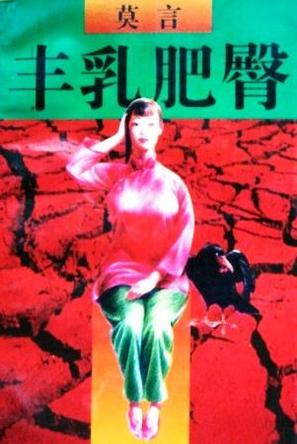
(By Luo Yanjie) Recent internet news has stated that the film adaption rights for Big Breast & Wide Hips, the work of 2012 Nobel laureate, Mo Yan, have sold for RMB 11,180,000 yuan, and the film will be directed by Zhang Yimou. Although Mo Yan’s agency ultimately confirmed that this was a false rumor, the cinematographic adaption of Mo Yan’s work has garnered public attention. With the trend of greater diversity in forms of work, we have seen more and more works recomposed in other artistic forms. Legally speaking, this re-composition actually belongs to adaption under the Copyright Law, and the work created is therefore adapted work. Today’s post will introduce the Chinese system for adaption of the film and cinematographic works.

READ MORE

Does Wind’s Sale of Tonghuashun’s Stock Constitute Insider Trading?

u32801495062224114695fm52gp0_副本

Previously, we posted “Tonghuashun VS. Wind and the Judgment Standards for Software Copyright Infringement in China” to introduce the copyright dispute between Wind and Tonghuashun. According to a recent report, two lawyers based in Beijing filed a complaint to the China Security Regulatory Commission (“CSRC”) accusing Wind and its affiliated company of insider trading, which has made the dispute more complicated.

As shown by the currently available information, from the second quarter of 2011 to the third quarter of 2012, Wind’s affiliated company was a shareholder of Tonghuashun. When the rumor emerged that Wind would sue Tonghuashun, Tonghuashun’s shares experienced several major trades. As indicated in the report issued in the third quarter of 2012, Wind sold all the Tonghuashun shares it had held. Wind explained this situation by stating that its investment in Tonghuanshun was to use its rights as a shareholder to persuade Tonghuashun to cease infringement. Today’s post will provide analysis on this issue.

READ MORE

Why a Chinese Court Judged Apple Inc. to Be the Actual Operator of the AppStore Rather than iTunes S.A.R.L?

u=2609607523,3788351582&fm=23&gp=0

(By Albert Chen) Recently, in the right to network dissemination of information dispute between Li Chengpeng, a well-known Chinese writer, and Apple, a Beijing judge held Apple as the actual operator of the App Store, even though the company had maintained that iTunes S.A.R.L (“iTunes”) is the actual operator, a fact afterwards admitted by iTunes. So, today’s post will introduce the reasoning used by the first instance court in its decision.

Li filed the lawsuit with the Beijing No.2 Intermediate People’s Court (“Intermediate Court”) on January 16, 2012, claiming that his latest work “李可乐抗拆记” was made into an app downloadable in App Store for free reading, which infringed his right to network dissemination of information. Additionally, as the operator, manager, and owner of the App Store, Apple should assume liability. Based on these points, Li demanded compensation for economic damages in the amount of 305,000 yuan and reasonable expenses in the amount of 5,425 yuan.

READ MORE

How to Determine Infringement Conducts in Copyright Disputes in China Courts?

(By Luo Yanjie) The Getty Images (Beijing) Co., Ltd. (hereinafter “Getty”) provided the court with a product brochure naming defendants Shanghai Shuote Co., Ltd. (hereinafter “Shuote”) and Shanghai Yikang Co., Ltd. (the “Yikang”). Getty claimed that the brochure was procured from the 6th International Tire Exhibition in Shanghai during 19th to 20th of May 2009. The defendant argued that they had neither printed nor used the brochure. However, the plaintiff provided substantial evidence to prove that the brochure could only have been printed by the defendant; regardless, the defendants failed to provide any explanation proving otherwise. On the other hand, the court had solid reasons to presume both defendants had engaged in the printing and using of the brochure.

READ MORE

Analysis on the Assumption of Liability in the Serv-U Infringement Lawsuit in China

(By Luo Yanjie) Serv-U is a kind of widely adopted FTP server terminal software, and its main function is to help the transmission of documents on websites. Because the software is relatively small and the normal user has no way to sense the server terminal, many domestic websites in China are now using pirated Serv-U. For this reason, Rhino Software Inc., the developer of Serv-U has been continuously fighting against the piracy of its software, a story which has recently been widely reported. The list of companies sued includes LockLock from South Korea, as well as Netac and eMule, among others. The compensation claimed in these cases ranges from half a million yuan to 1.99 million yuan.

READ MORE

Tonghuashun VS. Wind and the Judgment Standards for Software Copyright Infringement in China

(By Luo Yanjie) Recently, Wind Information Co., Ltd (“Wind Info”), a well-known stock speculation software developer in mainland China, made an official announcement that it would sue its competitor Zhejiang Hexin Tonghuashun (300033) to seek RMB 99.22 million yuan in compensation. According to Wind’s spokesman, “more than ninety-nine percent of its software’s function has been copied by Tonghuashun without any changes, including data, organizational structure, column names, connection mode, index, function, text interpretation, parameters, interface, operation or transfer method, and etc.” At present, the ninety-nine percent figure claimed by the spokesman refers to the interface, operation, or transfer method and database. Even if this claim is true, it is still not certain that Tonghuashun has infringed because the judgment of infringement depends on comparison of the source code of both parties’ software. Today, we would like to share the following information on the protection of software copyrights:

READ MORE

How to Judge the Copyright Holder of Musical Works

 (By Luo Yanjie) Previously, we introduced how to determine the copyright holder of cinematographic works, and today we would like to continue by introducing how to determine copyright ownership of musical works. Similar to cinematographic works, we have confronted situations in infringement cases in which it is difficult to determine the copyright holder of musical work. For example, in one case the copyright conducted in mainland China was licensed by an overseas rights holder, but the name in the signed and issued license was different from what was written on the original CD. Although the issue might have come from a mistake in the translation, it still created a real obstacle for the rights holder. Now, let’s take a look on the way to determine the copyright holder of musical work in China.

READ MORE

How to Judge the Copyright Holder of Cinematographic Work in China?

(By Luo Yanjie) In a previous infringement case against cinematographic we handled, the plaintiff submitted several articles of evidence to the court, which showed that the work belonged to different copyright holders: according to a certificate issued by the Hong Kong Copyright Center, it was Copyrighter A’s property while the subtitle authorship rights belonged to Copyrighter B. And yet, as demonstrated by a license agreement, C shall be the exclusive holder of the copyright. That made the plaintiff argue for his ownership of the copyright. In fact, due to the complexity in determining copyright ownership, contradictory disputes like the one described above are quite common in actual practice. In today’s post we will share our understanding of the issue.

READ MORE

Unauthorized Derivative Work Still Receives Protection Under China’s Copyright Law

By Luo Yanjie

The copyright holder of Pleasant Goat (喜羊羊), a popular Chinese cartoon figure, recently brought actions against the unauthorized use of the character in Flash games on several game websites. According to Chinese copyright law, the copyright holder must give permission to use art in a game, otherwise it will result in infringement. This is easily understood. But, if such an unauthorized game is then used on another website without the original developer’s consent, does this infringe the interests of the game developer? Today’s post will discuss this problem. In my opinion, even if the game developer used the cartoon character to create software without authorization from the copyright holder, the software still receives protection under the Copyright Law, but its protection has definite limits.

READ MORE

Introduction to Copyright Protect on Clothing Design in China

By Luo Yanjie

The clothing has been long seen the most afflicted field of IPR infringement, and in addition to the common trademark infringement, the pass off on the design or model developed by others is also ubiquitous. To pass off the design of the clothing is of no way to be protected by trademark law, for which shall be covered by the copyright law. Considering the clothing itself is not the statutory protective object in law, how to protect the design of clothing is also among the long argued topics. In today’s post, we would discuss over the issue.

READ MORE

Analysis on Copyright Risks of Duowan YY Music

By Luo Yanjie

According to a recent news report (note: the link is in Chinese), the Huanju Inc (namely duowan.com), the holding company of YY.com submitted the prospectus to SEC of USA, applying for the IPO in NASDAQ for $ 100 million funding, and the code of it is YY. As indicated in the prospectus, the achievements of YY music have been the most bling-bling part. YY music is actually the music channel of YY instant messenger, introduced in March of 2011, and mainly broadcasting live shows of music performance. The performer could interact with the spectators by Karaoke, singing match or live videos. Furthermore, amounts of virtual products are available on YY music, which could be got on payment or as gifts. Yet to the statement of someone skilled in the art, the mode of YY music is facing the copyright risk. Today’s post would share our opinions on the issue.

READ MORE