China Court: AppStore Could Not Enjoy Safe Harbor Principle in Apple VS. Writer Alliance (Updated)

u=1734199546,1181443474&fm=23&gp=0

(By You YuntingUpdate: Apple made the following statement to the recently made court decision:

In AppStore, Chinese users could get more than 700,000 best apps from Apple developers. And as a holder of intellectual property, it has always been Apple’s awareness the importance of IPR protection, and thereby we carefully treat each infringement complaint. Apple cherishes the opinions and advices put forward by China Written Works Copyright Society, China Writers Association and Internet Society of China. For a better aid to the right protection of the content owners, Apple would continue improving the service quality.

READ MORE

Beijing Love Story Is Confirmed as a Cooperative Work

无标题

(By Albert Chen) Recently, the Beijing Xicheng People’s Court made its decision on the dispute over copyright ownership of Beijing Love Story (“Story”) between Li Yaling and Chen Sichen, confirming that the Story was a cooperative work and that Li held copyright rights over it. After the Court’s decision, Li stated she would take the lawsuit a step further to invalidate the copyright transfer contract made unilaterally by Chen.

Although the author has certainly not seen the contents of the verdict, and the outlook on Li’s appeal to have the contract invalidated is pessimistic, to some extent, Li has already fulfilled her rights protection goals. At the same time, this case also serves as a reminder for other creators of TV series to pay more attention to copyright ownership and protection.

READ MORE

Is It Illegal for Amazon.cn Running Kindle Store with A License Borrowed from Business Cooperation?

图片1_副本

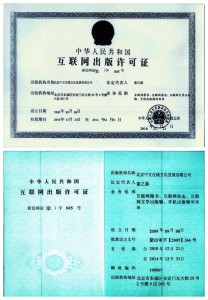
(By You Yunting) On the morning of 13th December, to most one’s inexpectation, Amazon.cn launched itsChinese Kindle Store. As indicated in the web page, it is run by Chineseall.com, a licensed online publisher. That hints Kindle reader would come to China soon. And on the eager of Chinese users,a media report on 14th December (Note: the link is in Chinese) claimed Kindle Store has been halted by the General Administration of Press and Publication (the “GAPP”) for its violation against the law.
“Mr. Wang Qiang, the chief of digital publication section of the Science & Digital Publication Department of GAPP said in his interview that Amazon’s Kindle Store is violating the law for its license borrowed from business cooperation”. Also, it is mentioned in the report that GAPP has inquired and investigated Amazon.cn and Chineseall.com, but yet no result is available now. It is obvious that to Amazon’s plan, it would like to settle the license obstacle by using others’ license. In today’s post, we would like to discuss legal issues concerning licenses on electronic book business.
I. What license is necessary for e-book business?
The qualification of e-book business is mainly regulated in department rules of GAPP. Possibly due to a faster development in science and outdated regulations, the rules are actually could not been seen as an official legislature. It is called Opinions on Developing E-book Industry by GAPP. (Note: the link is in Chinese) By its Article 14, the e-book business of Amazon involves the edition, publish and sales of the e-publication, and thereby shall correspondently apply for three licenses.
Before the e-book, the online game industry is also facing the license problem to publishing the user terminal. At then, two ways are mainly adopted by game companies for the acquisition of business license: 1) the game companies with online publish license could directly submit the game to the GAPP for approval in his own name; 2) those companies with no such qualification, they would present the games to the electronic audio and video publishing house and afterwards to gain the e-publication license. But unlike the publish of online game, for which hundreds of games could be run by a single company and they are possible to gain the license through the publishing house, the release of the e-book may involves millions of works, once they are published through publishing house, all their gains may be inadequate for the payment to the publishing house.
II. Why Amazon did not apply for the license directly?
Could Amazon directly apply for the license for online publication? The answer is no. The shareholder of Amazon.cn is Amazon USA, which makes it a foreign invested company. And by the Guideline of Foreign Invested Industry issued by the Ministry of Commerce, the field of video & audio production as well as the electronic publication and making is prohibited for foreign investment. For this reason, Amazon.cn could no apply for the license solely by itself or in its name.
III. What problems for the cooperation between Amazon and Chineseall.com?
According to the page of Amazon’s e-book:
“The e-book store of Kindle is supported by Chineseall.com, Xinchuwangzheng (jing) No.045”. The Chineseall.com is a licensed corporate, and obviously by Amazon’s plan,it would like to settle the problem of license through the cooperation with a licensed company. But to my personal opinion, the current operation model is defected. To my experience, the domain name, server room, software for reading and payment for book purchase of Kindle e-book store are all supported by Amazon.cn, and it has no connection with Chineseall.com, so where could see the support from Chineseall.com? Therefore, it is not groundless in law that the official from the GAPP said Amazon’s operation under others’ license is violating the law.
Before closing, just half month ago, Xiaomi Inc., a private high tech company, released its set top box–Xiaomi Box, which was also halted by the administration. For that, the author has also written two articles to criticize the authority. For this time, the international giant Amazon couters with the same problem in the publish field. However, either Xiaomi or Kindle Store leads the development direction of science and advanced culture. Their experience in the government’s administration could also explain their “advance”, and the outdate of Chinese authority. And by te existing system in China, no judicial relief is available to Chinese companies when in such situation, and they could not file an administrative lawsuit. The main risk for it is the administration supervision could kill the update and upgrade of high-tech products, which would eventually make our science development legging behind the global trend.

READ MORE

Is It Illegal for Microsoft to Use Firefox with Firebug Plugin in Evidence Preservation in China?

According to news reports, Microsoft along with Autodesk, filed a lawsuit in the Foshan Intermediate Court (note: the link is in Chinese) against a renowned company admitted in Foshan City, claiming computer software copyright infringement. The plaintiffs stated that the accused company had been using their software without any licenses or approvals. Based on this, the plaintiffs demanded compensation of RMB 8 million yuan, elimination of influence, cessation of infringement, and an apology. This case is not black and white and the court certainly has its own opinions, but today I would like to take this chance to discuss how to determine the legitimacy of evidence collection in cases of computer software infringement.

READ MORE

Tonghuashun VS. Wind and the Judgment Standards for Software Copyright Infringement in China

(By Luo Yanjie) Recently, Wind Information Co., Ltd (“Wind Info”), a well-known stock speculation software developer in mainland China, made an official announcement that it would sue its competitor Zhejiang Hexin Tonghuashun (300033) to seek RMB 99.22 million yuan in compensation. According to Wind’s spokesman, “more than ninety-nine percent of its software’s function has been copied by Tonghuashun without any changes, including data, organizational structure, column names, connection mode, index, function, text interpretation, parameters, interface, operation or transfer method, and etc.” At present, the ninety-nine percent figure claimed by the spokesman refers to the interface, operation, or transfer method and database. Even if this claim is true, it is still not certain that Tonghuashun has infringed because the judgment of infringement depends on comparison of the source code of both parties’ software. Today, we would like to share the following information on the protection of software copyrights:

READ MORE

Which Copyright Should Internet TV Operators Purchase?

Analysis on the Prohibition of Xiaomi Box and Legal Issues Concerning Internet TV

(By You Yunting) Recently, Xiaomi Tech (the “Xiaomi”), a thriving Chinese smart phone maker, released its “Xiaomi Box” (the “Box”), which enables the user to play online video on their television. Moreover, it also supports TV, games, music, and photos. Strangely, however, the Box ceased its video service under the claim of system maintenance only one week after its release.

According to some media reports (note: the link is in Chinese), the Box is a kind of set top box, and according to the rules of the State Administration of Radio, Film and Television (“SARFT”), such products must first be administratively approved before they can be used in online TV. Despite the cooperation made with WASU, other content available from Xiaomi’s box, such as video from Sohu, Tencent, PPTV, or iFeng are against Notice No. 181 issued by SARFT, which regulates that each set top box can only provide content from licensed video providers.

READ MORE

How to Judge the Copyright Holder of Musical Works

 (By Luo Yanjie) Previously, we introduced how to determine the copyright holder of cinematographic works, and today we would like to continue by introducing how to determine copyright ownership of musical works. Similar to cinematographic works, we have confronted situations in infringement cases in which it is difficult to determine the copyright holder of musical work. For example, in one case the copyright conducted in mainland China was licensed by an overseas rights holder, but the name in the signed and issued license was different from what was written on the original CD. Although the issue might have come from a mistake in the translation, it still created a real obstacle for the rights holder. Now, let’s take a look on the way to determine the copyright holder of musical work in China.

READ MORE

How to Judge the Copyright Holder of Cinematographic Work in China?

(By Luo Yanjie) In a previous infringement case against cinematographic we handled, the plaintiff submitted several articles of evidence to the court, which showed that the work belonged to different copyright holders: according to a certificate issued by the Hong Kong Copyright Center, it was Copyrighter A’s property while the subtitle authorship rights belonged to Copyrighter B. And yet, as demonstrated by a license agreement, C shall be the exclusive holder of the copyright. That made the plaintiff argue for his ownership of the copyright. In fact, due to the complexity in determining copyright ownership, contradictory disputes like the one described above are quite common in actual practice. In today’s post we will share our understanding of the issue.

READ MORE

How Long Is the Copyright Protection Period of Foreign Companies and Individuals in China?

By You Yunting

A reader asked: Does Chinese law protects the copyrights of foreign companies and individuals? And, how long is the protection period? Today’s post will discuss this question.

I. The three requirements for granting copyrights to the works of foreign individuals or companies

Whether or not the work of a foreign person, company, or stateless person enjoys the copyright protection period depends on whether or not they qualify as a Chinese copyright holder. By Article 2 of China’s Copyright Law, one of the following three conditions must be met:

READ MORE

Chinese Tech Websites Begin to Pay More Attention to the Copyright of Translated Work

By You Yunting

The competition among Chinese tech websites is fierce, and in order to gain an advantage in the battle, many translate essays from American blogs into Chinese and publish them on their websites without permission from the author. Recently, apple4.us, a China-based tech blog, announced they will no longer translate essays without authorization. Furthermore, they will withdraw all past unauthorized translations and ask permission from the authors.

Here is the whole story: Lawrence Li (李如一), an author for apple4.us, translated What Is and Is Not a Technology Company by Alex Payne without authorization and posted it on apple4.us. An editor of Donews, a tech blog under Qianxiang, asked Mr. Li and another apple4.us writer, Hu Wei, for authorization to reproduce the translated essay. Despite never giving confirmation, Mr. Lee later found that Donews had reproduced the essay.

READ MORE

Unauthorized Derivative Work Still Receives Protection Under China’s Copyright Law

By Luo Yanjie

The copyright holder of Pleasant Goat (喜羊羊), a popular Chinese cartoon figure, recently brought actions against the unauthorized use of the character in Flash games on several game websites. According to Chinese copyright law, the copyright holder must give permission to use art in a game, otherwise it will result in infringement. This is easily understood. But, if such an unauthorized game is then used on another website without the original developer’s consent, does this infringe the interests of the game developer? Today’s post will discuss this problem. In my opinion, even if the game developer used the cartoon character to create software without authorization from the copyright holder, the software still receives protection under the Copyright Law, but its protection has definite limits.

READ MORE

Is It Lawful for News Websites to Demand Payment of Fees for Google and Baidu Searches

(By You Yunting) According to a report in the New York Times, as also reported by some European websites, Google is recompiling its searched news results as a news page. It may be said that this method could infringe the copyright of the original publishing websites and, as a result, Google should pay fees for the websites. This idea has received support from both the French and German Governments, yet Google believes that its behavior fully conforms to the law, and thus should not have to pay any fees. In China, the main search engines Google and Baidu provide this kind of news search service, and today’s post will discuss whether it is lawful for news websites to claim fees from the search engines.

READ MORE

The Judicial Jurisdiction of Network Infringement in China

By Albert Chen

In the post Could Apple Use Objection to Jurisdiction to Prolong the Litigation Period?, we introduced the objection to jurisdiction Apple submitted to the Beijing Second Intermediate Court after it was sued by the China Writers Alliance over downloads in Apple’s App Store. In China, the infringement or tort cases shall be brought to the court of infringement place or the domicile of the defendant, and the infringement place may include the place where the infringement takes place or the place where the consequences of the infringement are felt. With regard to network infringement, could the place where the consequence of infringement is felt include any computer terminal? Today, we will introduce the relevant system.

READ MORE

Introduction to Copyright Protect on Clothing Design in China

By Luo Yanjie

The clothing has been long seen the most afflicted field of IPR infringement, and in addition to the common trademark infringement, the pass off on the design or model developed by others is also ubiquitous. To pass off the design of the clothing is of no way to be protected by trademark law, for which shall be covered by the copyright law. Considering the clothing itself is not the statutory protective object in law, how to protect the design of clothing is also among the long argued topics. In today’s post, we would discuss over the issue.

READ MORE

Is It Illegal to Unlock or Jailbreak iPhone and iPad in China?

By You Yunting

A friend asked me a question: why by the latest USA legislature, to unlock iPhone shall be against the law, while it is permitted by law to do so for iPad? This question is complicated on essence, and it actually involves two restrictions designed by Apple on its devices.

On the initial launch of iPhone, the exclusive operating partner of Apple for its new device in USA was AT&T, and therefore it built the capability into the phone so as to ensure only the AT&T would be service network. Later on, as detained a slow internet speed, such a SIM lock was soon been unlocked, and from then on other operator could serve the users with iPhone.

READ MORE