Does a Previously Registered Noted Trademark Influence Subsequently Registered Similar Trademarks?

Abstract

(By Luo Yanjie) In determining the similarity of two trademarks, one must take into account the common understanding among the public as to the trademark and the goods it presents (as well as the source), and the public’s comprehension of the words, pictures, designs, or a combination of all of the above. Concurrently, however, the reputation of the trademark must be taken into consideration in order to determine whether the above factors would lead to confusion as to source among the relevant consumers and market. Generally, trademarks are judged by their similarity with the appearance of another trademark; however, in the following described case, the second instance court also considered the reputation of the reference trademark and the understanding of the consumer in relation to a more comprehensive protection of a well-known brand. The significance of the case is primarily that, due to the millions of trademark applications made in China each year, even subsequently registered trademarks that are incredibly similar to those previously registered may be approved for commercial use by the China Trademark Office, due to strained and restricted resources on its part. In any case, the trademark involved in this case is a well-known one, and for this reason, the court decided that the subsequently registered mark would not be approved for use.

READ MORE

Would the Cancellation of the Applicant Lead to the Invalidity of Trademark Application in China?

(By Luo Yanjie) Abstract: trademark application may take a long time. If the applicant encounters any change on its subject qualification, it shall handle the trademark transfer procedure as soon as possible, or otherwise the trademark could be cancelled.

It normally takes about one year from submitting the trademark application to the right granting. If during the application process it encounters any opposition, the time it takes for right granting adjudication would be much longer, possibly extending to several years. While during that period, the applicant may face a change on its subject qualification, and then will the trademark application be influenced in such a situation? In today’s post, you will see a typical case that we would like to share it with our readers.

READ MORE

Is It Illegal For Directors in Company to Squat Trademarks in China?

A0132

 (By Luo Yanjie) As regulated in Article 15 of the Trademark Law:

“Where any agent or representative registers, in its or his own name, the trademark of a person for whom it or he acts as the agent or representative without authorization therefrom, and the latter raises opposition, the trademark shall be rejected for registration and prohibited from use.”

But in judicial practice, the agent or representative has a very vague definition and limit, and interpretation regarding the meaning of “authorized” is currently in dispute. Our website once introduced and analyzed the issues concerned in the post “Whether Sales Agents Are Included in the Trademark Agent Squatting Articles of China Trademark Law”, and in today’s post we would like to introduce the opinions of the court having analyzed the case from a different aspect. The details are as follows:

READ MORE

Why Couldn’t the Trademark “Bond” Be Applied to Contraceptives?

(By Albert ChenThe Beijing High People’s Court (the “Beijing High Court”) established the “merchandising right” in a 2011 judgment on an administrative dispute between the Trademark Adjudication and Review Board (the “Board”) and DANJAQ, LLC (the “DANJAQ”). That was the first judicial definition of the right, and the first time it was included as a protected “first right.” The decision can be considered a clarification of the “merchandising right” by the judicial organs as well as broadening the scope of first rights.

READ MORE

Why Apple Failed to Stop the Application of Apple-Trademark by Others?

20121220093547935

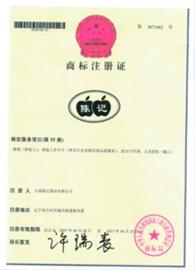
(By Luo Yanjie) Two companies with a great gap in their relative strength have been seen battling with each other over the trademark of an apple image; they are the globally known Apple Inc. and a fruit food making company in Zhuang He, a small city of China. At the end of the battle, the small company won the fight, Dalian Chenji Guopin Co., Ltd. (the “Chenji”) was supported by the authority in the dispute lasted for 5 years. The dispute was triggered by Chenji’s design, which consists two apples overlapped together, and the Chinese characters “陈记” written on them. In examining the mark, we can find the apple resembles that of Apple’s, which appears to have been bitten by someone. For this reason, Apple filed the trademark opposition with the trademark office.

READ MORE

How to Decide Infringement When Conflict between Trademark and Trade Name in China?

By Luo Yanjie

As two different concepts in law, trademark plays the role as to distinguish the origin of the product or services, and the trade name is the literal expression to indicate different companies. But in the daily operation, we may see the confusion between these two concepts, and the trade name may also be used as kind of mark in business. Naturally, we see many companies choose to register their name as the trademark. Despite the similar function of them, the trademark and trade name are verified by different administrations (the mark is subject to the administration of trademark office, and the trade name is ruled by local administration of industry and commerce), but that also triggers the conflict between two objects. In today’s post, we would like to analyze the conflict occurred when trade name registered prior to the trademark by different subjects.

READ MORE

Could Bolt’s Portrait be Used in Trademark?

By Albert Chen

The fastest man Usain Bolt continued his legend in London Olympics by claiming 3 gold medals, accompany with his record, Bolt’s celebration gesture also impresses the spectators. But in recent, a company from China’s Liaoning Province (the “Liaoning Company”) applied sprinter’s celebration gesture as his trademark.

The trademark applied by Liaoning Company is the combination of a black sportsman in yellow jersey and Bolt’s iconic victory gesture on the left half, and the Chinese character of “Real Hero” on the right side (the “Real Hero trademark”). There are three classes have been applied this time, among which the application in Class 43 has been rejected for others’ first registration, the application in Class 25 was approved and that in Class 28 is facing the opposition from Bolt’s team.

READ MORE

Will Lashou Lose its Trademark Battle after Apple?

—Analysis on Lashou trademark dispute

By Luo Yanjie

According to a recent news report (note: the link is in Chinese), Lashou Company, the largest daily deal website in China, owns the right of Chinese trademark “拉手网”, but the English trademark “lashou” is owned by “Shenzhen Harmonious Network Limited ” (the former Shenzhen Qiandao Ecommerce Ltd, hereinafter referred to as Shenzhen company) who applied the trademark in February of 2012, 2 months earlier than Lashou company. Shenzhen declared that the company may defend its legal interests. In addition, due to the “lashou” trademark is now of the ownership of the Shenzhen company, we have also noticed the concerns of the continuing use of lashou.com by Lashou Company.

READ MORE

State Intellectual Property Office Actually Only Be in Charge of Patent Matters in China

The Introduction to the IPR Administrations in China

We find that it remains unclear to most foreign friends that the division among the administrations managing IPR in China. Actually, it also puzzles local people for it’s hardly to judge the specific function of the administration from its name, for example, the State Intellectual Property Office is in charge of patent management, the industry and commerce administration for trademark, and the Copy Right Office, the managing organ for copyright, is also known as the administration of press and publication. (the image above is the logo of the administrations mentioned in this post)

READ MORE

Apple Lost the Trademark Opposition against Red Apple Trademark after the Proceeding for 10 Years

According to the report of hc360.com (the news is in Chinese), Beijing High People’s Court adjudicated the final judgment on the trademark opposition filed by Apple Inc (Apple) against Zhejiang Red Apple Electronic Co., Ltd. (Zhejiang Red Apple) on 28th November, 2011, Ltd, rejecting Apple’s opposition on the defendant’s registered trademark in class 9 of CCTV monitor. Till then the proceeding of the case for 10 years is finally ended up.

Early in November of 2002, Zhejiang Red Apple’s application of red apple trademark was approved by China Trademark Office, and afterwards opposed by Apple, who demanded no approval for the mark, for the similarity between the red apple image and the first applied Apple trademark. Despite the opposition, the trademark office approved the application and issued the “Image Trademark Opposition Ajudication”, (2007) Trademark Yi Zi No. 3887 on 27th August, 2007.

READ MORE

China Trademark Application Examination Period Decreased to 10 Months

As reported by Xinhua.com, it was released on the China Industry and Commerce Administration Conference on 26th, December, 2011 that the trademark examination period is further shortened to the current 10 months calculating from the documents submitting to the examination due, and on the other hand, the trademark opposition and dispute hearing could be finished within 18 months, which has reached the level of U.S.A and Japan.

For the rapid development in the economy, the trademark application in China surpassed the annual examinable amount around 2000, which then led to the overstock. And the examination period was prolonged to more than 3 years by the end of 2007. On that account, the administration took series measures to promote the process, and consequently, the examination period was reduced to less than 1 year by the end of 2010.

READ MORE

Matters for Attention in the Trademark Opposition

Recently, the Qiaodan Company (Qiaodan is the pronunciation of Michael Jordan’s name), a Chinese domestic sporting goods manufacturer, confronted trademark troubles on IPO in China, because Nike has opposed to 8 trademarks of Qiaodan, claiming that it might lead to the confusion with Nike’s “Air Jordan”. Nevertheless, such opposition was refused by China Trademark Office, and Nike filed no administration lawsuit afterwards.

The opposition filed by Nike to Qiaodan is based on the provision of the China trademark law:

READ MORE

Could the Unregistered Trademark be Legally Protected in China?

We  have been consulted for many similar cases this year, and most involving the operational difficulties or brand dilemmas that  foreign companies face due to trademark squatting. These unregistered trademarks could also be legally protected in certain situations, though normally the trademarks shall be first administratively approved for legal registration. Today, Bridge IP Law Commentary will introduce to you the matters related to unregistered trademarks.

I. The reputed unregistered trademark

READ MORE

McDonald’s Lost the First Instance of the Trademark Administrative Lawsuit against Wonderful

We once reported the administrative refusal on Mcdonald’s opposition on Wonderful’s trademark (the W trademark) which is similar to Mcdonald’s “M” trademark (you may check the details in How Could McDonald’s Beat Free Rider of Trademark in China?). After that, Mcdonald’s initiated the administrative lawsuit on the refusal.

According to Beijing Morning Post’s report on 10th December, Beijing First Intermediate People’s Court judged on the first instance of the administrative lawsuit, refusing the claims of Mcdonald’s.

READ MORE

The Actual Term of Trademark Registration in China

The brief introduction on the registration process of trademark in China

Bridge IP Law Commentary is frequently asked to introduce the process of the trademark application in China and the time it may take. Actually, the trademark registration is a harsh job here 5 years ago, for the administrative examination and approval could take as long as 3 years due to the imbalance between the rocketing applicaton amount and the low efficiencty of the trademark office in China. Luckily, it has been greatly improved, and 10 months is enough for going through the process. Today, Bridge IP Law Commentary will introduce you the standard process of the China trademark registration:

READ MORE