Why Apple Failed to Stop the Application of Apple-Trademark by Others?
20121220093547935

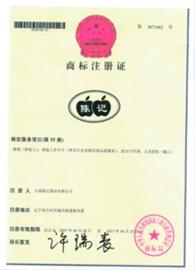
(By Luo Yanjie) Two companies with a great gap in their relative strength have been seen battling with each other over the trademark of an apple image; they are the globally known Apple Inc. and a fruit food making company in Zhuang He, a small city of China. At the end of the battle, the small company won the fight, Dalian Chenji Guopin Co., Ltd. (the “Chenji”) was supported by the authority in the dispute lasted for 5 years. The dispute was triggered by Chenji’s design, which consists two apples overlapped together, and the Chinese characters “陈记” written on them. In examining the mark, we can find the apple resembles that of Apple’s, which appears to have been bitten by someone. For this reason, Apple filed the trademark opposition with the trademark office.

READ MORE

Another iPad Like Battle for WeChat (微信) Trademark Dispute?

9090

 (By Albert Chen) In yesterday’s post, we analyzed why Tencent would confront with the trademark squatting, and mainly blamed it for the defect on the internal management. Today, we would continue our discussion, and share our opinions on how could Tencent take back or stop the first application by others.

Before the end of this year, no one would oppose “iPad battle” shall be the trademark dispute of the year, and yet with the breaking out of conflict on the trademark of “微信”, a LBS software from Tencent Inc. (the “Tencent”) and its English name is WeChat, that affirmation would be challenged.

READ MORE

How Companies in China Apply for Reserve Trademarks and Defensive Trademarks?

(By Luo Yanjie) A reporter from China Industry & Commerce News asked the author how companies should apply for reserve trademarks and defensive trademarks. The interview is as follows:

1. How to decide between the registration of a reserve or defensive trademark?

Reserve trademarks are prepared for coming new business. Because the period from application to reservation requires one year, it is suggested to prepare some spare names for new products or services being prepared or under research and development. Then, before the product is released, the company can directly select and use a name it has already registered. Generally, it is only necessary to apply for the classes the company intends to adopt, and there is no need to register many other related classes.

READ MORE

How to Acquire the Trademarks of Companies Whose Business Have Been Canceled or Whose Licenses Have Been Revoked in China?

By Albert Chen

Trademark assignees may sometimes encounter an awkward situation: the target trademark is in the hands of a company that has had its business license revoked or that has been cancelled. Although the trademark is still valid, others seem to have no legitimate means to acquire it. So, under these circumstances, does the assignee really have no means to acquire the trademark? In today’s post, you will find the answer.

I. Why would trademarks be left unused?

According to relevant statistics, the average life of Chinese companies is seven years, and the average of life of privately owned companies is only 2.9 years. On the other hand, however, the validity period of a trademark is ten years, and there is nothing in Chinese law that states that the trademark shall automatically become invalid when the business license of its holder is revoked or the company is cancelled. Especially when the business license has been revoked, the company still has legal capacity. It is merely incapable of conducting civil acts, including the use and transfer of trademarks, because its business license or chop has been announced invalid or has been confiscated under the punishment of business license revocation.

READ MORE

What Geographical Names Can be Registered As Trademarks in China?

It is reported that (Note: the link is in Chinese) Wakayama County of Japan recently announced that the trademark application for “Ji Zhou” (纪州) filed by a Hong Kong company on the Chinese mainland concerns a publicly well-know geographical name. The County has also filed an objection with the Chinese Trademark Office because this name is not appropriate to serve as a trademark. The report also stated that Wakayama County has been paying close attention to trademark applications in China since 2010 and has already had two objections granted against trademark applications for “Wakayama.” Today, we would like to discuss whether geographical names can be registered as trademarks:

READ MORE

Does Chinese Trademark Law Permit the Coexistence of Identical or Similar Trademarks?

Last year, the Supreme People’s Court issued the final decision in the protracted dispute between LACOSTE and CARTELO. The decision clarifies cases involving long brand history and could guide future hearings on similar disputes in courts of all levels. In the decision, LACOSTE lost the lawsuit, and no infringement was found on the part of CARTELO. In the judgment, the Court took the first steps towards establishing a system of “trademark coexistence,” which means the coexistence of similar trademarks in the same class, for use in China’s trademark cases. Today’s post will provide an analysis of the application of this system in China.

READ MORE

Is It Infringing to Show Others’ Trademarks on Exhibitions?

By Luo Yanjie

Previously, our website introduced issues of trademark and patent in China exhibition: Legal Issues concerning Trademark during the Exhibition in China, Patent Issues for Attention on the Exhibition in China. Recently, a customer told our attorneys that they found a company using their registered trademarks for the promotion on similar goods in an exhibition. The company learned a little Chinese law and they know only Chinese patent law provides that “offer to sell” is infringement. So they ask our advice about that if using other’s registered trademarks constitute trademark infringement?

READ MORE

Calculation to the Illegal Operation Income in Trademark Infringement

By Luo Yanjie

The trademark infringement in China, honestly though reluctant to admit, is very serious. That made the administration and the judicial organ pay more attention to the infringement investigation, and on the other hand, foreign invested companies could also be dragged into the conflict concerning the trademark, like Apple encountered enforcement by local administration for iPad trademark. In such circumstance, the calculation to the illegal income amount shall be important to the infringer, which shall influence their legal liability in direct way.

READ MORE

How to Legally Use Mickey Mouse Brand and FIgure in China?

By You Yunting

About one month before, the IPR Committee of Shanghai Bar Association invited the police officer from the Economic Investigating Squadron of Shanghai Police Department to deliver a speech on the criminal protection over IPR issues. And in the communication after the seminar, the police officer raised a question to the acceded lawyers, “The Shanghai Disney Land will be constructed several years later, and it’s foreseeable that there could be stores selling Mickey Mouse or other figures articles with no license thereby granted around the park. Yet, by then, the copyright protection term on Mickey could be expired, and so what measures could be taken to strike the unlicensed using or selling?”

READ MORE

Can Sound or Smell be registered as Trademarks in China?

—the introduction to the registerable trademarks in China

By You Yunting

As a news report (note: the link is in Chinese), Apple applied the trademark protection for the start up sound of its Mac in USA and Europe. The protection of sound trademark is on the front of the theory research, and in many situations, the sound is protected through copyright law. So far, to register the sound as mark in China is of no legal ground. Meanwhile, in the latest revision of the Chinese Trademark Law, we notice the suggestions to add sound as legal sort of trademark, which was objected by some experts. According to the schedule of the legislation in China, the latest Trademark Law could be issued in this October as soonest, and then we could find the answer to proposal. Today, we will introduce you the sorts of trademarks to be applied in China.

READ MORE

Wanglaoji Trademark Lawsuit and China Trademark License Record System

By You Yunting

As reported (note: the link is in Chinese), the eye-catching trademark battle on Wanglaoji, also known as Wong Lo Kat in Hong Kong, as been adjudicated by Beijing No.1 Intermediate People’s Court on the 13th July 2012, by which Hong Dao Group’s (the “Hong Dao”) appeal to revoke the arbitration decision by CIETAC was refused. This means the arbitration decision shall take effect from 9th May 2012, the two supplementary trademark license contracts signed by the disputed parties are judged invalid, and Hong Dao will no longer use the trademark of Wanglaoji. For the case, we have expressed our opinions in the past post “Will JDB Revoke Wang Lao Ji Trademark Arbitration Award through Litigation?

READ MORE

Analysis on Lawsuits and Arbitration in Domain Name Dispute Settlement System in China

By Luo Yanjie

According to a news report, Apple filed arbitration in June over “iPad 3.com” in WIPO, and claimed the adjudication to grant it the domain name. So far as is known this week, Apple is said to have received the internet address, and the registration information of iPad 3.com, and has now been updated, transferred from Global Access to Kilpatrick Townsend & Stockton; the law firm entrusted by Apple.

The development and popularity of the Internet has increased the weight of domain names to the companies, especially for those engaged in the Internet industry and to them the domain name is playing the main role in propaganda with the replacement of trademark to some extent. Therefore, the domain name has been one of the main battlegrounds of the Internet or IT companies, and that thereby has brought many disputes. Due to the fact that the domain name is unified in global standard, the dispute concerning the domain name could be mainly settled in arbitrations (like Apple did in the case above, while it’s a little different from the contractual arbitration as specified below) and lawsuits. Now, we would like to introduce you how these two settlement methods applied in China:

READ MORE

Legal Analysis on Program Format Protection

By Luo Yanjie

China’s Got Talent broadcasted on Dragon TV has seen its 4th season this year, and during the past couple years, the show has been one of the most popular interactive reality TV shows in China. The main reason contributing to the show’s success is its high production level and the claimed license from British copyright owner which makes the program the true Talent like its British and American equivalents. However, in fact, Dragon TV’s statement is not legally accurate by China Copyright Law for the show is kind of transfer of the British program format. Today, the essay will tell you shall the program format be protected by law and what kind protection it is.

READ MORE

A Compromise between Michael Jordan and Qiaodan Sports?

Reportedly (Note this report is in Chinese), Michael Jordan, the star sportsman of NBA, recently made a statement that Qiaodan Sports Co., Ltd. (“Qiaodan Sports”) is suspected of infringement on his right of name, and he had initiated the legal proceeding in the People’s Court of China. And by the late news, the Shanghai Second Intermediate People’s Court has accepted this case. It is reported (Note this report is in Chinese) that the Qiaodan Sports has been approved by the Issuance Examination Committee of Shanghai Stock Exchange (SSE) to issue 11.25 million shares collecting RMB 1.06 billion, which would be issued publicly upon the future approval of China Securities Regulatory Commission (CSRC). (the image above is the trademark information retrieved from the trademark office of PRC)

READ MORE