China Supreme People’s Court: Latest IPR Related Cases Data of 2011 in China

The Supreme People’s Court (SPC) of China released the latest data of IPR cases in 2011

In 2011, the number of first instance civil intellectual property cases accepted and disposed by local courts grew by 38.86% and 39.51% to 59,612 and 58,201 respectively.

Among the cases accepted in 2011, 7,819 were patent cases, up 35.16% year-on-year;

12,991 were trademark cases, up 53.56% year-on-year;

35,185 were copyright cases, up 42.34% year-on-year;

557 were technology contract cases, down 16.87% year-on-year;

READ MORE

Why Apple Store’s Design Patent Application is Not Necessary? II

The post will be published on our website for two days, and today is the second half of it. (the image is the picture of Apple Store in Lujiazui from the www.apple.com.cn)

III. The legal risk in the lawsuit filed against design infringement

Furthermore, once Apple initiate the lawsuit basing on the design, it may be trapped in the patent validity and serial lawsuits, and it’s also a common challenge of patent lawsuits in China.

1. The poor stability of design patent

Despite the design patent is granted by the administration after approval, the organ will not examine the novelty and creativity of the patent applied for it being instable at all. For example, in the design dispute between SECO and HONDA (note: the link is in Chinese), when HONDA sued against SECO for the claimed plagiarism of SECO’s S-RV to its CR-V, the defendant filed the application of patent validity, and present the evidence including the previous design patent applied by HONDA.

READ MORE

Why Apple Store’s Design Patent Application is Not Necessary? I

The post will be published on our website for two days, and today is the first half of it. (the image is the picture of Apple Store in Lujiazui from the www.apple.com.cn)

By the report of Shanghai Daily, Apple Inc filed an application to the United State Patent and Trademark Office (USPTO) for the appearance design of its store in Lujiazui, Pudong New Area. In consideration of the fake Apple Store in Kuning, Yunan Province in south and west China, the application made this time may be the international application, and will enter into China soon to stem the flooding knock off stores. More interesting is that the journalist of the Daily interviewed our attorneys before the report, and we reserved our opinion on the application. To complete our comments on it, here’s our analysis on the issue:

READ MORE

Interpretation on New Compulsory Licensing for Patent Implementation Rule

China State Intellectual Property Office (SIPO) issued its No. 64 order on 15th March, 2012 to announce the promulgation of the newly revised Measures for the Compulsory Licensing for Patent Implementation (the “Measures”). The most attention catching point is the amendment of medicine patent compulsory licensing. Then, what are the specific provisions? And is there any amendment else deserve you focus? Today, we will make a brief introduction for you. (the image is the picture of Tamiflu once applied for compulsory licensing in China)

READ MORE

How to Label Patent Mark Correctly in China?

In Recent, State Intellectual Property Office of China (“SIPO”) issued its No.63 order for the promulgation of Measures on the Labeling of the Patent Marks (the “Measures”) on its website, the Measures modifies the past Provisions on the Methods for Labeling the Patent Marks and Patent Numbers (the “Provisions”) and will come into effect from 1st May of 2012. (the image is the certificate of patent in China)

Today, we will introduce you how to label your patent marks in China under the new Measures, and its new provisions.

READ MORE

WIPO: ZTE and HUAWEI of China Rank First and Third in PCT Application of 2011

By the news of 6th March, WIPO released the statistics on the PCT application in 2011 global wide, among which ZTE Corporation of China with 2,826 published applications overtook Panasonic Corporation of Japan (2,463) as the top PCT applicant in 2011. Huawei Technologies, Co. of China (1,831) ranks third.

Despite difficult economic conditions, international patent filings under the WIPO-administered Patent Cooperation Treaty (PCT) set a new record in 2011 with 181,900 applications – a growth of 10.7% on 2010 and the fastest growth since 2005. China, Japan and the United States of America (US) accounted for 82% of the total growth. In 2011, the patent application in China saw a growth of 33.4 on 2011, the fastest growth among all, and totaled 16, 406; a growth of 8% in U.S.A totaled 48, 596 and a growth of 21% in Japan totaled 38, 888.

READ MORE

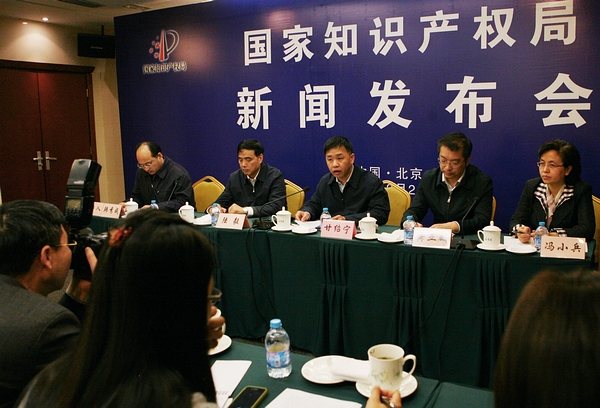
SIPO: 172,113 Granted Invention Patent in China 2011

Recently, the State IP Office (“SIPO”) held a News Conference, on which Mr. Gan Shaoning, the deputy director of the administration, announced China’s patent statistic of 2011 (the image above is the picture of the conference ). For your reference, Bridge IP Law Commentary translates the news on Gmw.cn (note: the link is in Chinese) as follows.

I. The Rank of Provinces, Cities and Enterprises on Patent Granting in China, 2011

There has granted 172,113 invention patent by the SIPO in 2011, up 27.4% year to year, among which, 112,347are granted to the inventors at home, namely 65.3% of the total, up 65.3% year to year.

READ MORE

State Intellectual Property Office Actually Only Be in Charge of Patent Matters in China

The Introduction to the IPR Administrations in China

We find that it remains unclear to most foreign friends that the division among the administrations managing IPR in China. Actually, it also puzzles local people for it’s hardly to judge the specific function of the administration from its name, for example, the State Intellectual Property Office is in charge of patent management, the industry and commerce administration for trademark, and the Copy Right Office, the managing organ for copyright, is also known as the administration of press and publication. (the image above is the logo of the administrations mentioned in this post)

READ MORE

In China, It’s Easy to Be Put in Jail for IPR Infringement

The introduction on the minimum standard of IPR crimes

As the country being most frequently blamed for its intellectual property rights infringement, China has strengthened its legislature in IPR to wash its mud stuck reputation, though the enforcement of such laws still contains defect, any infringement against IPR could bring the criminal liability. In fact, many infringed companies have jailed the infringers for intellectual property infringement, such as the Microsoft against the author of “Tomato Garden”, Microsoft piracy and the IFPI against the owers of the “Knight Music”. Today, Bridge IP Law Commentary will introduce the regulations regarding to the lowest standards for crimes of trademark, copyright, patent and trade secret infringement. (the image above is the install CD of Tomato Garden)

READ MORE

9 Billion Yuan Financing from Patent Pledge in 2011

In 2011, the patent pledge financing amounted to 9 billion yuan in China (involving 1953 patents), which enjoyed a 28% increase year by year and be the highest in recent 3 years. At present, the State Intellectual Property Office is studying and drafting the Guidelines of Intellectual Property Loan by Financial Institution in Banking Industry, which now has been made the exposure draft and will be issued soon.

Other recommended posts:
1.How to manage the company’s patent?
2.How to apply for the 2-dimensional bar code in China?
3.The Patent Prosecution Highway is Piloting in China.
4.How to apply for the pre-litigation injunction in China? (I)
5.The First Primary People’s Court with Jurisdiction over Patent Disputes in China

READ MORE

China and Germany lauch Patent Prosecution Highway (PPH)

According to the report of People.com, the patent prosecution highway between China and Germany was started on 23rd, January, 2012. According to the Joint Statement by the Chinese Intellectual Property Office (SIPO) and the German Patent and Trademark Office (DPMA), the piloting items of the PPH only involve the regular PPH, excluding PCT-PPH in the Sino-Japan PPH and Sino-America PPH. The initial programme will run for two years and ends on 22nd January, 2014, subject to the renewal. Thus Germany has been the third main trade partner of China after Japan and America cooperating in PPH.

READ MORE

Complaints from China IT Tycoon: Weak Protection over IPR Jeopardizes Industry Innovation

According to the report of Nandu Daily, Mr. Ding Lei, the CEO of NetEase (NASDAQ: NTES) and the representative of People’s Congress in China stated on the conference of Guangdong People’s Congress that despite the innovation could make customers more satisfied and bring more market share to the company, which is also the impetus to the company, it’s also haunted with the dilemma of “more innovation more suffering” due to the weak protection on IPR by the state.

According to Ding’s words, the lawsuit on the infringement against the company may last for years, therefore the proceeding may be a suffering to the company; moreover, the judged compensation may be very low even the infringed company wins the lawsuit. “Previously, Baidu stately posted the works of Han Han in its product Baidu Wenku, and why? The reason could only be the poor combat on the infringement”, said Mr. Ding.

READ MORE

The Choice for Apple in China: Patent Lawsuit or Lower Price

According to the news of Forbes.com, for the fast developing and immensely potential mobile phone market in China, Apple has adjusted its phone strategy focusing on the increasing of the market penetration, which however facing the competition from the local manufacturer in China. For such challenges, Apple seems to be tending to file the patent lawsuit for more market share in the country.

In fact, Apple is actively suing its competitor globe-wide. Previously, Apple has filed patent lawsuit against SAMSUNG and HTC in U.S.A., Australia and Europe for its market share is eaten up by android phones, while for the robust iPhone market in England, no same or similar litigation has been initiated by Apple.

READ MORE

Patent Issues for Attention on the Exhibition in China

The international exhibitions give enterprises great opportunity to release new technology or new product, which can help enterprises draw much public attentions. While such exhibitions are also annoyed by the patent dispute with damages the enterprises expectations on the exhibition. Today, Bridge IP Law Commentary today will give our analysis on the issues related to the exhibition patent.

I. Showing in an exhibition won’t cause a patent product lossing novelty

The priority of the trademark on the exhibition has been analyzed in our past post, while as to the patent right, the exhibition attendance could not necessarily bring the priority. According to Article 24 of Paten Law in China:

“An invention-creation for which a patent is applied for does not lose its novelty where, within six months before the date of filing, one of the following events occurred: (1) where it was first exhibited at an international exhibition sponsored or recognized by the Chinese Government”.

READ MORE

The Officer of U.S. Consulate Visited Bridge IP Law Commentary

On 20th December, Mr. Steven Duke (杜史文), Vice Consul of U.S.A, visited DeBund Law Offices/Bridge IP Law Commentary for the survey on the IPR protection in China.

On the meeting with the Consul, Mr. You Yunting introduced the IPR protection in China and replied the questions interested by the visitor, which mainly include the national treatment of foreign companies in IPR dispute settlement, the destroy of knockoff model through judicial way, the copyright of video-sharing programs, the transaction and transfer of patent, the protection of trade secret and the development of IPR judge and lawyers in China.

READ MORE